
Last Updated: November 4, 2026
Quick Summary
The safe way to clean mold off pontoon covers is to brush off loose spores, scrub gently with a mild dish soap and warm water solution, then rinse and dry completely. Reinstall only when both sides, seams, and folds are fully dry, since a damp cover restarts the mold cycle.
- Mold eats into the water-repellent treatment and UV-resistant coating that keep a cover working.
- Check the label first, because the wrong cleaner can strip a protective coating in one pass.
- A few drops of dishwashing liquid in a bucket of warm water lifts light mildew without attacking fabric.
- Mix equal parts white vinegar and water for light surface mold and lingering mildew odor.
- Restore water repellency with a canvas-safe treatment applied to a fully dry cover.
Table of Contents
- Why Mold Grows on Pontoon Covers and Why It Matters
- Identify Your Cover Fabric Before You Clean
- Choosing the Right Boat Cover Cleaner for Mold and Mildew
- How to Clean Mold Off Pontoon Covers Without Damaging the Fabric
- How to Clean Mold Off Pontoon Covers With Vinegar
- How to Clean Boat Canvas Mildew Stains That Won’t Lift
- Bleach, Pressure Washing, and Other Mistakes That Ruin Covers
- Restoring Water Repellency and Preventing Mold All Season
- Frequently Asked Questions
Why Mold Grows on Pontoon Covers and Why It Matters
Mold grows on pontoon covers because trapped moisture, warmth, and shade create perfect conditions for spores to settle and spread.
Here is the part most owners miss. Mold does not just stain fabric. It eats into the water-repellent treatment and the UV-resistant coating that keep your cover working.
- Pooled water sits in one low spot for days
- Warm air under the canvas speeds growth
- Shade from trees or a storage building blocks drying
That combination shortens the life of a cover that should last years. It also puts your upholstery at risk.
Identify Your Cover Fabric Before You Clean
Not all pontoon covers are the same fabric, and the wrong cleaner can strip a protective coating in one pass. Check the label or the manufacturer’s care instructions first. Most pontoon canvas falls into a few common groups:
- Solution-dyed acrylic canvas – color holds up well, but harsh cleaners can break down the finish
- Polyester canvas with a coating – common on newer covers, sensitive to bleach
- Vinyl-coated or laminated fabric – wipes clean easily, but solvents can crack it
If the tag is gone, test any cleaner on a hidden corner first. Wait an hour and check for fading or stiffness. If your cover is worn thin or the coating is flaking, cleaning may not be worth the effort. A replacement may serve you better, and you can compare a pontoon canvas solution for 22-26 ft boats or check a smaller 12-18 ft canvas option to see what fits your boat.
Choosing the Right Boat Cover Cleaner for Mold and Mildew
The best boat cover cleaner for mold is a mild soap and water mix, not a harsh chemical. Most owners already have what they need in the kitchen.
Here is what to keep on hand and what to avoid:
| Cleaner | Safe for Most Canvas | Best Use |
|---|---|---|
| Mild dish soap + warm water | Yes | Routine cleaning, light mildew |
| White vinegar (diluted) | Usually | Surface mold, odor |
| Specialized canvas cleaner | Yes, follow label | Stubborn stains |
| Household bleach | Risky | Conflicts with manufacturer advice |
| Pressure washer (high setting) | No | Damages coating and seams |
Watch out: cleaning advice online contradicts itself on bleach. Some sources say diluted bleach is fine for mold, while cover makers warn it damages UV and water-repellent treatments. The safe move is to follow your cover manufacturer’s instructions, not a forum post.
Resolving the Bleach Question by Fabric Type
Bleach is the single most contested cleaner in boat-cover care, and the right answer depends on what your cover is made of. Rather than pick a side, match the cleaner to the fabric:
- Solution-dyed acrylic canvas – Never use chlorine bleach. It attacks the finish that holds color and water repellency. A diluted oxygen-based cleaner is the usual substitute for stubborn stains.
- Polyester canvas with a coating – Chlorine bleach can degrade the backside coating and cause flaking. Stick to mild soap or a canvas-specific cleaner.
- Vinyl-coated or laminated fabric – Bleach is generally unnecessary; mild soap and water wipe clean. Solvent cleaners are the bigger risk here because they crack the vinyl.
If you decide to use a diluted bleach solution on a fabric the manufacturer permits, keep the mix weak (roughly one part household bleach to ten parts water is a common starting point), spot-test a hidden corner, keep dwell time short, and rinse thoroughly. Never mix bleach with vinegar, ammonia, or other cleaners, because the combination can release dangerous gas.
Dilution and Dwell-Time Basics
Strength and contact time matter as much as the product. A few drops of dish soap in a gallon of warm water is enough for routine cleaning; more soap means more residue that attracts dirt. For vinegar, equal parts white vinegar and water is a standard mix. For any specialized canvas cleaner, follow the label ratio and do not let it dry on the fabric.
What to Keep on Hand
A soft-bristled brush, a sponge, two buckets (one for soap, one for rinse water), a garden hose, and clean towels cover most jobs. Skip abrasive pads, stiff wire brushes, and high-pressure nozzles. If your cover is worn thin or the coating is flaking, cleaning may not be worth the effort, and a replacement may serve you better.
How to Clean Mold Off Pontoon Covers Without Damaging the Fabric
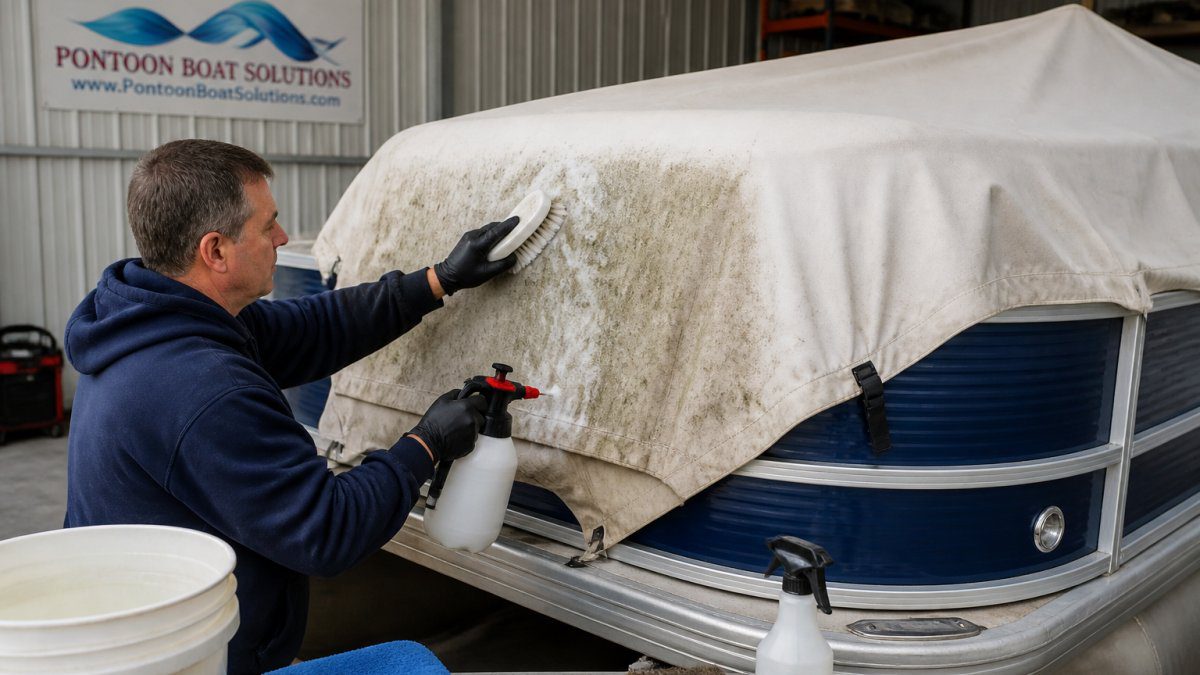
The safe way to clean mold off pontoon covers is a three-step process: brush off loose spores, scrub gently with mild soap, then rinse and dry completely. This approach protects the fabric and its coatings while removing the mold.

Step 1: Brush Off Loose Spores and Debris
Start dry. Use a soft-bristled brush to sweep loose spores, dirt, and leaves off the cover. Do this outdoors so spores do not spread into a garage or storage space. Work top to bottom and pay attention to seams and corners where debris collects.
Step 2: Apply a Mild Soap Solution and Scrub Gently
Mix a few drops of dishwashing liquid into a bucket of warm water. Apply it with a soft sponge or plastic-bristled brush. Scrub in small circles on the mold stains. Do not grind hard on one spot, because you can wear through the coating.
- Work in sections so the soap does not dry on the fabric
- Rinse your brush often to keep spores from spreading
- Clean the underside too, where mold often hides
Step 3: Rinse, Dry, and Reinstall the Cover
Rinse with clean water until no soap remains. Soap residue attracts dirt and can break down the coating over time. Let the cover air-dry fully in the sun before you put it back on the boat.
This is the step people rush. Reinstalling a damp cover traps moisture and starts the cycle again. Dry both sides, then reinstall on a sunny day.
Drying Both Sides, Seams, and Folds Before Reinstallation
Most recurring mildew starts with a cover that was reinstalled or stored while still damp in the places owners cannot see. A complete drying procedure looks like this:
- Drape, don’t bunch. Lay the cover over a clean railing, fence, or two sawhorses so air reaches both sides. A cover folded on itself keeps moisture in the middle.
- Open the seams and folds. Seams, hems, and the folds where the cover was creased in storage hold water longest. Flip the cover and let those areas face the sun.
- Check the underside. The side that faces the boat is where mold usually starts. If it still feels cool or damp to the touch, it is not dry.
- Dry the support poles and frame contact points. Moisture wicks from the cover onto poles and back again. Wipe them down before refitting.
- Reinstall only when fully dry. Refit the cover on a sunny, low-humidity day, and tension it so water runs off rather than pooling.
Watch out: a cover that feels dry on top can still be damp at the seams and underside. Reinstalling it can trap that moisture against the boat and restart the mold cycle.
Reinstalling Without Trapping Moisture
Before the cover goes back on, make sure the boat itself is dry, especially the seats and carpet that sit under the cover. Fit the cover tight and pitched so rain runs off, and check that no low spots will pool water. If your cover still sags, a support system that keeps it elevated and tensioned does more to prevent mold than any cleaner.
How to Clean Mold Off Pontoon Covers With Vinegar
Vinegar is a gentle option for light surface mold and lingering mildew odor. Mix equal parts white vinegar and water in a spray bottle. Spray the affected areas, let it sit for a few minutes, then scrub with a soft brush and rinse well.
Vinegar works well because it is mild and easy to find. It is not a miracle cure, though. On heavy mold or stains that have set in, vinegar alone may not lift the discoloration.
How to Clean Boat Canvas Mildew Stains That Won’t Lift
Some mildew stains stay visible even after cleaning, because the mold has dyed the fabric. When that happens, a specialized canvas cleaner or a diluted oxygen-based cleaner can help.
For stubborn stains, try this order:
- Re-clean with mild soap and a soft brush
- Apply a canvas-safe mildew remover per its instructions
- Let it dwell, then rinse thoroughly
- Air-dry in full sun, which helps fade stains naturally
If a stain still will not lift after two attempts, the fabric may be too far gone. Persistent stains often signal a coating that has failed, and no cleaner brings that back.
Bleach, Pressure Washing, and Other Mistakes That Ruin Covers
Two cleaning habits do the most damage to pontoon covers: bleach and high-pressure washing. Both can strip the protective coating that makes a cover water-repellent and UV-resistant.
Here is what to avoid:
- Full-strength or strong bleach mixes – weaken fabric and break down coatings
- High-pressure washing – forces water into seams and tears the weave
- Stiff wire brushes – scratch the surface and open small holes
If you do use a pressure washer, keep it on the lowest setting and hold the nozzle well back from the fabric. Even then, a garden hose and a soft brush are safer for most covers.
Restoring Water Repellency and Preventing Mold All Season
Cleaning strips some of the water-repellent finish, so restoring it afterward matters. A canvas-safe water-repellent treatment, applied to a fully dry cover, helps rain bead and roll off instead of soaking in.
Prevention comes down to airflow and drainage. A cover that sags and pools water will keep attracting mold, no matter how often you clean it.
You can follow a step-by-step guide to prevent mold under your pontoon cover, or add a rise extension kit to improve airflow and drainage if your cover still sags. For worn canvas support parts, we also offer a Gator Bite canvas solution pack to help keep the cover tight and dry.
A few habits keep mold away:
- Store the boat with the cover tight and pitched, never flat
- Let the cover dry fully before storage
- Clean off leaves and debris that trap moisture
For general guidance on marine fabric care, the American Boat & Yacht Council publishes standards for boat systems and materials. You can also review EPA guidance on mold cleanup for safe handling of mold in general, and Centers for Disease Control and Prevention mold resources for health precautions while cleaning.
Frequently Asked Questions
What takes mold off boat canvas without damaging the fabric?
A mild soap solution made with dishwashing liquid and warm water removes surface mold from most pontoon covers without harming the fabric. Scrub with a soft-bristled brush or sponge, then rinse thoroughly. For deeper mold stains, a diluted white vinegar solution works on canvas and vinyl, but test it on a hidden area first. Avoid bleach and high-pressure washing, which strip UV-resistant and water-repellent treatments from the cover material.
Can you use vinegar to clean mold off a pontoon cover?
Yes, white vinegar is a safe option for cleaning mold off pontoon covers when diluted with water. Mix equal parts white vinegar and water in a spray bottle, apply to the affected areas, let it sit for 10 to 15 minutes, then scrub gently and rinse. Vinegar works well on canvas and vinyl surfaces, but it can affect some water-repellent treatments over time, so check your cover manufacturer’s care instructions first and reapply a fabric guard after cleaning.
What is the best cleaner for mold and mildew on a boat cover?
For routine cleaning, mild soap and warm water handle most mold and mildew on pontoon covers. For stubborn stains, a diluted vinegar solution or a marine-specific canvas cleaner works well. Look for products labeled safe for canvas and vinyl, and avoid bleach-based cleaners that damage protective coatings. Always test any boat cover cleaner on a small hidden area before applying it to the whole cover.
How can you prevent mold from growing on a pontoon cover?
Mold needs moisture and trapped air to grow, so the key is keeping the cover dry and ventilated. Remove standing water after rain, make sure the cover is fully air-dried before storage, and use a support system that keeps the canvas elevated so water runs off instead of pooling. A floor-supported dome system, such as the Arch-Makers from Pontoon Boat Solutions, keeps the cover elevated and secure.
Mold on a pontoon cover is a moisture problem first and a cleaning problem second. Clean it gently, dry it fully, and keep the cover pitched so water never pools. That is the difference between a cover that lasts seasons and one you replace every couple of years. Pontoon Boat Solutions builds a no-drill, floor-supported system with heavy-duty aluminum Arch-Makers that keeps your canvas elevated and secure. Get started with Pontoon Boat Solutions and protect your pontoon investment all season.
