
Last Updated: November 28, 2026
Quick Summary
The best way to store pontoon boat cushions is to clean and dry them fully, then keep them in a cool, dry, ventilated space, off concrete and out of direct sun. Trapped moisture causes most of the damage, so drying completely before storage matters most.
- Brush off loose dirt, wash with mild soap, then rinse all soap out.
- Dry cushions in shade or a breezy spot for a full day or more.
- Press the foam core and keep drying if the middle still feels damp.
- Store cushions on edge or flat, never folded or crushed, with gaps for airflow.
- Use breathable covers, not plastic bags, which trap moisture.
Table of Contents
- How Do You Store Pontoon Boat Cushions Properly?
- Should You Remove Pontoon Seats From the Boat or Leave Them On?
- Step-by-Step Cleaning and Drying Before Storage
- How to Store Boat Seats for Winter
- How to Store Outdoor Cushions in a Garage
- How to Protect Boat Seats From Mice
- Preventing Mold and Mildew and Checking Cushions in Spring
- Frequently Asked Questions
How Do You Store Pontoon Boat Cushions Properly?
The best way to store pontoon boat cushions is to clean and dry them fully, then keep them somewhere cool, dry and ventilated, off concrete and out of direct sun. The steps below show how to protect pontoon seating through the off-season.
Most cushion damage comes from moisture that gets trapped inside the stored pile. Mold and mildew grow in damp, still air. Sun fades and cracks vinyl, and heat can warp foam.
- Clean every cushion before it goes away.
- Dry each piece completely, inside and out.
- Store them in a dry, ventilated space.
- Keep them off the floor and away from sunlight.
- Check them in spring for early signs of mold.

Should You Remove Pontoon Seats From the Boat or Leave Them On?
There is no single right answer for every pontoon, so treat this as a decision rather than a rule. The choice comes down to three things: how the cushions attach, where the boat sits for the off-season, and how much moisture the boat is exposed to. Work through the questions below in order.
1. How are the cushions attached? Pontoon seating usually falls into three designs, and each one changes the math.
- Snap-in or strap-down cushions lift off in seconds. Remove these. There is no upside to leaving removable cushions aboard, because the seat base underneath stays drier and easier to inspect when the cushion is gone.
- Hinged or friction-fit seat backs and bottoms that pull out of a track can usually be removed, but check for wiring first. Some pontoon seats hide speakers, USB ports, or courtesy lighting in the cushion or the base. If a wire runs into the cushion, do not yank it; disconnect at the plug or leave that piece in place.
- Fixed benches and built-in loungers with foam bonded to the frame cannot come off. For these, the job shifts to drying and ventilating the boat itself rather than removing the cushion.
2. Where does the boat sit? A boat kept in a heated shop or a dry garage can keep its cushions aboard with little risk. A boat stored outside, under a tarp, or in a humid climate should have every removable cushion taken off. The reason is condensation: temperature swings between day and night pull moisture out of the air and deposit it on cool surfaces, including vinyl and foam.
3. What is under the seat? Under-seat compartments are tempting storage spots because they are already there, but they are often the worst place for cushions. Most pontoon seat bases are sealed on the bottom and open to the deck, so moisture wicks up from the floor and has nowhere to go.
When leaving cushions aboard makes sense: the boat is inside a building, the cushions are dry before the cover goes on, and the cover is breathable and supported so it does not press down on the seats. In that case, prop the seat cushions up on edge or flip them so air reaches the bottom, and leave the seat bases open.
When removal is the clear call: the boat stays outside, the storage space floods or stays damp, the cushions are removable without tools, or the boat will be shrink-wrapped. Shrink wrap is the strongest argument for removal, because it seals the boat tightly and traps whatever moisture is inside. If the boat must be wrapped, remove the cushions and ventilate the hull before the wrap goes on.
Watch out: a cover that fits loosely enough to flap will let rain in at the seams, and a cover pulled tight enough to pool water will hold a puddle right over the seats. Either way, the cushions end up wet whether they are on the boat or not, so fix the cover before you decide.
Step-by-Step Cleaning and Drying Before Storage
Clean the cushions first, then dry them thoroughly. Storing even slightly damp cushions is the most common mistake owners make.
- Brush off loose dirt. Use a soft brush to remove dust, leaves and grit.
- Wash with mild soap. Mix a small amount of mild soap with warm water. Scrub gently and rinse well.
- Rinse all soap out. Leftover soap can attract dirt and hold moisture.
- Dry in shade or a breezy spot. Direct sun can fade and crack vinyl, so dry cushions out of direct light.
- Check the middle. Press the foam core. If it feels damp, keep drying before you store it.
Give cushions a full day or more in good airflow before packing them away.
Cleaning and drying are the two steps that matter most before storage, so the article lays them out in order:
| Step | What to do | Time or frequency |
|---|---|---|
| Brush off loose dirt | Use a soft brush to remove dust, leaves and grit | Before washing |
| Wash with mild soap | Mix mild soap with warm water, scrub gently and rinse well | During cleaning |
| Rinse all soap out | Remove leftover soap, which attracts dirt and holds moisture | Before drying |
| Dry in shade or a breezy spot | Keep cushions out of direct sun to avoid fading and cracking | Full day or more |
| Check the middle | Press the foam core; if damp, keep drying | Before storing |
How to Store Boat Seats for Winter
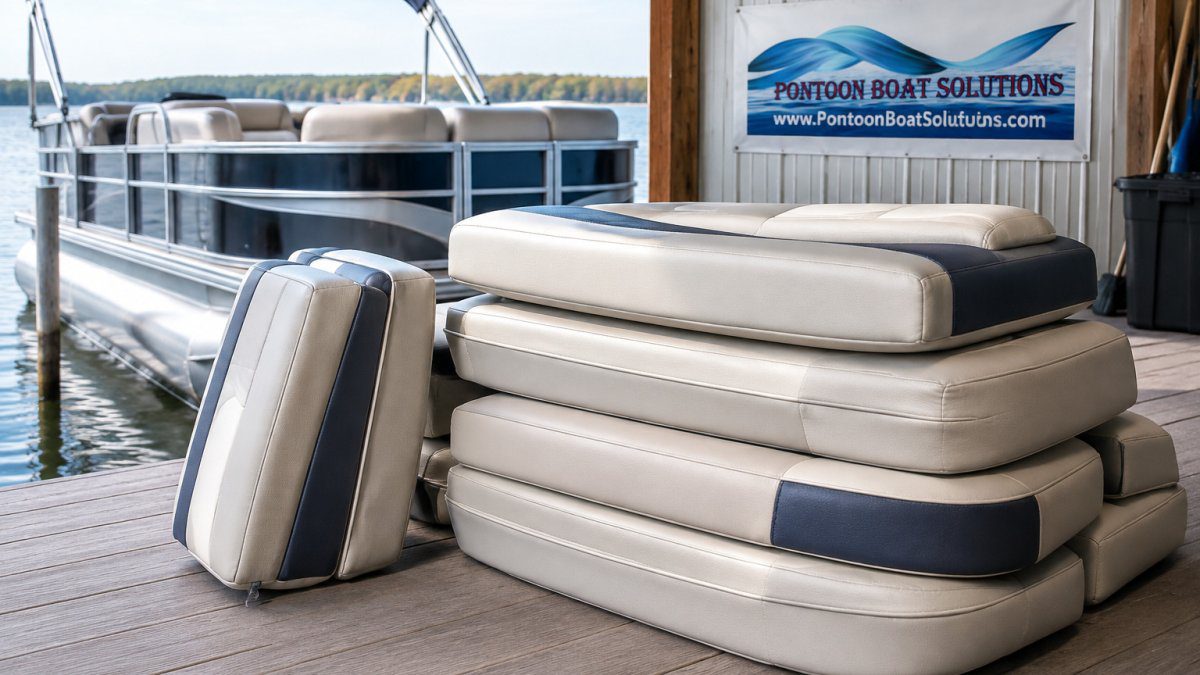
Store cushions flat or on edge, never folded or crushed, in a cool, dry space. Keep them away from concrete floors, which can hold moisture, and away from heat sources.
- Stand cushions on edge on a shelf or rack, or lay them flat on a raised platform.
- Leave a small gap between pieces so air can move.
- Use breathable covers, not plastic bags, which trap moisture.
- Place a moisture absorber in the storage area if humidity runs high.
Keeping cushions off the floor and checking the storage area during the season helps catch moisture problems early.
How to Store Outdoor Cushions in a Garage
A garage works well for pontoon cushions if it stays dry and ventilated. Avoid garages that flood, sit near a heater, or stay closed up for months with no airflow.
Raise the cushions off the floor on shelves or wood pallets. Keep them out of direct sun through windows. A small fan or a cracked vent helps air move.
Avoid stacking cushions tightly against each other. Tight stacks hold moisture between layers and can leave permanent creases.
How to Protect Boat Seats From Mice
Mice can ruin stored cushions, and the damage often goes unnoticed until the owner checks. Foam makes a warm, dry nest, vinyl gives them an easy edge to chew, and a quiet garage or shed gives them cover. Keeping mice out of the storage area protects more than cushions, so apply the same care when you store marine electronics for winter.
Start with the storage space, not the cushions. Walk the perimeter of the garage, shed, or barn and look for gaps the width of a pencil. Mice can pass through a hole about a quarter inch wide, so seal anything larger with steel wool packed into the gap and expanding foam or caulk over it (the CDC).
Get the cushions off the floor and away from walls. Mice travel along walls and baseboards, so a cushion pushed against a wall is on their route. Put cushions on a shelf or rack at least a foot off the floor and several inches out from the wall.
Choose the container carefully. This is where pest advice and moisture advice pull against each other. A sealed plastic bin keeps mice out, but it also traps any moisture still in the foam, which invites mold. The workable compromise is a sealed bin only for cushions that are bone dry, with a moisture absorber packet inside and the lid checked every few weeks.
Remove the food and nesting material. Mice are drawn to the storage area for reasons other than the cushions. Sweep up grass seed, birdseed, pet food, and paper scraps. Store birdseed and pet food in metal or heavy plastic containers with lids. A clean floor removes the reason mice show up in the first place.
Use traps, not bait, around stored cushions. Bait stations can draw rodents toward the storage area and, if a mouse dies in a cushion, the smell and contamination are hard to fix. Snap traps set along the walls, with the trigger side against the baseboard, are the standard approach.
Inspect before and after storage. Before the cushions go away, look for existing chew marks, droppings, or nesting material, and clean the cushions if you find any. Mouse urine and droppings carry disease, so wear gloves and a mask, and clean any contaminated surface with a disinfectant rather than just soap (the CDC).
Watch out: a cushion that smells like mouse urine but shows no visible damage still needs to be thrown out or professionally cleaned, because the foam holds the odor and the contamination even after the cover is washed.
Preventing Mold and Mildew and Checking Cushions in Spring
Mold and mildew are the main threats to stored cushions. They show up as dark spots or a musty smell, and they can stain vinyl and weaken fabric.
To prevent them, keep cushions dry before storage, keep the space ventilated, and check the stored cushions every few weeks. A dehumidifier or moisture absorbers help in damp climates.
In spring, unpack the cushions and inspect each one. Look for mold spots, cracks, tears and pest damage. Clean any mold with a mild soap solution and dry the cushion completely before reinstalling it. Cushions with deep mold or heavy foam damage may need replacing.
Protect your pontoon investment this winter with the right setup. Pontoon Boat Solutions offers a patent-pending, screw-free system with heavy-duty solid aluminum Arch-Makers that keep your canvas cover elevated without drilling into your boat. Shop all products to see what fits your boat.
Frequently Asked Questions
Can pontoon boat cushions stay on the boat over winter?
They can, but only if the boat is kept covered and the cushions are fully dry, clean and well ventilated. Cushions left on a boat in a damp or unventilated space are far more likely to develop mold and mildew, and they are easier targets for mice that nest in foam. If you leave them on, lift them slightly off the deck, keep the canvas cover loose enough for airflow, and check for moisture several times over the winter. Many owners find that removing and storing cushions indoors is the safer choice.
How do you keep mice from damaging boat seats?
Store cushions off the floor in sealed plastic bins or hard-sided containers rather than in cardboard or loose piles, since mice chew through foam and fabric to build nests. Place a few dryer sheets or cedar blocks in storage containers and set traps or bait stations in the garage or shed. Keep the area clear of food and clutter, and inspect cushions in spring for droppings, shredded foam or chew marks before reinstalling them.
How can I store outdoor cushions in my garage?
Choose a dry spot away from the garage door, where condensation and temperature swings are less severe. Make sure each cushion is clean and fully dry before it goes in, then store it upright or flat in a breathable bin or on a shelf rather than sealing it in plastic while any moisture remains. Good airflow and a stable, dry environment do more to prevent mold than any cover alone.
