
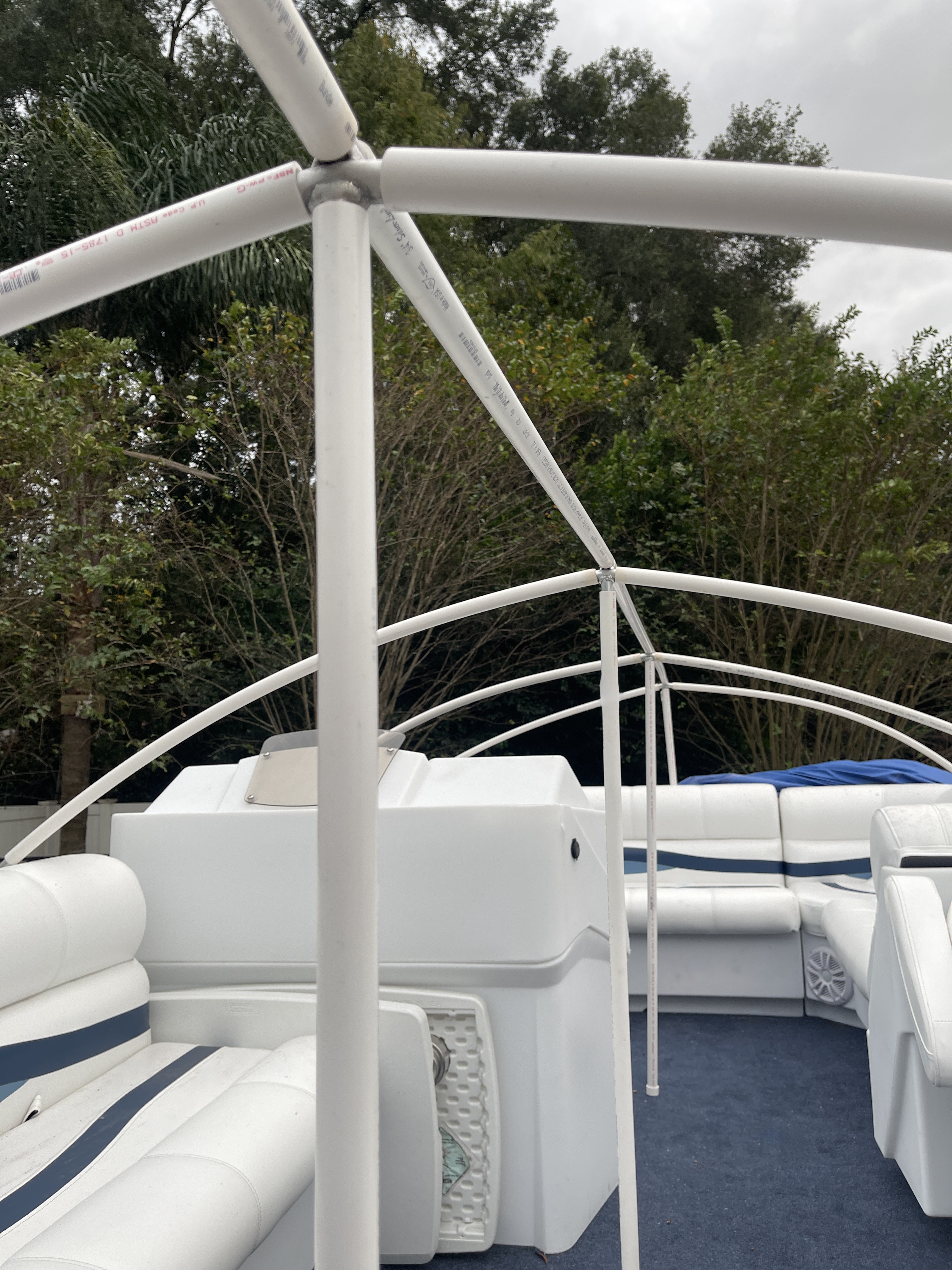
Rain pooling on a pontoon cover is one of the fastest ways to ruin your canvas, stretch your fabric, and shorten the life of your boat’s protection system. If you’ve walked out after a storm and seen gallons of water sagging in the middle of your cover, you’re not alone.
The good news: it’s completely preventable.
This guide explains why rain pooling happens, what damage it causes, and the best way to permanently stop it.
Why Does Water Pool on Pontoon Covers?
Most pontoon covers are relatively flat across the center. Without proper support underneath, rainwater collects in low spots instead of running off the sides.
Over time, this leads to:
• Canvas stretching
• Mold and mildew growth
• Bent support poles
• Frame stress
• Premature cover replacement
Even high-quality covers will fail if water is allowed to sit repeatedly.
Why Rain Pooling Is More Expensive Than You Think
Many boat owners underestimate the cost of ignoring the problem.
Replacing a pontoon cover can cost $1,500–$3,000 depending on material and size. Add labor, downtime, and potential interior damage, and the number climbs quickly.
Water pooling can also:
• Damage upholstery
• Promote wood rot in decking
• Create long-term moisture issues
• Attract mildew odors
Prevention is dramatically cheaper than replacement.
The Best Way to Stop Rain Pooling on a Pontoon Cover
The most effective solution is installing a properly engineered pontoon cover support system.
A support system works by:
- Elevating the center of the cover
- Creating a peak or slope
- Allowing rain to run off naturally
- Eliminating low spots
When installed correctly, water no longer collects — it drains.
Do Standard Support Poles Work?
Basic adjustable poles can help temporarily, but they often:
• Shift during storms
• Create pressure points
• Bend under heavy rainfall
• Require constant readjustment
For consistent protection, a structured, engineered support system performs significantly better than single-point poles.
What to Look for in a Pontoon Cover Support System
Not all support solutions are equal. Look for:
• Marine-grade materials
• Stable multi-point support
• Easy DIY installation
• No permanent boat modification
• Compatibility with pontoon geometry
A properly designed system distributes weight evenly and maintains tension across the entire cover surface.
How to Install a Pontoon Cover Support System
Installation typically involves:
Step 1: Positioning the support frame beneath the canvas
Step 2: Securing supports according to boat width
Step 3: Adjusting height for proper runoff slope
Step 4: Checking tension across the cover
Most systems install in minutes and require minimal tools.
Can You Prevent Pooling Without a Support System?
Some owners try:
• Tightening straps
• Adding extra poles
• Using tarps
• Pumping water off manually
These methods may reduce pooling temporarily but rarely solve the root problem. The core issue is lack of structural support beneath the cover.
How Long Does a Pontoon Cover Last With Proper Support?
With consistent elevation and runoff management, covers can last significantly longer — often several seasons beyond unsupported covers.
Reducing stress and stretch is the key to longevity.
When Should You Install a Support System?
Install before:
• Storm season
• Long-term storage
• Winter layup
• Extended marina docking
The sooner you prevent pooling, the less cumulative damage occurs.
Protect Your Pontoon Before the Next Storm
Rain doesn’t wait — and neither should your protection plan.
A properly engineered pontoon cover support system eliminates sagging, prevents water damage, and protects your investment for the long haul.
If you’re tired of walking out after a storm to find gallons of water on your cover, it’s time to install a permanent solution.
Explore pontoon cover support kits designed specifically for real-world marine conditions and DIY installation.