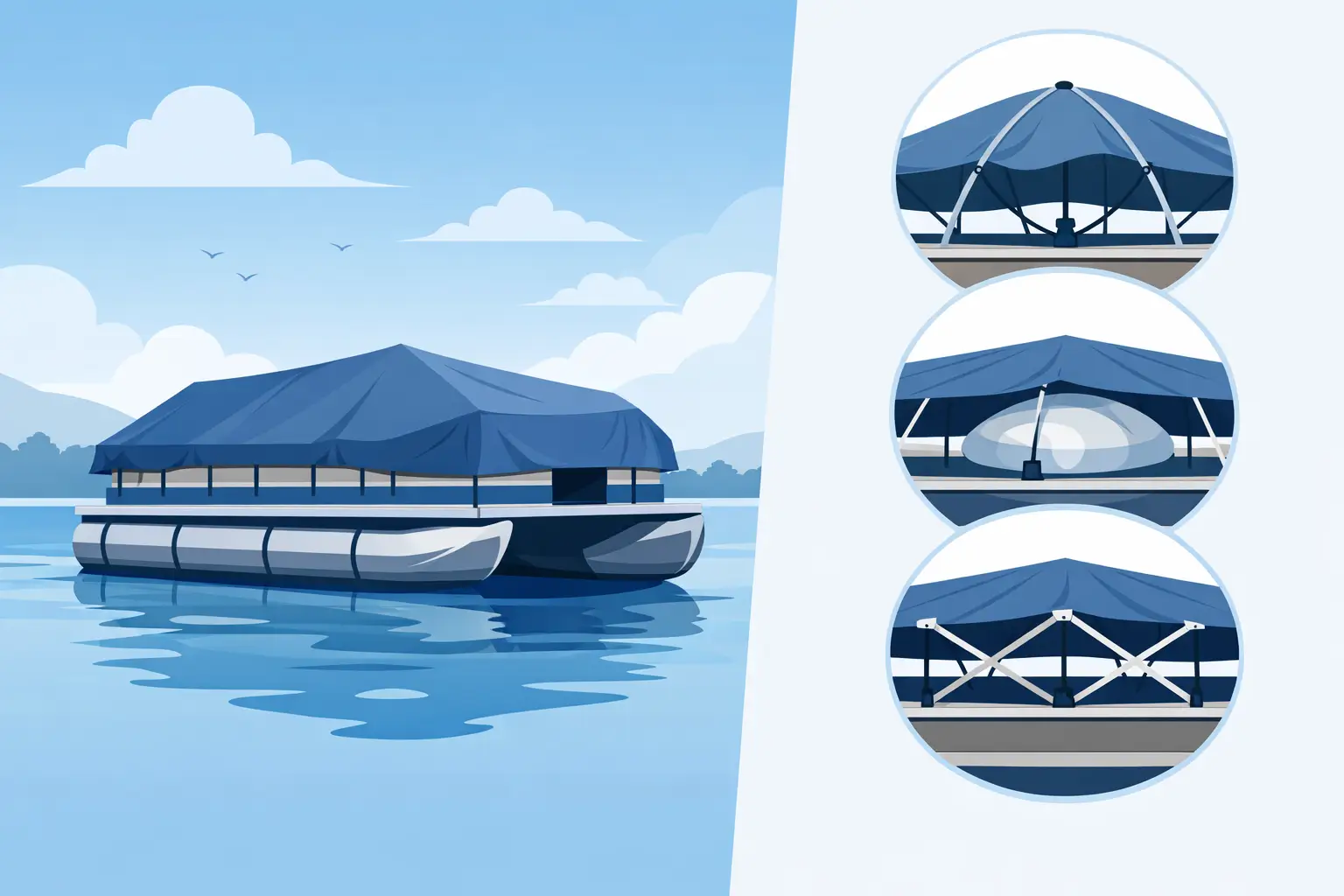
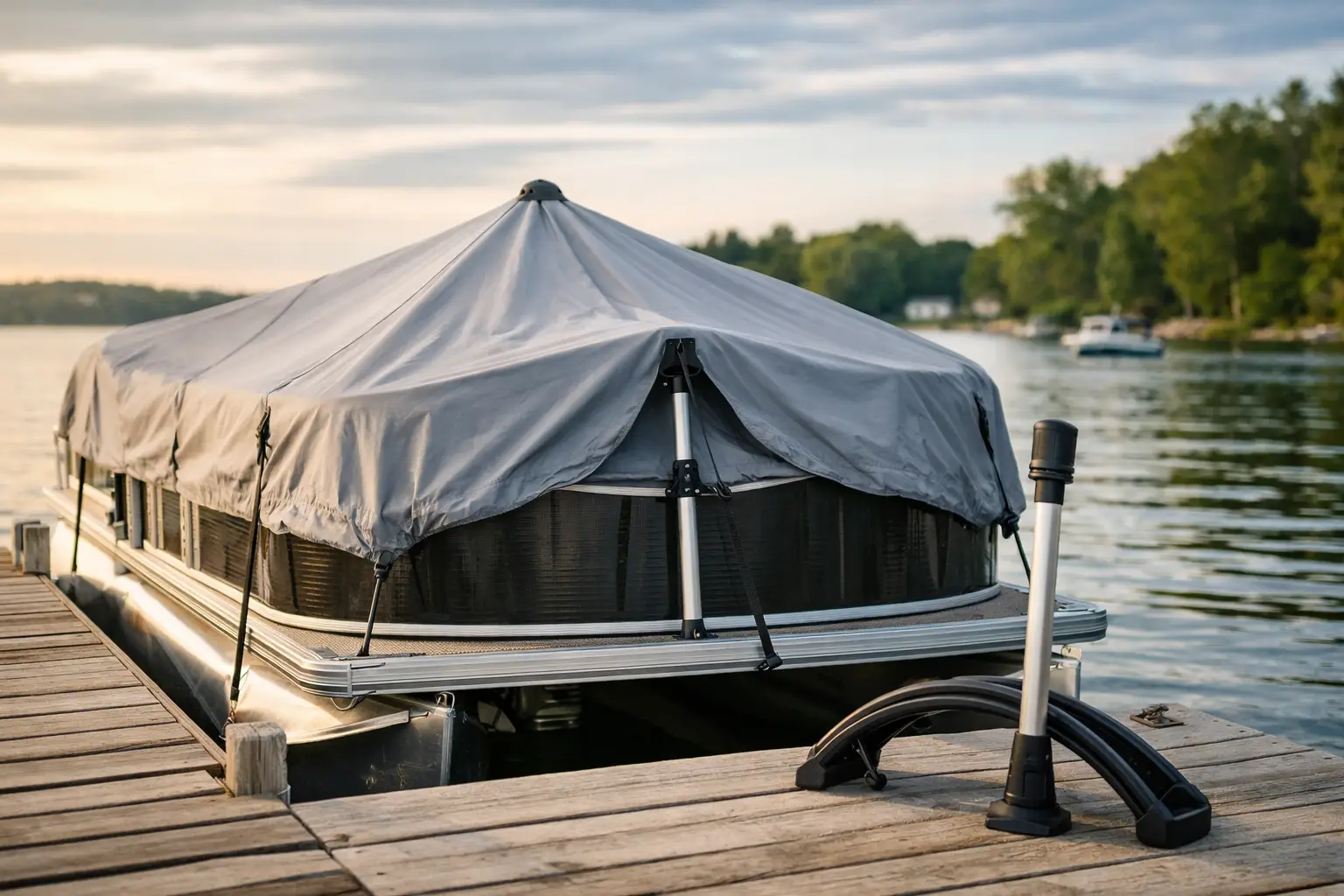
Posted on — Leave a comment

Pontoon Boat TV Mount: What to Look For

Pontoon Boat TV Mount: What to Look For

A cheap bracket looks fine in the garage. Then the boat hits a little chop, somebody grabs the rail to board, and suddenly that screen is shaking like it was mounted to a lawn chair. That is the difference between a generic bracket and a pontoon boat TV mount designed for how pontoons are actually built and used.

If you want a TV on your pontoon, the goal is not just hanging a screen somewhere convenient. The real goal is adding entertainment without creating a new problem – rattling hardware, drilled holes, blocked walkways, or a mount that was never meant for pontoon rail geometry. A good setup should feel secure, stay out of the way, and protect your investment while keeping installation simple.

Why a pontoon boat TV mount is different

A pontoon is not laid out like a fishing skiff or a runabout. The rails sit higher, the furniture layout is different, and open social space matters more. That changes where and how a TV should be mounted.

Most generic marine brackets are adapted from other uses. They may clamp awkwardly, need extra hardware, or force you into a location that looks acceptable on paper but feels wrong once you are actually on the water. On a pontoon, every accessory has to work with the rail system, passenger movement, cover fit, and the way people use the boat for cruising, anchoring, sports, or dockside entertaining.

That is why fit matters so much. A purpose-built pontoon boat TV mount is designed around rail dimensions and common pontoon layouts, not forced into place with improvised parts. That usually means a cleaner install, less stress on the boat, and a finished look that belongs there.

What to look for in a pontoon boat TV mount

Strength comes first. A mount that feels solid at the dock can still flex too much once the boat is moving. You want a bracket that can handle vibration, quick turns, wakes, and repeated use without loosening up over time. Heavy-duty construction matters here, especially when the screen is mounted in a spot where people may brush past it.

Material choice matters just as much. Marine environments are hard on hardware, even if your pontoon spends most of its life on a freshwater lake. Aluminum components and corrosion-resistant parts tend to hold up better than bargain hardware that starts showing rust, staining, or seized joints after one season.

The next issue is mounting style. Rail-mounted systems make the most sense for many pontoon owners because they avoid permanent modification. If you can install a TV mount without screws, nuts, bolts, glue, or drilling, you eliminate a lot of hassle and reduce the chance of damaging rails or creating weak points. That is especially appealing if you want a cleaner DIY install or if you may reposition accessories later.

Adjustability is worth paying attention to too. A fixed TV can work if you always use the boat the same way and always sit in the same zone. But many owners want the flexibility to angle the screen for a seating area, tuck it in tighter when not in use, or choose a location that works for both cruising and dockside relaxation. The right amount of movement helps, but too many joints can also introduce wobble. That is one of those areas where more is not always better.

Placement matters more than most owners expect

The biggest mistake with a pontoon boat TV mount is treating the TV like wall decor. On a boat, placement affects safety, traffic flow, visibility, and even your day-to-day enjoyment.

A screen mounted too low can get bumped by knees, bags, coolers, or boarding passengers. Mounted too high, it becomes hard to see and more exposed to shaking. Put it near a common walkway and it may quickly become an annoyance. Put it where it interferes with furniture access or gate operation and you will notice that every single outing.

For most pontoons, the best location is one that serves the main seating area without blocking movement around the deck. That often means using the rail structure to your advantage instead of forcing a mount onto furniture or an improvised panel. A well-placed rail-mounted TV feels integrated. A poorly placed one feels like an afterthought from the first weekend.

You also need to think about storage and cover use. Some setups look great until it is time to put the cover on. If the mount sticks out too far or forces awkward clearance around the canvas, it creates extra work every time you protect the boat. Owners who have already dealt with cover sag, pooling water, and weather exposure usually do not want one more thing complicating off-water protection.

Drilling versus no-drill installation

This is where a lot of pontoon owners separate the right product from the wrong one.

Drilling into a boat may not sound like a big deal when you are staring at a shiny new bracket on a workbench. But once holes are made, they are made. If the location turns out to be wrong, if the hardware loosens, or if you sell the boat later, those permanent modifications can become a headache. They can also take away from the clean, purpose-built look many owners want.

A no-drill rail solution is usually the smarter move when it is designed specifically for pontoon geometry. It protects the structure, keeps installation DIY-friendly, and gives owners more confidence that they are adding function without compromising the boat. That is exactly why pontoon-specific accessory systems have gained so much traction – they solve real-world problems without asking owners to cut, patch, and guess their way through installation.

The trade-off between screen size and stability

Everybody likes the idea of a big screen. On the water, bigger is not always better.

A larger TV adds weight and leverage. That extra force gets transferred into the mount, the rail, and the attachment points every time the boat moves. If the mount is undersized or the rail connection is not truly secure, screen size can turn from a selling point into the source of the problem.

That does not mean you need a tiny TV. It means the screen and mount need to match. A compact to mid-size screen paired with a heavy-duty pontoon boat TV mount is often the better long-term solution than trying to push a larger TV onto a bracket that is barely up to the task. Stability usually beats bragging rights once you are actually using the boat.

Who benefits most from a TV on a pontoon

This upgrade makes a lot of sense for owners who entertain at the dock, spend full days on the lake, or use their pontoon as a social platform for family weekends, ball games, races, and evening cruising. It can also be a great fit for lakefront homeowners who want their boat set up like an extension of their outdoor living space.

If you mostly fish solo at sunrise and keep the boat stripped down, a TV mount may not be high on your list. But for owners who use their pontoon as a place to relax, host, and unwind, it can be one of those additions that gets used more than expected – if it is installed right.

How to know you are buying the right solution

The best products usually make the decision easier because they are clearly built with pontoon use in mind. Look for heavy-duty construction, clean rail integration, simple installation, and a design that respects how pontoons are laid out. If the product looks like it belongs on a pontoon, installs without turning your project into a weekend of trial and error, and gives you confidence that the TV will stay secure underway, you are in the right category.

That is the difference with a specialized brand like Pontoon Boat Solutions. The focus is not on adapting generic boating hardware and hoping for the best. It is on products designed specifically for pontoon geometry, with practical installation and real owner use in mind.

A TV mount should make your boat more enjoyable, not more complicated. Choose one that protects the rail, holds steady, fits the layout, and installs without drama. When an accessory is designed for the platform instead of forced onto it, you notice the difference every time you leave the dock.

The smartest pontoon upgrades are the ones that solve a problem cleanly and keep the boat easy to use, and that is exactly the standard your TV mount should meet.

Posted on — Leave a comment

10 Pontoon Fishing Accessories That Matter

10 Pontoon Fishing Accessories That Matter

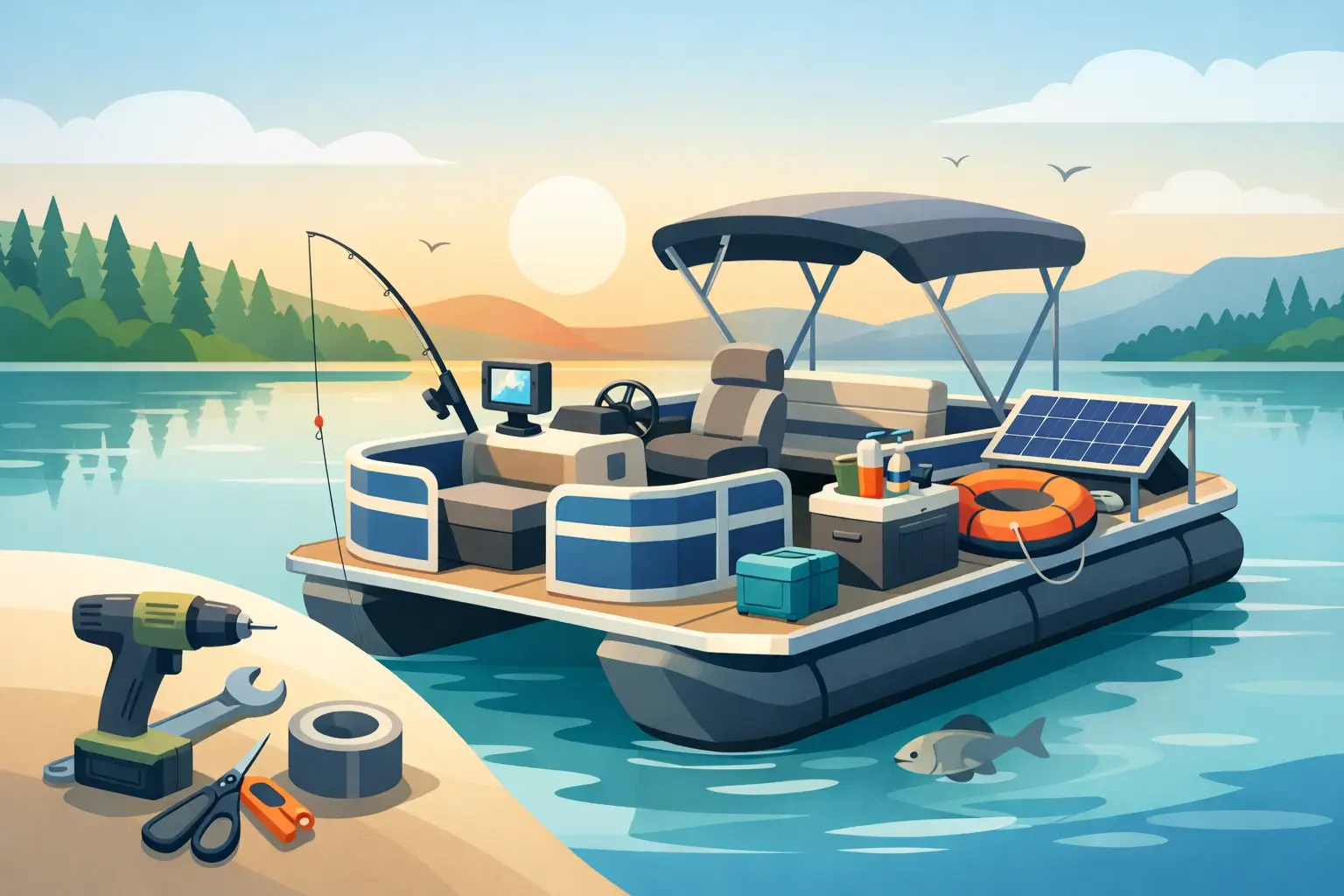
A pontoon set up for fishing can be one of the most comfortable rigs on the water – until loose gear starts sliding, rods have nowhere secure to rest, and every useful add-on seems built for a different kind of boat. That is exactly why the right pontoon fishing accessories matter. They do more than add convenience. They solve fit problems, protect your investment, and make your time on the water simpler from the first cast to cleanup at the dock.

Generic marine accessories often force pontoon owners into compromises. You end up drilling into rails, adapting hardware that never feels solid, or giving up deck space to gear that does not belong there. A better approach is choosing accessories designed specifically for pontoon geometry, especially rail-mounted systems that install cleanly and work with the way pontoon boats are actually used.

Why pontoon fishing accessories should be pontoon-specific

Fishing from a pontoon is different from fishing from a bass boat, center console, or jon boat. You have more seating, more room to move, and a different rail layout. That creates real advantages for comfort and family use, but it also changes what works when it comes to rigging.

A pontoon-specific accessory does two things better than a generic one. First, it fits where it should without awkward brackets or permanent modifications. Second, it respects the boat’s layout, so you can keep the deck open, protect furniture, and avoid turning a comfortable cruiser into a cluttered platform.

That matters most for owners who fish one day and cruise with family the next. If your setup is hard to remove, hard to store, or leaves behind drilled holes, it stops feeling like an upgrade. The best pontoon accessories earn their place by being easy to install, easy to use, and easy to live with.

The pontoon fishing accessories worth prioritizing

Not every accessory deserves deck space. Some are nice to have. Others quickly become part of every trip. If you want immediate improvement, start with the accessories that improve rod control, storage, comfort, and deck organization.

Rod holders that mount where you need them

A proper rod holder is one of the first upgrades most owners should make. On a pontoon, placement matters as much as strength. You want holders positioned for trolling, still fishing, or keeping extra rods secure while the boat is underway. Rail-mounted designs are usually the smarter choice because they keep your setup flexible and avoid unnecessary drilling.

The trade-off is simple. Fixed holders can feel permanent and strong, but adjustable rail-mounted holders usually give you better versatility. For many pontoon owners, that flexibility wins. You can change angles, move locations, and adapt the boat for different styles of fishing without committing to one layout forever.

Tackle and gear storage that keeps the deck clear

Pontoon decks feel spacious until tackle trays, bait buckets, pliers, and extra line start collecting near the seats. Good storage is not about adding more containers. It is about creating dedicated places for the gear you actually use.

Rail-mounted storage solutions, compact caddies, and under-seat organization help keep the deck safer and easier to clean. They also reduce wear on upholstery by keeping hooks, weights, and wet equipment off your furniture. If you fish with kids or guests, organized storage becomes even more valuable because it cuts down on clutter and confusion fast.

Fish finder and electronics mounts

Electronics can absolutely improve your results, but only if the screen is visible and the mount is stable. On a pontoon, finding a clean mounting location can be tricky. You need a setup that works with the helm layout without blocking movement or requiring a homemade bracket that shakes every time the boat crosses wake.

This is another place where purpose-built mounting systems make a difference. A clean installation protects the electronics and gives the driver a better view. If you mainly fish smaller lakes, you may not need an elaborate electronics package. But even a modest unit becomes more useful when mounted correctly and positioned for quick reading.

Livewell and cooler solutions

Many pontoon owners use a cooler as a simple fish-and-drink solution, but that approach only works up to a point. If you keep fish regularly, dedicated livewell or fish storage options can make the day cleaner and more practical. If you mostly catch and release, a cooler solution may be enough, especially if it doubles as extra seating or beverage storage when the fishing is done.

The key is choosing something secure. Coolers that slide around the deck become a nuisance quickly. Mounted or properly restrained solutions keep weight where it belongs and help maintain an organized layout.

Comfort matters more on a fishing pontoon than most owners expect

One reason people love fishing from a pontoon is that it is simply easier on the body. You have room to sit, room to stand, and a more relaxed layout than many dedicated fishing boats. The right accessories should build on that advantage, not work against it.

Fishing chairs, pedestal seats, footrests, and stable table options can all improve the experience, depending on how you fish. If you spend long mornings anchored over brush piles, seating comfort becomes a real performance factor. If you troll or move often, open deck space may matter more than adding another seat.

This is where some owners overdo it. More accessories do not automatically create a better fishing boat. Too many add-ons can eat up casting room and create obstacles. The smarter move is choosing a few well-placed upgrades that support the way you fish most often.

Rail-mounted solutions usually win

For pontoon owners, rail-mounted accessories solve a long list of frustrations at once. They are typically easier to install, easier to reposition, and far less invasive than hardware that requires drilling into your boat. That matters when you want the freedom to upgrade your setup without damaging rails, panels, or furniture.

It also matters for resale and long-term ownership. Every hole you drill is permanent. Every poorly fitted accessory creates a chance for rattling, shifting, corrosion, or cosmetic damage. Rail-mounted systems designed for pontoon dimensions avoid those issues and keep the boat cleaner-looking at the same time.

Pontoon Boat Solutions has built its reputation around this exact idea – purpose-built products that fit pontoon geometry, install without the usual hassle, and give owners a stronger, cleaner solution than generic marine hardware.

How to choose pontoon fishing accessories without wasting money

The smartest buying decision starts with an honest look at how you actually use your boat. Some owners fish every weekend and need a dedicated setup with rod holders, electronics mounts, gear storage, and fish handling solutions. Others want a hybrid pontoon that can fish in the morning and host family in the afternoon.

If you fall into that second group, prioritize accessories that can stay out of the way or serve more than one purpose. Adjustable rod holders, removable mounts, compact storage, and secure cooler systems usually give you the most value. If your pontoon is primarily a fishing platform, then a more built-out layout makes sense, but even then, clean installation and deck flow should stay top priorities.

Material quality is another place where cheap accessories often disappoint. Marine conditions expose everything to sun, spray, vibration, and repeated handling. Heavy-duty aluminum components and solid mounting hardware tend to hold up better than lighter plastic setups, especially on boats used frequently through the season.

Don’t forget protection when building your fishing setup

Fishing accessories help on the water, but smart owners think about what happens when the boat is docked, stored, or sitting through weather. Rod holders and storage upgrades are useful, but protecting the entire boat from water pooling, debris, and cover sag is part of protecting your fishing investment too.

That matters because every accessory on board sits inside a larger ownership picture. Your furniture, flooring, electronics, and rigging all last longer when your cover stays tight and supported. For pontoon owners, storage protection is not separate from fishing utility. It is part of keeping the whole setup ready for the next trip instead of cleaning up damage after the storm passes.

The best pontoon fishing accessories solve real problems

There is no shortage of boating gear marketed as essential. But the accessories that truly earn their keep on a pontoon are the ones that fix a specific frustration. Rods need a secure place to rest. Gear needs to stay organized. Electronics need stable mounting. Coolers need to stay put. And the boat itself needs protection when the day is over.

If an accessory makes your pontoon easier to fish from without adding hassle, it is probably worth your attention. If it requires workarounds, permanent modification, or constant adjustment, keep looking. The best setup feels like it belonged on the boat from day one – and that is usually the clearest sign you chose the right solution.

Posted on — Leave a comment

DIY Pontoon Boat Accessories That Pay Off

DIY Pontoon Boat Accessories That Pay Off

A sagging cover full of rainwater can turn a great weekend boat into an expensive headache fast. That is why smart diy pontoon boat accessories are less about decoration and more about protecting your investment, making setup easier, and fixing the little frustrations that generic marine gear never seems to solve.

Pontoon owners know the pattern. You buy a useful-looking accessory made for “most boats,” wrestle with it for an hour, and then realize it does not really match pontoon geometry. The rails are different. The deck layout is different. The way you board, fish, entertain, store gear, and cover the boat is different. A good DIY upgrade respects that from the start.

What makes DIY pontoon boat accessories worth it

The best upgrades do one of three jobs well. They protect expensive surfaces and furniture, they make the boat easier to use, or they solve a storage problem that keeps coming back. If an accessory does not do one of those things, it may not deserve space on deck.

That matters because every pontoon owner has limits. Weight matters. Rail space matters. Storage space matters. So does installation. A project that sounds cheap on paper is not really a bargain if it requires drilling into rails, invites corrosion, or takes half a Saturday to install and remove every season.

The sweet spot is simple: accessories that feel custom, install cleanly, and do not force permanent changes unless there is a real payoff.

Start with protection, not extras

Most owners think first about comfort items like tables, phone holders, or extra cupholders. Those can be useful, but the highest-value DIY move usually starts with protection. If your cover sags, water pools, leaves pile up, or snow load stretches fabric, your furniture and finishes are taking the hit.

That is why cover support is one of the smartest categories in diy pontoon boat accessories. A proper support system creates a dome effect so water sheds off instead of collecting in the middle. It also reduces debris buildup and helps preserve the cover itself. This is one of those upgrades where a cheap workaround can cost more later. Buckets, loose poles, and improvised supports may work for a while, but they shift, tip, and often fail when weather gets serious.

A purpose-built support system designed specifically for pontoon rails solves that problem better because it matches the platform instead of fighting it. For owners who want a DIY-friendly install without drilling, that kind of rail-mounted design is hard to beat.

The best DIY upgrades solve everyday use problems

A pontoon is a social boat, a fishing boat, a family boat, and a storage puzzle all at once. That means the best accessories often come from noticing repeated annoyances.

Maybe the cooler is always in the way. Maybe the table setup is awkward. Maybe you need a better place for fishing rods that does not eat up seating space. Maybe you want a TV mount for dockside evenings but do not want to start modifying your rails with hardware from the home improvement aisle.

In those cases, the right DIY approach is not always building from scratch. Sometimes it means choosing modular, rail-based components that install easily and can be repositioned as your needs change. That is still very much a DIY mindset – practical, owner-controlled, and focused on function.

There is a trade-off, of course. Homemade accessories can save money if you already have the materials and the design is simple. But if the project has to hold weight, resist weather, or attach to rails cleanly, a purpose-built accessory usually delivers a better result and less frustration.

Where DIY works best and where it usually doesn’t

Some pontoon upgrades are ideal for hands-on owners. Storage bins, gear organizers, removable lighting ideas, and small comfort additions can be excellent DIY projects if they do not interfere with structure or safety. A custom tackle station, a better trash solution, or a simple organizer for life jackets and tow ropes can make a big difference without much risk.

Other categories are less forgiving. Anything related to cover support, rail mounting, towing loads, or elevated equipment needs to be stable, corrosion-resistant, and designed for real marine use. This is where many DIY projects go sideways. Household materials may look fine in the garage but fail under UV exposure, rain, vibration, and repeated use.

That does not mean you should avoid all ambitious projects. It means you should be honest about what the accessory has to endure. If failure could damage your cover, furniture, rails, or passengers’ experience, it makes sense to use components built for the job.

Rail-mounted accessories are usually the smarter route

For pontoon owners, rail space is valuable real estate. It is also one of the biggest reasons generic accessories disappoint. A pontoon rail is not just a convenient place to clamp random hardware. It is part of how the boat functions, how it looks, and how people move around on board.

That is why rail-mounted pontoon accessories work best when they are designed specifically for pontoon geometry. A clean-fitting rail system can hold tables, rod holders, cupholders, TVs, and storage options without forcing you to drill holes or commit to a layout you may want to change later.

For many owners, that is the ideal DIY outcome. You still do the install yourself. You still improve the boat on your terms. But you are not guessing your way through fitment with off-the-shelf marine parts that were never meant for a pontoon.

Choose accessories based on how you actually use your boat

Not every pontoon needs the same upgrades. A family cruiser has different priorities than a fishing setup or a dockside entertainment boat.

If your main goal is preservation, start with cover support and weather protection. If you fish regularly, organize rods, tackle, and open deck space before adding comfort features. If your boat is all about relaxing at the dock, rail-mounted tables, cooler solutions, and entertainment options may give you the biggest return.

This is where many owners overspend. They buy accessories that look fun but do not solve the biggest pain point first. The better strategy is simple: protect the boat, improve the workflow, then add comfort upgrades.

A smarter standard for DIY pontoon boat accessories

The phrase diy pontoon boat accessories can mean two different things. It can mean building something yourself from raw materials, or it can mean choosing accessories you can install yourself without drilling, glue, or a complicated parts pile. For most owners, the second option is the one that pays off over time.

That is especially true if you want a cleaner look, easier seasonal removal, and less risk of damaging your rails or deck. Heavy-duty aluminum components, corrosion-resistant hardware, and no-drill installation are not just convenience features. They are what keep a quick upgrade from becoming a future repair.

Pontoon Boat Solutions built its reputation around that exact idea – purpose-built, pontoon-specific solutions that owners can install themselves without turning the project into a fabrication job. That approach makes sense because it respects both the value of the boat and the time of the owner.

Buy fewer accessories, but buy better ones

There is always a temptation to load up a pontoon with add-ons. But more accessories do not automatically mean a better boat. The right accessory should earn its place every time you use the boat or every time bad weather rolls through.

A smart cover support system earns its place. A rail-mounted table that actually fits and stays put earns its place. A fishing setup that keeps gear organized without cluttering the deck earns its place. Those are practical upgrades with a clear return.

If you are deciding what to tackle next, think less about novelty and more about stress reduction. Which upgrade saves you time at the dock? Which one protects expensive upholstery? Which one makes boarding, entertaining, or storing the boat easier every single week? That is where real value lives.

The best DIY project is not the one that looks clever in the garage. It is the one that still works after sun, storms, and a full season on the water, while making your pontoon easier to enjoy and easier to protect.

Posted on — Leave a comment

11 Smart Pontoon Boat Upgrade Ideas

11 Smart Pontoon Boat Upgrade Ideas

A pontoon usually tells on its owner fast. You can spot the boats that are easy to cover, easy to clean, and ready for a full day on the lake – and you can spot the ones fighting sagging canvas, cluttered decks, and accessories that never quite fit right. The best pontoon boat upgrade ideas solve those everyday frustrations without turning your boat into a weekend-long project.

That is the standard worth aiming for. A good upgrade should protect your investment, make setup and storage easier, and feel like it belongs on a pontoon in the first place. If it requires drilling into places you would rather leave untouched, or if it looks like it was adapted from some other boat category, it is probably not the right solution.

The best pontoon boat upgrade ideas start with protection

Most owners think about entertainment upgrades first, but protection should come before anything else. Your furniture, flooring, helm, and finishes take a beating from pooled water, debris, sun exposure, and long off-season storage. If your cover sags, you are not just looking at a cosmetic issue. You are inviting mildew, stained upholstery, stretched canvas, and extra cleanup every time you head back to the dock.

A purpose-built canvas support system is one of the smartest upgrades you can make because it solves a real pontoon-specific problem. Pontoons have wide open deck layouts, large cover spans, and rail geometry that generic support poles do not handle well. A support system designed specifically for pontoon geometry creates a dome under the cover, keeps water moving off instead of collecting, and helps reduce debris buildup before it turns into a mess. Just as important, the right system installs without screws, nuts, bolts, glue, or drilling, which matters if you want protection without permanent modification.

This is the kind of upgrade that pays you back quietly. You spend less time dealing with waterlogged covers and less money replacing weather-damaged materials.

Storage upgrades that actually reduce hassle

Clutter on a pontoon builds up one small item at a time. Tow ropes, life jackets, tackle, phone chargers, towels, tools, and drinkware all seem manageable until they start living on seats and underfoot. A smarter storage setup makes the boat feel bigger, safer, and easier to enjoy.

Cooler mounts and rail-based storage options are especially useful because they move gear into wasted space instead of stealing room from passengers. That is a major advantage on a pontoon where open seating is part of the experience. A secure cooler solution also helps in rougher water or during long cruises when you do not want heavy items sliding around the deck.

Tables are another underrated upgrade. Not every table adds value, though. The best ones are stable, sized for the way you use the boat, and easy to remove when you want the deck open again. If your pontoon is your floating patio, a table is not just a convenience. It is what makes lunch, cards, snacks, and sunset drinks feel organized instead of improvised.

Why rail-mounted upgrades make more sense on a pontoon

Pontoons give you one structural advantage that many other boats do not – useful rail space. That makes rail-mounted accessories one of the smartest ways to add function without chewing up deck space or drilling holes into expensive surfaces.

Rail-based designs also tend to be easier for DIY owners. If you can install an upgrade cleanly, remove it when needed, and avoid invasive hardware, you get more flexibility with less risk. That is especially appealing for owners who care about resale value or simply do not want to experiment on a boat they worked hard to buy.

Comfort upgrades that get used every trip

Some upgrades look impressive at the dock and barely matter once you are underway. Others become part of every outing. Comfort upgrades fall into that second category when you choose them with real use in mind.

Start with seating support and shade management. If your crew spends long afternoons on the water, small improvements in comfort go a long way. Rearranging how your space functions with better accessory placement, adding a practical table, or creating more accessible drink and snack storage can make the boat feel more welcoming without major renovation.

Entertainment is another area where it pays to think practically. A rail-mount TV option can be a fun addition for owners who entertain at the dock, spend time tied up in a cove, or use the boat as a social space at a lake home. But this only works if the mount is secure, built for marine use, and designed around pontoon rail systems. Otherwise, it becomes one more accessory that rattles, shifts, or gets in the way.

The trade-off here is simple. Every comfort upgrade should earn its footprint. If it takes up room but only gets used twice a season, skip it. If it improves every outing, it is worth serious consideration.

Pontoon boat upgrade ideas for fishing and watersports

A lot of pontoons are doing double duty now. One day they are family cruisers, the next they are fishing platforms or tow boats for watersports. That flexibility is part of what makes ownership worthwhile, but it also means your upgrades need to support more than one kind of day on the water.

For fishing, dedicated rod holders, smarter tackle organization, and stable accessory mounts can make a big difference. The goal is not to turn your pontoon into a bass boat. The goal is to make fishing more convenient without sacrificing the comfort that made you buy a pontoon in the first place.

For watersports, think in terms of efficiency and safety. Where do ropes go when they are not in use? Where does wet gear get staged? How quickly can you transition from cruising to towing and back again? Good accessory choices reduce deck clutter and speed up those transitions, which means more time enjoying the day and less time sorting out gear.

This is where pontoon-specific products stand apart from generic marine accessories. A product designed for pontoon rails, pontoon deck layouts, and pontoon traffic patterns simply works better in real conditions.

Choose upgrades that fit your ownership style

The smartest upgrade path depends on how you actually use your boat. If your pontoon spends weeks under cover between outings, protection and storage should come first. If you host family and friends every weekend, comfort and entertaining accessories may move to the top of the list. If your boat lives for fishing mornings and tubing afternoons, utility matters more than appearance.

That is why the best upgrade strategy is not buying the most accessories. It is solving your most expensive or most frequent problems first. Start where frustration shows up the most. Is it water pooling on the cover? Gear everywhere? No good place for food and drinks? Accessories that do not fit the rail system? Those are the right places to invest.

What to look for before you buy

Durability should be non-negotiable. Marine environments punish weak materials fast, especially in sun, rain, and changing temperatures. Heavy-duty construction and aluminum components usually make more sense than lightweight parts that save money upfront but fail under regular use.

Installation matters too. Many owners want a clean DIY install without drilling holes or gathering a pile of hardware. That is not just about convenience. It is about protecting the boat itself. The more a product respects the original build of your pontoon, the better chance it has of feeling like a true upgrade instead of a compromise.

Finally, look for accessories designed specifically for pontoon geometry. That phrase matters because pontoons are not shaped, used, or stored like every other boat. Precision fit is not a bonus. It is the whole reason an upgrade performs the way it should.

A well-upgraded pontoon feels easier to own. It covers better, stores better, entertains better, and asks less of you before and after each trip. If you focus on practical improvements that protect the boat and simplify the way you use it, you will get more than a nicer setup – you will get more good days on the water, with fewer headaches waiting at the dock.

Posted on — Leave a comment

Best Pontoon Boat Weather Protection Accessories

Best Pontoon Boat Weather Protection Accessories

A pontoon cover that looks fine from the driveway can be hiding a real problem underneath. One hard rain, a week of falling leaves, or a windy storage season can turn trapped moisture into stained vinyl, warped plywood, mildew, and a cleanup job nobody wants. That is exactly why pontoon boat weather protection accessories matter – not as extras, but as practical tools that protect your investment.

Pontoon owners deal with a different set of storage and protection challenges than many other boat owners. Wide decks, open layouts, rail systems, furniture-heavy interiors, and large cover spans create more places for water to collect and more surface area for weather to attack. Generic marine accessories often miss the mark because they were not designed specifically for pontoon geometry. When an accessory does not fit the platform, it usually creates more frustration than protection.

What pontoon boat weather protection accessories actually need to do

The goal is not simply to cover the boat. Real protection means keeping water moving off the cover instead of collecting in low spots, limiting debris buildup before it turns into stains and mold, reducing fabric stress, and shielding upholstery, flooring, electronics, and finishes from repeated exposure.

That sounds simple until you have lived through a full season with a sagging cover. Once water starts pooling, the cover stretches, low spots deepen, and the problem compounds. Add acorns, pine needles, or heavy wet leaves, and you are no longer dealing with ordinary storage. You are putting pressure on seams, straps, snaps, and anything below that pooled weight.

The best weather accessories solve the root problem. They support the cover properly, fit the boat without awkward workarounds, and go on without turning a simple job into a hardware project.

The most important accessory is a real cover support system

If there is one upgrade that changes everything, it is a purpose-built canvas support system. Not a temporary prop. Not a stack of random poles. Not a homemade fix that shifts the first time the wind picks up.

A proper support system creates a dome effect across the cover so water sheds off instead of sitting in the middle. That one improvement helps reduce standing water, slows down cover wear, minimizes debris accumulation, and keeps the interior better protected. It also makes seasonal storage easier because you are not constantly checking for sagging after every storm.

For pontoon owners, fit matters more than most people realize. A support design that works on another type of boat can be awkward on a pontoon because of the rail layout and deck shape. Products designed specifically for pontoon geometry have a major advantage here. They use the structure of the pontoon the way it was meant to be used rather than forcing owners to drill, bolt, glue, or improvise.

That is where a rail-mounted system stands out. Instead of relying on unstable center poles or invasive mounting methods, it can slide onto the rails, create strong support across the span, and hold the cover tighter where it needs help most. The result is less pooling, less stress, and less chance of weather damage sneaking up on you over a storage season.

Why generic weather accessories often disappoint

A lot of marine accessories are marketed as universal, but universal usually means compromise. On a pontoon, compromise shows up quickly.

A generic support pole may be too short, too tall, or badly positioned. A universal strap kit may rub where it should not. A one-size-fits-all cover aid might shift under tension or create pressure points that wear the canvas faster. These products can be cheap upfront, but they often cost more in hassle, replacement covers, and preventable interior damage.

Pontoon-specific accessories are worth more because they solve a pontoon-specific problem. They account for rail spacing, furniture arrangement, wider deck footprints, and the need for stable installation without permanent modification. For owners who care about preserving their boat, that difference is not minor.

Pontoon boat weather protection accessories worth prioritizing

Not every accessory carries the same value. Some are genuinely protective. Others are just nice to have. If your goal is to prevent weather damage and cut down on storage headaches, start with the accessories that handle water, debris, and cover stability first.

A cover support system belongs at the top of that list because it influences how well the entire cover performs. After that, high-quality tie-downs and tensioning components matter because a great cover setup can still fail if the fabric shifts or loosens in wind. Protective reinforcement for contact points can also help when there are sharp edges, corners, or repeated friction areas.

Moisture management matters too, but this is where it depends on how and where you store the boat. If your pontoon sits outside for long stretches, preventing pooling is the first priority. If it is stored in a humid environment, airflow and moisture control become more important. If your area deals with heavy leaf drop, debris shedding may be almost as critical as rain protection because organic buildup holds moisture against the canvas.

Choosing the right setup for your storage conditions

The right accessory package depends on your real-world use, not just the product label. A pontoon stored on a lift in a windy lakeside location needs a different level of protection than one kept under a roof and used every weekend.

If your biggest issue is heavy rain, focus on support structure first. You need enough shape and strength under the cover to keep water from settling. If snow is part of your off-season, support becomes even more important because snow load can turn a weak setup into a damaged one fast.

If wind is your main concern, secure attachment and a stable support design matter more than a quick fix. Wind finds every weak point. It will expose loose fabric, shift poorly placed poles, and wear out areas that move too much.

If your pontoon sits under trees, weather protection is really debris protection plus moisture control. Wet leaves and seed pods trap water, stain covers, and create extra cleanup. A tighter, better-supported cover helps more than most owners expect because debris slides off more easily when the cover holds its shape.

Installation should not feel like a remodel

One of the biggest reasons owners put off upgrading weather protection is simple – they do not want to drill into their boat, sort through a pile of hardware, or commit to an accessory that becomes another project.

That concern is fair. If an accessory takes too much time to install, many owners delay using it, especially during busy weekends or at the end of the season when weather is already turning. The best solutions are heavy-duty and easy to install. Those two qualities are not opposites. In fact, for most pontoon owners, they need to go together.

Accessories that mount cleanly to existing pontoon structures save time and preserve the boat. That means no unnecessary holes, no guesswork, and no adapting non-pontoon hardware to make something sort of work. A product designed around rail-based installation is usually a smarter choice because it respects the layout of the boat and the time of the owner.

Protecting more than just the cover

Owners sometimes think weather accessories are mainly about extending the life of the canvas. That is part of the value, but it is not the full picture.

When water pools and moisture stays trapped, the real damage happens below the cover. Vinyl seating can discolor. Flooring can hold dampness. Wood structures can weaken over time. Mildew odors can settle in. Metal hardware can show corrosion faster. What starts as a cover problem can become an interior restoration problem.

That is why a good protection setup pays for itself differently for every owner. For some, it means fewer cover replacements. For others, it means preserving expensive furniture and keeping the boat ready to use instead of spending the first warm weekend scrubbing and drying out the interior.

The best buying mindset for weather protection accessories

Buy for the problem you already know is coming. If your cover has pooled before, do not hope it somehow fixes itself next season. If your pontoon sits outside for months, assume weather will test every weak point. If you have already dealt with mildew, staining, or sagging canvas, that is your sign to upgrade the system, not just replace one worn part.

This is where owner-focused design makes a real difference. Purpose-built accessories are not about adding complexity. They are about removing recurring headaches with a better fit, stronger materials, and simpler installation. That is the kind of solution serious pontoon owners should expect.

Pontoon Boat Solutions has built its reputation around that exact idea – durable, pontoon-specific products that solve real storage and protection problems without forcing owners into invasive installs or generic compromises.

When you choose pontoon boat weather protection accessories, think beyond the accessory itself. Think about fewer cleanup days, less weather stress, and a boat that stays in better shape between outings. The right setup does more than cover your pontoon. It helps you keep it ready for the next good day on the water.

Posted on — Leave a comment

7 Pontoon Boat Storage Cover Ideas

7 Pontoon Boat Storage Cover Ideas

A pontoon cover usually fails long before the fabric wears out. It starts with one low spot, then a few hard rains, then a heavy pocket of water stretching the cover, staining furniture, and turning off-season storage into a cleanup job. That is why smart pontoon boat storage cover ideas matter – not as cosmetic upgrades, but as real protection for one of the most expensive pieces of equipment you own.

The best pontoon boat storage cover ideas start with shape

Most storage problems come down to one issue: the cover is not being supported in a way that matches pontoon geometry. A pontoon is wide, open, and furniture-heavy. Generic marine cover supports were not designed for those rail layouts, long spans, or flat deck profiles. They may work for a short stretch, but once wind, rain, and debris show up, weak support points become obvious fast.

The strongest idea is also the most practical one – create a dome shape that keeps the cover elevated across the boat instead of relying on one or two center poles. A true dome sheds water, helps leaves slide off, and reduces the sagging that leads to stretched seams and premature cover wear. More importantly, it keeps pressure off the upholstery and flooring underneath.

That shape matters even more if your pontoon sits outside for months at a time. Winter storage, storm season, and shoulder months with constant rain all expose the weak spots in a flat or poorly supported cover. If your current setup lets water collect anywhere, the cover is already under more strain than it should be.

1. Use a rail-mounted support system instead of center poles

For many pontoon owners, this is the upgrade that changes everything. Traditional center poles are common because they are cheap and easy to find, but they are rarely the best answer for a pontoon. They create isolated high points instead of full-span support, and they can shift, tip, or put pressure in the wrong places.

A rail-mounted canvas support system designed specifically for pontoon rails solves that problem at the source. By sliding onto the rails and building a stronger arched structure across the frame, it supports the cover where a pontoon actually needs it. That means less pooling, less sagging, and less chance of standing water working its way into the cover over time.

This is also the better choice for owners who do not want to drill holes, glue hardware in place, or piece together a workaround every season. A purpose-built rail system is cleaner, stronger, and easier to trust when the weather turns bad.

2. Build a full-length crown, not a single peak

One of the most overlooked pontoon boat storage cover ideas is how support is distributed from bow to stern. A single high point in the middle may lift part of the cover, but it still leaves long channels where water can settle. On a pontoon, those channels can become heavy fast.

A better approach is creating a crown that runs through the full covered area. Think of it as controlled tension across the whole boat instead of a tent pole in one spot. When the cover stays consistently elevated, rain has fewer places to gather and the fabric maintains a tighter, more stable fit.

If your storage setup includes a mooring cover that already fits well, this kind of support can make that cover perform much better in the off-season. If the cover itself is oversized or loose, support still helps, but it cannot fully fix bad fit. In that case, the support system and the cover need to work together.

3. Add more support where pontoon furniture creates valleys

Pontoons are not empty decks. Lounge backs, helm areas, changing stations, and seating layouts all create uneven spaces under the canvas. That is where covers tend to dip, rub, or lose tension. Generic supports do not account for those valleys very well.

A smarter storage idea is to support the cover according to the actual layout of your boat. Wider seating sections and open deck spans often need more structure than narrow pathways or smaller bow areas. This is one reason pontoon-specific systems outperform one-size-fits-all hardware. They are built around the way pontoons are actually configured, not around a generic small-boat profile.

For owners who store their boat outside year-round, this is not a small detail. Furniture replacement is expensive, and moisture trapped under a sagging cover can lead to mildew, discoloration, and avoidable wear.

4. Combine tight cover tension with strong support

Support and tension are not the same thing, but you need both. Even the best support frame cannot do its job if the cover is loose enough to flap in the wind or sag between contact points. On the other hand, pulling a cover drum-tight without proper support can stress the fabric and attachment points.

The right balance is a well-fitted storage cover sitting over a stable support structure that gives it shape. That combination helps the cover shed water and resist wind movement without overworking the seams. It also reduces the abrasive rubbing that happens when a loose cover shifts back and forth over rails and corners.

If your current cover is still in decent condition, improving the support underneath may be the most cost-effective upgrade you can make. If the fabric is already stretched or the seams are failing, replacing the cover and upgrading the support at the same time often makes more sense.

5. Think about snow load, not just rain pooling

Rain pooling is the problem most owners notice first, but snow can be even harder on a pontoon cover. Wet snow adds weight quickly, especially if it settles into low spots and starts compacting. That extra load can bend weak poles, collapse support points, and force the cover down onto seats and consoles.

If you live in a region with real winter weather, your cover setup needs to do more than push water off after a storm. It needs enough structure to maintain shape under repeated load. That is where heavy-duty materials and wider-span support become worth every penny.

This is also the point where bargain solutions usually fall short. Light poles and improvised straps may look fine on day one, but they are not built for months of weather exposure. A storage setup should reduce stress, not create another mid-winter maintenance problem.

6. Avoid solutions that require permanent modification

A lot of pontoon owners want better cover support but do not want to start drilling into rails or attaching awkward hardware all over the boat. That hesitation makes sense. Permanent modifications can create fit issues later, add corrosion points, or simply make a clean boat harder to maintain.

One of the better ideas is choosing support components that install securely without screws, nuts, bolts, or glue. That keeps the boat more original, speeds up installation, and makes seasonal setup less of a chore. For DIY-minded owners, that simplicity matters. You want protection you can count on, not a project that drags on all weekend.

At Pontoon Boat Solutions, that problem-solving approach is exactly the point – products designed specifically for pontoon geometry should fit the boat better and ask less from the owner.

7. Match your cover strategy to where and how you store

Not every pontoon needs the exact same storage setup. A boat stored indoors for short stretches has different needs than one sitting uncovered at a lakeside property through storms, pollen season, and freezing weather. The best pontoon boat storage cover ideas depend on your storage reality.

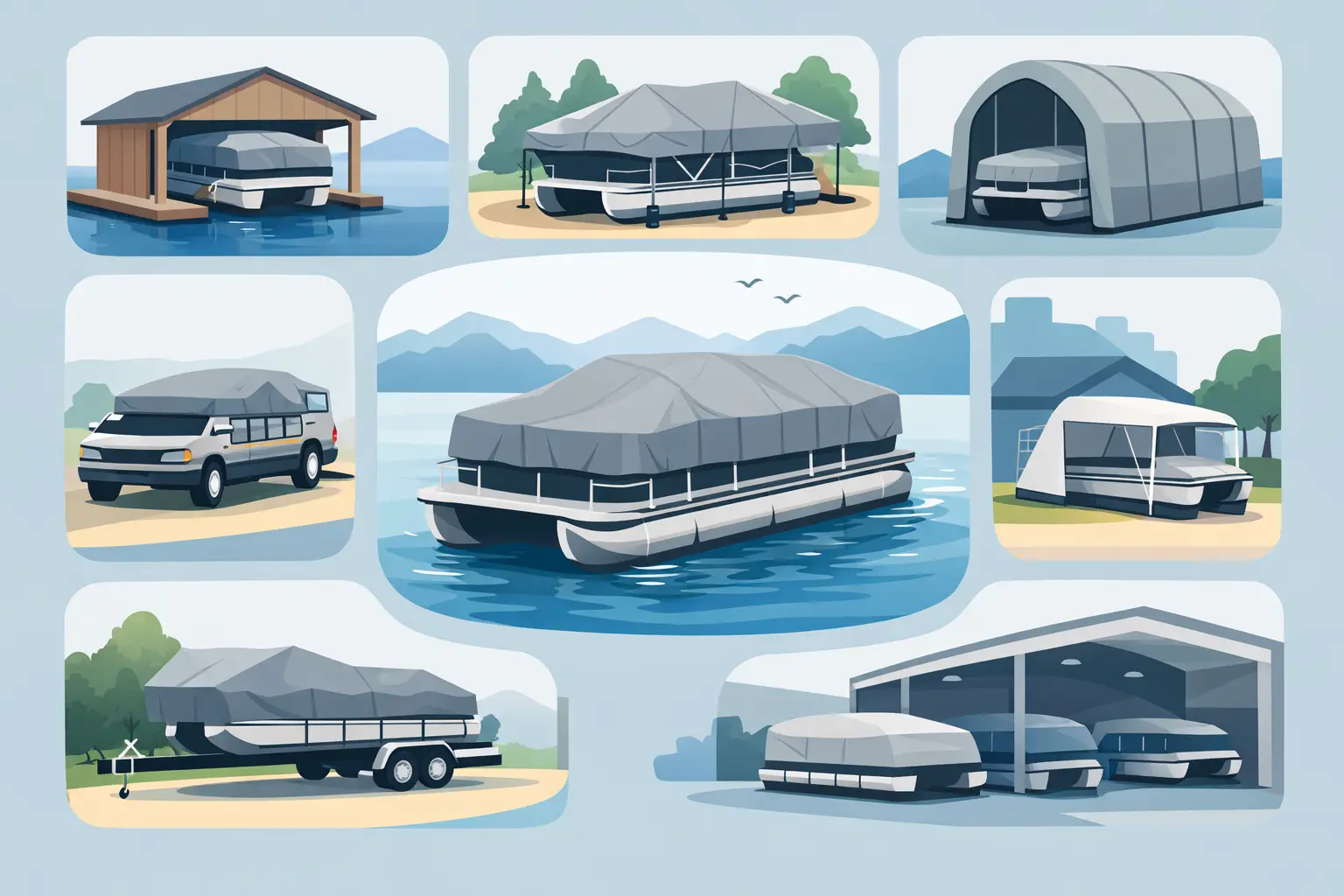
If your boat stays on a lift under a roof, your focus may be keeping dust, birds, and occasional wind-driven rain off the interior. If it is trailered outside, wind resistance and tie-down security move higher on the list. If it is parked for the winter in open weather, water shedding and structural support become the top priorities.

That is why pontoon owners usually get the best results by thinking in systems, not single parts. Cover fit, support shape, installation method, and local weather all work together. When one of those pieces is weak, the whole setup becomes less reliable.

What actually pays off over time

The most effective storage cover idea is usually the least flashy one: give the cover the right structure so it can do its job. That protects upholstery, flooring, electronics, and finishes. It also saves you from the repeated hassle of pumping off pooled water, readjusting poles, or replacing a cover that failed early.

A pontoon is not a generic boat, and its storage setup should not be generic either. When the support system is designed specifically for pontoon geometry, the difference shows up in tighter canvas, better runoff, and fewer weather-related headaches. Protect your investment with a solution that works with your boat instead of fighting it.

The best cover setup is the one that lets you walk away after storage day and feel confident the next storm is not going to leave you with a mess.

Posted on — Leave a comment

Best Rail Mounted Pontoon Accessories

Best Rail Mounted Pontoon Accessories

A pontoon rail is valuable space. Too often, it gets treated like an afterthought until you need a place for a table, rod holder, drink caddy, grill mount, or cover support that actually works. That is why rail mounted pontoon accessories matter so much. When they are designed specifically for pontoon geometry, they turn unused railing into practical, secure, easy-to-install utility without forcing you to drill holes into a boat you want to protect.

Why rail mounted pontoon accessories make more sense on a pontoon

A pontoon is not just another boat with flat deck space. Its layout, fence height, seating arrangement, and open social design create different needs than a fishing boat or fiberglass runabout. Generic marine accessories often claim to be universal, but pontoon owners know what usually happens next – awkward fit, shaky mounting, hardware that gets in the way, or a project that suddenly requires screws, nuts, bolts, glue, and more time than it should.

Rail mounted pontoon accessories solve that problem when they are built for the actual structure of a pontoon. They use the existing rail system as a strong mounting point, which keeps installation simpler and avoids unnecessary modifications. That matters if you want to preserve resale value, avoid damaging rails or fencing, and make upgrades that can be repositioned as your needs change.

This is where purpose-built design separates a real solution from a compromise. If an accessory was designed specifically for pontoon geometry, it tends to fit cleaner, sit straighter, and perform better over time.

The biggest advantage is no-drill installation

Most pontoon owners are not looking for another weekend project that turns into measuring, drilling, sealing, and hoping nothing cracks or loosens later. They want upgrades that go on cleanly, hold securely, and can be installed without turning the boat into a workshop.

That is one of the strongest reasons to choose rail mounted pontoon accessories. A well-designed rail system lets you add function without permanent alteration. You get the benefit of extra utility while avoiding damage to powder coating, rails, fencing, or deck material. For many owners, that is not just a convenience. It is part of protecting the investment.

There is a trade-off, of course. No-drill accessories still need to be built strong enough to handle motion, vibration, weather, and regular use. Cheap clamp-on products can shift or wear prematurely. The answer is not to give up on rail mounting. The answer is to choose heavy-duty accessories made for pontoon conditions, with materials and attachment methods that match the job.

Which rail mounted pontoon accessories are worth adding first

The right upgrade depends on how you use your boat. A family entertainment setup needs different accessories than a fishing pontoon or a boat that spends long periods covered at the dock or in storage. Still, a few categories deliver the most immediate payoff.

Cover support systems

If you store your pontoon outside, a rail-mounted cover support system is one of the smartest upgrades you can make. Rain pooling on a cover is not a minor nuisance. It stretches fabric, stresses seams, promotes mildew, collects debris, and can eventually lead to damage underneath. Furniture, flooring, and finishes all pay the price when water sits where it should not.

A rail-mounted support system creates the dome shape a cover needs to shed water and debris. The key is strength and fit. Pontoon-specific support systems that slide onto the rails and create a stable arch do a much better job than makeshift poles or generic straps. This is exactly the kind of accessory that solves a real ownership problem instead of just adding convenience.

Tables, cup holders, and entertaining upgrades

Pontoons are built for relaxing, hosting, and spending long days on the water. Rail-mounted tables and beverage accessories make that easier without taking up deck space. A good table gives you a place for snacks, tackle, drinks, or small gear, while cup holders and caddies help keep the seating area organized.

The best part is flexibility. Because these accessories mount to the rail, they can often be placed where they are most useful instead of where a factory layout forces them to be. That is especially helpful on older pontoons where the original setup may not match how the boat is used today.

Fishing accessories

If your pontoon pulls double duty as a family cruiser and a fishing platform, rail-mounted fishing accessories are a practical upgrade. Rod holders, tool holders, and accessory mounts let you add fishing function without cluttering the deck or making permanent changes. That matters on a pontoon because the same space often needs to switch from fishing mode in the morning to family mode in the afternoon.

A rail-based setup makes that transition much easier. It keeps gear controlled and accessible, and it gives owners the option to adjust or remove accessories based on the day’s plan.

Utility and storage add-ons

Cooler mounts, organizer racks, and rail-mounted storage solutions may not sound flashy, but they can make a major difference in how a pontoon feels on the water. Loose gear is one of the fastest ways to create clutter and frustration. When accessories give common items a dedicated place, the whole boat works better.

That is especially true for owners who entertain often or spend full days on the lake. Small improvements in organization can mean less setup, less cleanup, and fewer things sliding around underway.

What to look for before you buy rail mounted pontoon accessories

Fit should come first. Not every pontoon rail system is exactly the same, and not every accessory marketed to pontoon owners is truly designed around pontoon dimensions. You want products that account for rail shape, fence structure, clearance, and real use on a moving boat.

Material matters too. Marine conditions punish weak hardware fast. Aluminum components and heavy-duty construction generally hold up better than lightweight, low-cost alternatives that were built more for shelf appeal than actual service. If the accessory will stay exposed to sun, moisture, and repeated handling, durability is not a bonus feature. It is the whole game.

Then there is ease of installation. A smart accessory should be owner-friendly. If it takes complicated modification to make it fit, it probably was not much of a pontoon solution to begin with. The best products install cleanly, feel secure, and make sense the moment you handle them.

Why pontoon-specific design beats generic marine hardware

This is where many owners waste money the first time around. Generic marine hardware often looks close enough online, but close enough is rarely good enough on a pontoon. Railing dimensions, fence layouts, and cover needs are different. When a product is adapted from another boating category, the fit issues usually show up quickly.

Pontoon-specific design avoids that compromise. Accessories engineered for pontoon rails tend to install more cleanly, function more reliably, and look like they belong there. That may sound like a cosmetic detail, but it affects performance too. A better fit usually means better stability, less movement, and less wear over time.

For owners who value simplicity, that difference is huge. You are not buying an accessory just to add something new. You are buying a solution that should save time, reduce hassle, and protect a boat that represents a real investment.

Rail mounted pontoon accessories and long-term boat protection

Some accessories are about convenience. Others are about prevention. The best rail-mounted upgrades often do both.

A cover support system helps prevent water pooling and the expensive problems that come with it. Storage accessories reduce clutter that leads to damage or loss. Secure mounts help keep gear from shifting, rubbing, or falling where it should not. Even a simple table or holder can reduce wear by giving items a stable place instead of letting them bounce around on seats and flooring.

That is the bigger picture many owners appreciate after a season or two. The right accessory is not just a nice add-on. It can reduce maintenance, extend the life of materials, and make the boat easier to use every single time you leave the dock.

Choosing upgrades that match how you actually use your boat

There is no single perfect set of rail mounted pontoon accessories for every owner. If your pontoon spends most of its life covered at the lake house, start with protection. If you entertain often, prioritize table space, cooler solutions, and drink management. If you fish, focus on adaptable rail-mounted gear that keeps the deck open.

The common thread is choosing products that work with your pontoon instead of against it. That means no awkward universal hardware, no unnecessary drilling, and no settling for accessories that almost fit.

At https://www.PontoonBoatSolutions.com, that owner-first thinking drives products designed specifically for pontoon geometry and built to solve the everyday problems pontoon owners actually face. When an accessory protects your investment, installs easily, and performs like it belongs on the boat, it stops being an extra. It becomes part of a better ownership experience.

If your rail space is still going unused, that is probably the next upgrade opportunity worth taking seriously.

Posted on — Leave a comment

How to Protect Pontoon Furniture Outside

How to Protect Pontoon Furniture Outside

A pontoon can look great in the spring and feel worn out by midsummer if the furniture spends every day fighting sun, rain, pollen, and standing water. If you want to know how to protect pontoon furniture outside, the answer is not one magic product. It is a system – cover support, moisture control, routine cleaning, and a setup designed for pontoon geometry instead of generic marine shortcuts.

Pontoon seating is one of the most expensive parts of the boat to replace. Once vinyl starts cracking, stitching weakens, mildew sets in, or foam stays damp too long, the damage moves fast. The good news is that most of it is preventable if you solve the real causes instead of just throwing a loose cover over the deck and hoping for the best.

Why pontoon furniture gets damaged so quickly outside

Outdoor storage is hard on any boat, but pontoon layouts create a few specific problems. The wide open deck gives rainwater and debris plenty of surface area to collect. Standard covers often sag between rails, which turns the top of the boat into a series of shallow bowls. That pooled water adds weight, stretches canvas, and traps moisture over the seating below.

Sun is the slow damage you notice late. UV exposure dries vinyl, fades color, and weakens seams over time. Moisture is the fast damage you notice after one bad stretch of weather. A week of rain under a sagging cover can leave cushions damp, promote mildew, and create that musty smell no owner wants to deal with.

Leaves, pollen, bird droppings, and dirt add another layer of trouble. They do not just make the boat look neglected. They hold moisture against surfaces and create more cleanup work later. Protecting furniture outside means keeping weather off the seats, but it also means reducing everything that sits on top of the cover and works its way underneath.

Start with the cover, but fix the real weak point

Most owners already know they need a cover. The bigger issue is whether the cover stays tight enough to do its job. A cover by itself is only as effective as the support underneath it.

When a cover sags, rain pools. When rain pools, the fabric stretches and the trapped moisture hangs over your furniture for days. That is where many furniture problems begin. If your current setup allows low spots, you are not really protecting the boat – you are delaying damage.

A proper support system creates a dome shape that sheds water instead of collecting it. That shape matters more than many owners realize. It reduces pressure on the canvas, helps keep debris from piling up, and improves airflow under the cover. On a pontoon, that support needs to match the rail layout and deck shape. Generic poles and straps can work in mild conditions, but they are often unstable, awkward, or poorly positioned for the broad footprint of a pontoon.

That is why pontoon-specific support systems make such a difference. A solution designed specifically for pontoon geometry gives the cover structure where it actually needs it, without forcing owners into a complicated install or permanent modifications. At Pontoon Boat Solutions, that owner-first thinking is exactly the point – protect the furniture by preventing the sag, the pooling, and the moisture buildup before they start.

How to protect pontoon furniture outside in real conditions

If your boat lives outdoors for part or all of the season, protection has to hold up in real weather, not just ideal weekends. That means building a setup around the conditions your pontoon actually faces.

Rain and pooled water

Rain is often the biggest threat because it creates both direct and indirect damage. Direct damage comes from leaks, trapped water, and persistent dampness. Indirect damage comes when the extra weight of pooled water stretches your cover and makes every future storm worse.

The solution is simple in principle. Keep the cover elevated, keep tension where it belongs, and make sure water runs off quickly. If you see puddles on top of your cover after a storm, your system is not doing enough. Even a high-quality cover cannot compensate for poor support underneath.

Sun and heat

UV exposure slowly breaks down vinyl and thread, especially on boats parked in full sun. A cover helps, but only if it stays positioned correctly and does not flap loose in the wind. Loose fabric can shift, rub, and leave parts of the furniture exposed over time.

For boats in intense sun, consistency matters more than occasional deep cleaning. Covering the boat every time it is stored outside will protect the seats far better than trying to restore dried-out vinyl later. Vinyl protectants can help, but they should support your storage routine, not replace it.

Humidity and mildew

Mildew is where a lot of pontoon owners lose the battle. They cover the boat, assume it is protected, and then discover that trapped moisture created a better environment for mildew than open air would have.

You need protection from rain, but you also need airflow. That balance depends on using a cover system that keeps fabric up off the furniture and allows moisture to escape instead of condense and linger. If the inside of the cover feels damp long after the rain stops, ventilation is probably not where it needs to be.

Cleaning habits that actually preserve the seats

Storage protection gets most of the attention, but surface care matters too. Dirt and organic residue do more damage than many owners think. They grind into vinyl, stain light-colored upholstery, and hold moisture on the surface.

Clean the furniture regularly with a marine-safe vinyl cleaner and a soft cloth or soft-bristle brush. The goal is not aggressive scrubbing. The goal is removing sunscreen, food residue, pollen, algae film, and grime before they settle in. Harsh household cleaners can dry out vinyl or damage stitching, so this is one area where using the right product is worth it.

After cleaning, let everything dry fully before covering the boat. That step gets skipped all the time, and it is one of the easiest ways to create moisture problems. If you wash the seats and trap leftover dampness under the cover, you have just handed mildew a head start.

A vinyl protectant can be useful, especially during peak sun exposure, but product choice matters. Some leave oily residue or attract more dirt if overapplied. A light, even application on clean, dry furniture is usually the better approach.

Outdoor storage trade-offs every owner should know

There is no perfect outside storage setup. There is only the right level of protection for your climate, storage period, and how often you use the boat.

If you use your pontoon every weekend, you may want a fast, easy cover system that goes on and off without a fight. If the boat sits for long stretches, long-term moisture control becomes more important than quick access. If you store near trees, debris shedding may matter just as much as rain runoff. If you store in a windy area, cover stability moves to the top of the list.

That is why generic solutions can be frustrating. They are built to sort of work for a lot of boats. Pontoon owners usually need something more specific. The broad deck, rail structure, and cover shape demand a setup that addresses how pontoons are actually stored outside.

Small checks that prevent expensive repairs

You do not need a complicated maintenance schedule, but a few quick checks can save a lot of money. After storms, look for standing water on the cover. Check whether any area of the canvas is sagging lower than it used to. Inspect the furniture for damp spots, mildew odor, fading, and seam wear.

It is also smart to check that nothing under the cover is creating pressure points against the vinyl. A support system should lift and protect, not rub against the furniture. When the setup is right, the cover stays off the seats, water runs off the top, and the furniture stays cleaner and drier with less effort from you.

That is the real goal. Protecting pontoon furniture outside should not feel like a constant battle. With a purpose-built cover setup, basic cleaning discipline, and support designed for pontoon geometry, you can keep your seating in better shape season after season and spend a lot less time dealing with preventable damage.

Posted on — Leave a comment

Best Pontoon Cover Support Poles Alternative

Best Pontoon Cover Support Poles Alternative

If you have ever walked down to your boat after a hard rain and found your cover sagging like a wet tarp over your furniture, you already know why so many owners start searching for a pontoon cover support poles alternative. The standard center pole setup is common because it is cheap and familiar. That does not mean it is the best way to protect a pontoon that spends weeks or months sitting in the weather.

A pontoon is not shaped like a runabout, and that matters more than most cover systems seem to admit. Wide decks, open seating layouts, long spans, and rail geometry create a different support challenge. A single pole, or even a few poles, can lift part of the cover, but it often leaves low spots, shifting pressure points, and too much unsupported canvas. That is when rainwater pools, debris collects, and the cover starts working against you instead of for you.

Why owners look for a pontoon cover support poles alternative

Most pontoon owners are not trying to reinvent storage. They just want a cover that stays tight, sheds water, and does not leave them babysitting the boat after every storm. Traditional support poles can help in mild conditions, but they come with trade-offs.

The biggest issue is that poles create point support instead of broad support. In plain terms, they push up one spot while the surrounding fabric still has room to sag. On a pontoon cover, that can mean multiple valleys between raised areas. Water is heavy, and once it starts collecting, the problem gets worse fast. The weight stretches fabric, stresses seams, and can transfer moisture where you do not want it.

There is also the setup frustration. Poles tip, straps loosen, bases shift, and cover fit changes from one season to the next. If your boat is stored outdoors for extended periods, you need a system that keeps doing its job after wind, temperature swings, and repeated rain. That is where many generic pole kits fall short.

What actually works better than support poles?

The best pontoon cover support poles alternative is a support system that creates a dome across the cover instead of relying on a few vertical pressure points. That distinction matters. A dome shape encourages water runoff across a larger area, reduces sagging between supports, and helps keep the cover tighter from end to end.

For pontoon owners, rail-mounted support systems are usually the better answer because they use the boat’s existing geometry instead of fighting it. Rather than standing loose inside the deck and pushing up from below, these systems anchor to the rails and create structure where a pontoon cover needs it most. The result is more consistent support, better drainage, and less chance of the cover collapsing into low spots.

This is also where pontoon-specific design separates itself from generic marine hardware. A product designed specifically for pontoon geometry can span the width more effectively and keep support where the canvas naturally wants to sag. That is a major upgrade over one-size-fits-all poles that were never really built with pontoons in mind.

The problem with generic solutions on a pontoon

A lot of boat accessories are sold as universal. That sounds convenient until you install them on a pontoon and realize universal usually means compromise. Support poles are a good example. They are often adapted from general boat storage setups, not engineered around the real dimensions and rail layouts of pontoon boats.

On a pontoon, wide beam and long open deck sections make generic pole placement tricky. Put a pole in the wrong spot and it interferes with seating, presses awkwardly against the cover, or simply fails to support the surrounding span. Add wind into the mix and you can end up with shifted poles, rubbing fabric, or uneven tension that shortens cover life.

That does not mean every pole system is useless. If you store your boat short term, keep it under a roof, or only need a temporary lift point, a basic pole may be enough. But if your goal is long-term outdoor protection, especially through repeated storms, tree debris, and seasonal storage, most owners benefit from moving beyond poles.

What to look for in a true pontoon cover support poles alternative

A better system should do more than lift the canvas a few inches. It should improve the entire way your cover performs.

First, look for broad structural support. The goal is not just height. The goal is shape. You want a support design that creates a clear high point and steady slope so rain and leaves are less likely to sit on the cover.

Second, look for a secure mounting method that does not depend on constant adjustment. Freestanding poles can move. A system that attaches to the pontoon rails is typically more stable and more predictable in changing weather.

Third, installation matters. Many pontoon owners want better protection, but they do not want to drill holes, fool with glue, or turn a weekend project into a full hardware retrofit. A smarter solution should be DIY-friendly and non-invasive.

Finally, pay attention to materials. Lightweight and flimsy is not an advantage if it bends under load or fails after a season in the elements. Heavy-duty aluminum components and purpose-built hardware usually hold up better over time, especially for owners who store their boat outside.

Why rail-mounted dome systems make more sense

A rail-mounted dome support system solves the core weakness of poles by distributing support across the cover instead of concentrating it in isolated spots. That means less sagging, better runoff, and fewer problem areas where standing water can settle.

It also makes practical sense for pontoon owners because it respects the boat you already own. You invested serious money in your furniture, flooring, canvas, and finishes. The support system protecting that investment should not require drilling into the boat or improvising with straps and unstable bases.

That is why purpose-built systems have become such a strong upgrade path. At Pontoon Boat Solutions, LLC, the focus is on products designed specifically for pontoon geometry, and that matters here. A rail-mounted canvas support system built for pontoons creates a stronger dome structure, keeps covers tighter, and helps prevent the pooling and debris buildup that can age your cover and your interior faster than expected.

Is a pontoon cover support poles alternative worth it?

For many owners, yes, especially when the boat sits outside for weeks at a time. The value is not only in better water runoff. It is also in reduced hassle. A tighter, better-supported cover usually means fewer trips to check pooling after storms, less chance of mildew-friendly moisture hanging around, and better protection for seating and finishes.

The real answer depends on how you use and store your pontoon. If your boat lives on a lift with a roof overhead, a simple setup may be all you need. If it is parked outside through spring storms, summer downpours, falling leaves, and off-season weather, upgrading to a stronger support system becomes a lot easier to justify.

It also depends on the cover itself. Even a quality cover can only perform as well as the structure beneath it. When support is poor, water pooling and fabric stress can wear out a good cover early. Better support helps your cover do the job you bought it to do.

Choosing the right alternative for your boat

Start with the basic question: do you want a temporary workaround, or do you want a long-term protection solution? If you are tired of adjusting poles, dealing with puddles, and worrying about what the next storm will leave behind, a pontoon-specific support system is usually the smarter move.

Measure your storage reality honestly. Think about how often your boat sits uncovered by any roof, how much rain and debris your area gets, and whether you are storing for days, weeks, or an entire off-season. The harsher the exposure, the more important support design becomes.

A good alternative should feel like it belongs on a pontoon, not like a generic part adapted to fit. That is the difference between a product that merely props up a cover and one that actively helps protect your investment.

Your cover should not become a shallow pool every time the weather turns. If your current setup keeps creating sagging, puddles, or constant maintenance, that is your sign to stop settling for poles and choose a solution built for the way pontoons are actually stored.

Posted on — Leave a comment

Best Pontoon Cover Support System Picks

Best Pontoon Cover Support System Picks

A pontoon cover usually fails in the same place owners do – right after a heavy rain. You walk down to the boat, expecting a quick cleanup, and instead find gallons of water sagging in the middle of the canvas, leaves packed into the low spots, and furniture sitting in a damp, stale space. If you are looking for the best pontoon cover support system, the real question is not just what holds the cover up. It is what actually protects your investment season after season.

Generic support poles can help a little, but pontoon boats are not generic boats. Their wide decks, open layouts, long spans, and rail geometry create challenges that a basic center pole was never designed to solve. That is why the best systems are built specifically around how a pontoon is shaped and how a pontoon cover behaves under rain, wind, debris, and long-term storage.

What makes the best pontoon cover support system?

The best support system creates a strong dome under the cover so water runs off instead of collecting in low spots. That sounds simple, but there is a major difference between a setup that barely props the canvas up and one that gives the entire cover real structure.

A true pontoon-specific system needs to spread support across the span of the boat, not just push up from one point. When support is too concentrated in the center, the cover can still dip along the sides or between seating zones. Rainwater does not need much of a low spot to start pooling, and once pooling starts, the weight stretches the canvas, weakens seams, and makes the problem worse every time it rains.

Fit matters just as much as strength. A support system that works with pontoon rails and deck layout will usually be more stable, easier to install, and less likely to shift in bad weather. That is especially important for owners who store their boat outside for part or all of the year.

Why generic cover poles usually come up short

A lot of pontoon owners start with the standard marine solution – one or two adjustable poles under the cover. They are inexpensive, easy to find, and better than no support at all. But they come with trade-offs.

The first issue is limited coverage. One pole lifts one area, not the whole canvas. On a pontoon, where covers often stretch over a broad footprint, that leaves too many opportunities for water to settle elsewhere. The second issue is stability. A pole can tip, shift, or punch awkwardly into the underside of the cover if the fabric moves in wind.

Then there is installation frustration. Some systems rely on straps, loose fittings, or makeshift anchoring methods that become one more thing to adjust every time you cover the boat. If a support solution feels temporary every time you use it, it probably is.

The best pontoon cover support system is built for pontoon geometry

This is where pontoon-specific design changes everything. A support system designed specifically for pontoon geometry can use the rail structure to create a more secure and consistent framework under the canvas. Instead of acting like a stick holding up a tent, it acts more like a shaped support structure that follows the boat.

That difference shows up fast in real-world conditions. Rain sheds better. Debris slides off more easily. The cover stays tighter. The interior stays drier. You also reduce the long-term strain that causes expensive covers to sag, stretch, and wear out before they should.

For owners who care about preserving upholstery, flooring, electronics, and finishes, that matters. Water pooling is not just a cover problem. It is often the first step toward mildew, trapped moisture, staining, and premature aging inside the boat.

What to look for before you buy

If you are comparing options, focus less on marketing claims and more on how the system actually solves pontoon storage problems.

Material quality is a big one. Heavy-duty aluminum components tend to offer a better mix of strength, corrosion resistance, and manageable weight than flimsy mixed-material kits. If the hardware feels like it was built for occasional use rather than repeated seasonal setup, it may not hold up the way you need.

Installation method matters too. Many pontoon owners do not want to drill into rails, use glue, or deal with permanent modifications just to support a cover. A smarter system should be DIY-friendly and secure without turning a simple protection upgrade into a weekend project.

You should also think about adjustability and shape. Not every pontoon has the same seating layout, rail dimensions, or cover profile. The best setup should work with the broad, flat realities of pontoon design while still creating enough height and structure to move water off efficiently.

One design advantage owners should not overlook

A rail-mounted system has a clear edge for many pontoon owners because it uses the boat’s existing structure instead of fighting against it. That usually means better stability and a more predictable fit.

A patent-pending canvas support system that slides onto pontoon rails and creates a strong dome structure addresses the exact problems most owners deal with: sagging covers, pooled rainwater, debris buildup, and unnecessary wear on expensive canvas. It also avoids a lot of the hassle that comes with screws, nuts, bolts, glue, and drilling.

That kind of design is not just convenient. It is better aligned with what pontoon owners actually want – strong protection, simple installation, and no permanent changes to the boat.

Best pontoon cover support system for different owners

The best choice depends a little on how and where you store your pontoon.

If your boat sits outside through frequent rain, your top priority should be a system that creates a pronounced dome and holds that shape consistently. Minor support is not enough when repeated storms are part of your season.

If you keep your boat near trees, debris control matters almost as much as water runoff. Leaves, seed pods, and small branches collect quickly in low spots, especially when the cover relaxes over time. A stronger support profile helps stop that buildup before it starts.

If you trailer occasionally or remove the cover often, ease of use becomes a bigger factor. A cumbersome support setup that takes too long to install can lead to shortcuts, and shortcuts usually mean the cover goes on without proper support. The best system is one you will actually use every time.

And if your pontoon is a major investment with premium furniture and finishes, it makes sense to choose the most purpose-built option available. Saving a little upfront on a generic support product can cost more later if moisture damage, mildew, or cover replacement enters the picture.

Why purpose-built usually wins long term

Pontoon owners know the difference between something that technically fits and something that was actually designed for the boat. That same rule applies here.

A purpose-built support system tends to perform better over time because it solves the right problem from the start. It does not ask a universal boating accessory to adapt to pontoon dimensions. It starts with pontoon dimensions and builds from there.

That is why owner-focused brands that specialize in pontoon-only solutions often have an advantage. They are not guessing at fit, improvising installation, or forcing a one-size-fits-all marine product onto a platform with its own geometry and storage issues. At Pontoon Boat Solutions, that focus shows up in products designed to protect the boat without adding unnecessary complexity.

Is the most expensive option always the best?

Not automatically. Price should reflect design quality, materials, ease of installation, and how effectively the system prevents the problems you are trying to avoid. A basic pole system may be enough for short-term covered storage or mild weather. But if your pontoon lives outdoors, sees regular storms, or stays covered for long stretches, a more advanced pontoon-specific system often delivers better value.

The cost of replacing a damaged cover, cleaning mildew, or repairing weather-related wear adds up fast. In that context, the best pontoon cover support system is usually the one that prevents those problems before they start.

The right support system should give you one less thing to worry about

Boat ownership is better when storage is simple. You cover the pontoon, walk away, and trust that the next storm is not going to leave a waterbed sitting on your canvas. That peace of mind comes from using a system that was designed to do more than prop up fabric.

Choose the solution that matches the way pontoons are actually built, the way weather actually hits them, and the way owners actually use them. When your cover stays tight, sheds water, and protects what is underneath, you spend less time fixing storage problems and more time getting ready for the next day on the water.