
A pontoon cover usually fails long before the fabric wears out. It starts with one low spot, then a few hard rains, then a heavy pocket of water stretching the cover, staining furniture, and turning off-season storage into a cleanup job. That is why smart pontoon boat storage cover ideas matter – not as cosmetic upgrades, but as real protection for one of the most expensive pieces of equipment you own.
The best pontoon boat storage cover ideas start with shape
Most storage problems come down to one issue: the cover is not being supported in a way that matches pontoon geometry. A pontoon is wide, open, and furniture-heavy. Generic marine cover supports were not designed for those rail layouts, long spans, or flat deck profiles. They may work for a short stretch, but once wind, rain, and debris show up, weak support points become obvious fast.
The strongest idea is also the most practical one – create a dome shape that keeps the cover elevated across the boat instead of relying on one or two center poles. A true dome sheds water, helps leaves slide off, and reduces the sagging that leads to stretched seams and premature cover wear. More importantly, it keeps pressure off the upholstery and flooring underneath.
That shape matters even more if your pontoon sits outside for months at a time. Winter storage, storm season, and shoulder months with constant rain all expose the weak spots in a flat or poorly supported cover. If your current setup lets water collect anywhere, the cover is already under more strain than it should be.
1. Use a rail-mounted support system instead of center poles
For many pontoon owners, this is the upgrade that changes everything. Traditional center poles are common because they are cheap and easy to find, but they are rarely the best answer for a pontoon. They create isolated high points instead of full-span support, and they can shift, tip, or put pressure in the wrong places.
A rail-mounted canvas support system designed specifically for pontoon rails solves that problem at the source. By sliding onto the rails and building a stronger arched structure across the frame, it supports the cover where a pontoon actually needs it. That means less pooling, less sagging, and less chance of standing water working its way into the cover over time.
This is also the better choice for owners who do not want to drill holes, glue hardware in place, or piece together a workaround every season. A purpose-built rail system is cleaner, stronger, and easier to trust when the weather turns bad.
2. Build a full-length crown, not a single peak
One of the most overlooked pontoon boat storage cover ideas is how support is distributed from bow to stern. A single high point in the middle may lift part of the cover, but it still leaves long channels where water can settle. On a pontoon, those channels can become heavy fast.
A better approach is creating a crown that runs through the full covered area. Think of it as controlled tension across the whole boat instead of a tent pole in one spot. When the cover stays consistently elevated, rain has fewer places to gather and the fabric maintains a tighter, more stable fit.
If your storage setup includes a mooring cover that already fits well, this kind of support can make that cover perform much better in the off-season. If the cover itself is oversized or loose, support still helps, but it cannot fully fix bad fit. In that case, the support system and the cover need to work together.
3. Add more support where pontoon furniture creates valleys
Pontoons are not empty decks. Lounge backs, helm areas, changing stations, and seating layouts all create uneven spaces under the canvas. That is where covers tend to dip, rub, or lose tension. Generic supports do not account for those valleys very well.
A smarter storage idea is to support the cover according to the actual layout of your boat. Wider seating sections and open deck spans often need more structure than narrow pathways or smaller bow areas. This is one reason pontoon-specific systems outperform one-size-fits-all hardware. They are built around the way pontoons are actually configured, not around a generic small-boat profile.
For owners who store their boat outside year-round, this is not a small detail. Furniture replacement is expensive, and moisture trapped under a sagging cover can lead to mildew, discoloration, and avoidable wear.
4. Combine tight cover tension with strong support
Support and tension are not the same thing, but you need both. Even the best support frame cannot do its job if the cover is loose enough to flap in the wind or sag between contact points. On the other hand, pulling a cover drum-tight without proper support can stress the fabric and attachment points.
The right balance is a well-fitted storage cover sitting over a stable support structure that gives it shape. That combination helps the cover shed water and resist wind movement without overworking the seams. It also reduces the abrasive rubbing that happens when a loose cover shifts back and forth over rails and corners.
If your current cover is still in decent condition, improving the support underneath may be the most cost-effective upgrade you can make. If the fabric is already stretched or the seams are failing, replacing the cover and upgrading the support at the same time often makes more sense.
5. Think about snow load, not just rain pooling
Rain pooling is the problem most owners notice first, but snow can be even harder on a pontoon cover. Wet snow adds weight quickly, especially if it settles into low spots and starts compacting. That extra load can bend weak poles, collapse support points, and force the cover down onto seats and consoles.
If you live in a region with real winter weather, your cover setup needs to do more than push water off after a storm. It needs enough structure to maintain shape under repeated load. That is where heavy-duty materials and wider-span support become worth every penny.
This is also the point where bargain solutions usually fall short. Light poles and improvised straps may look fine on day one, but they are not built for months of weather exposure. A storage setup should reduce stress, not create another mid-winter maintenance problem.
6. Avoid solutions that require permanent modification
A lot of pontoon owners want better cover support but do not want to start drilling into rails or attaching awkward hardware all over the boat. That hesitation makes sense. Permanent modifications can create fit issues later, add corrosion points, or simply make a clean boat harder to maintain.
One of the better ideas is choosing support components that install securely without screws, nuts, bolts, or glue. That keeps the boat more original, speeds up installation, and makes seasonal setup less of a chore. For DIY-minded owners, that simplicity matters. You want protection you can count on, not a project that drags on all weekend.
At Pontoon Boat Solutions, that problem-solving approach is exactly the point – products designed specifically for pontoon geometry should fit the boat better and ask less from the owner.
7. Match your cover strategy to where and how you store
Not every pontoon needs the exact same storage setup. A boat stored indoors for short stretches has different needs than one sitting uncovered at a lakeside property through storms, pollen season, and freezing weather. The best pontoon boat storage cover ideas depend on your storage reality.
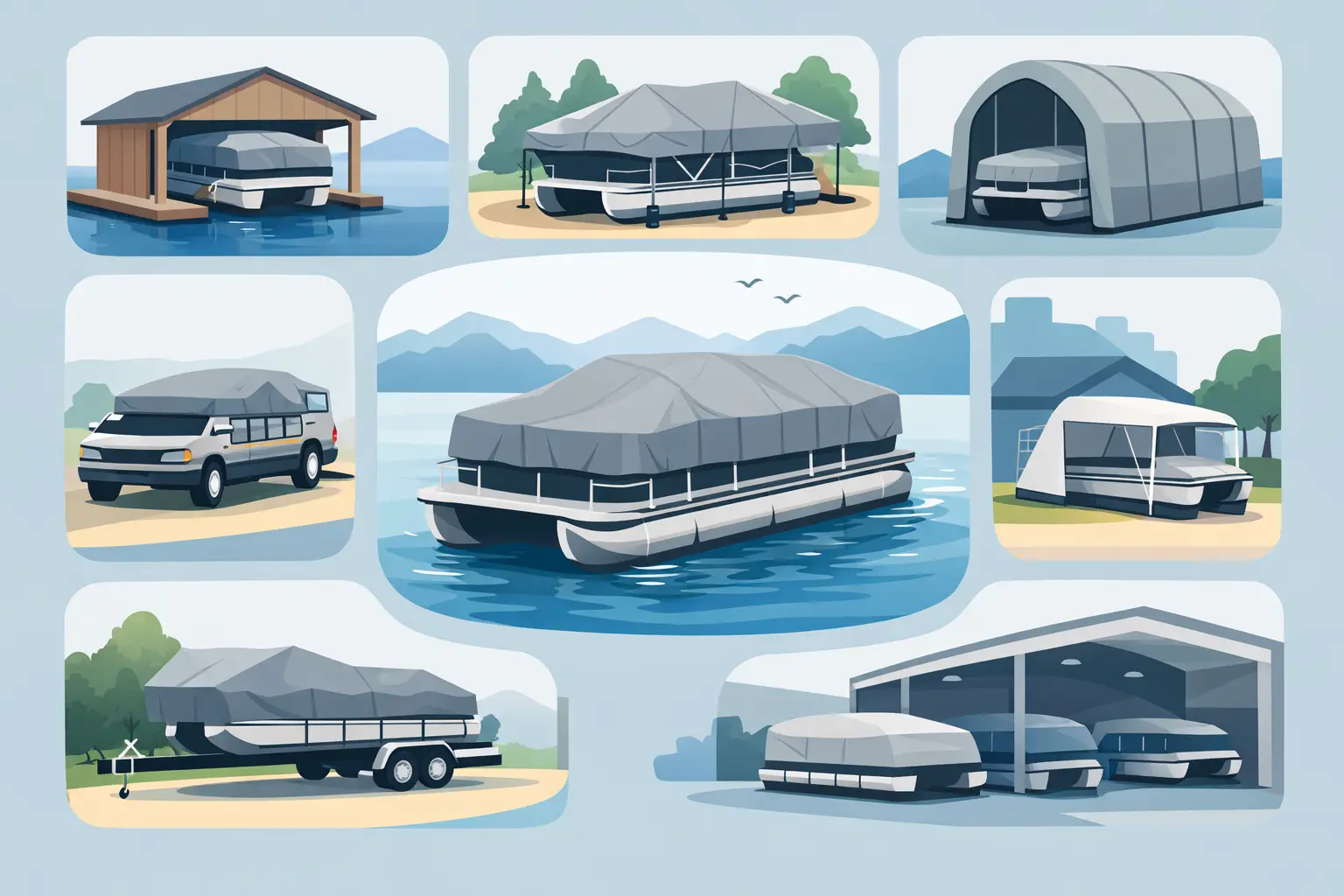
If your boat stays on a lift under a roof, your focus may be keeping dust, birds, and occasional wind-driven rain off the interior. If it is trailered outside, wind resistance and tie-down security move higher on the list. If it is parked for the winter in open weather, water shedding and structural support become the top priorities.
That is why pontoon owners usually get the best results by thinking in systems, not single parts. Cover fit, support shape, installation method, and local weather all work together. When one of those pieces is weak, the whole setup becomes less reliable.
What actually pays off over time
The most effective storage cover idea is usually the least flashy one: give the cover the right structure so it can do its job. That protects upholstery, flooring, electronics, and finishes. It also saves you from the repeated hassle of pumping off pooled water, readjusting poles, or replacing a cover that failed early.
A pontoon is not a generic boat, and its storage setup should not be generic either. When the support system is designed specifically for pontoon geometry, the difference shows up in tighter canvas, better runoff, and fewer weather-related headaches. Protect your investment with a solution that works with your boat instead of fighting it.
The best cover setup is the one that lets you walk away after storage day and feel confident the next storm is not going to leave you with a mess.