
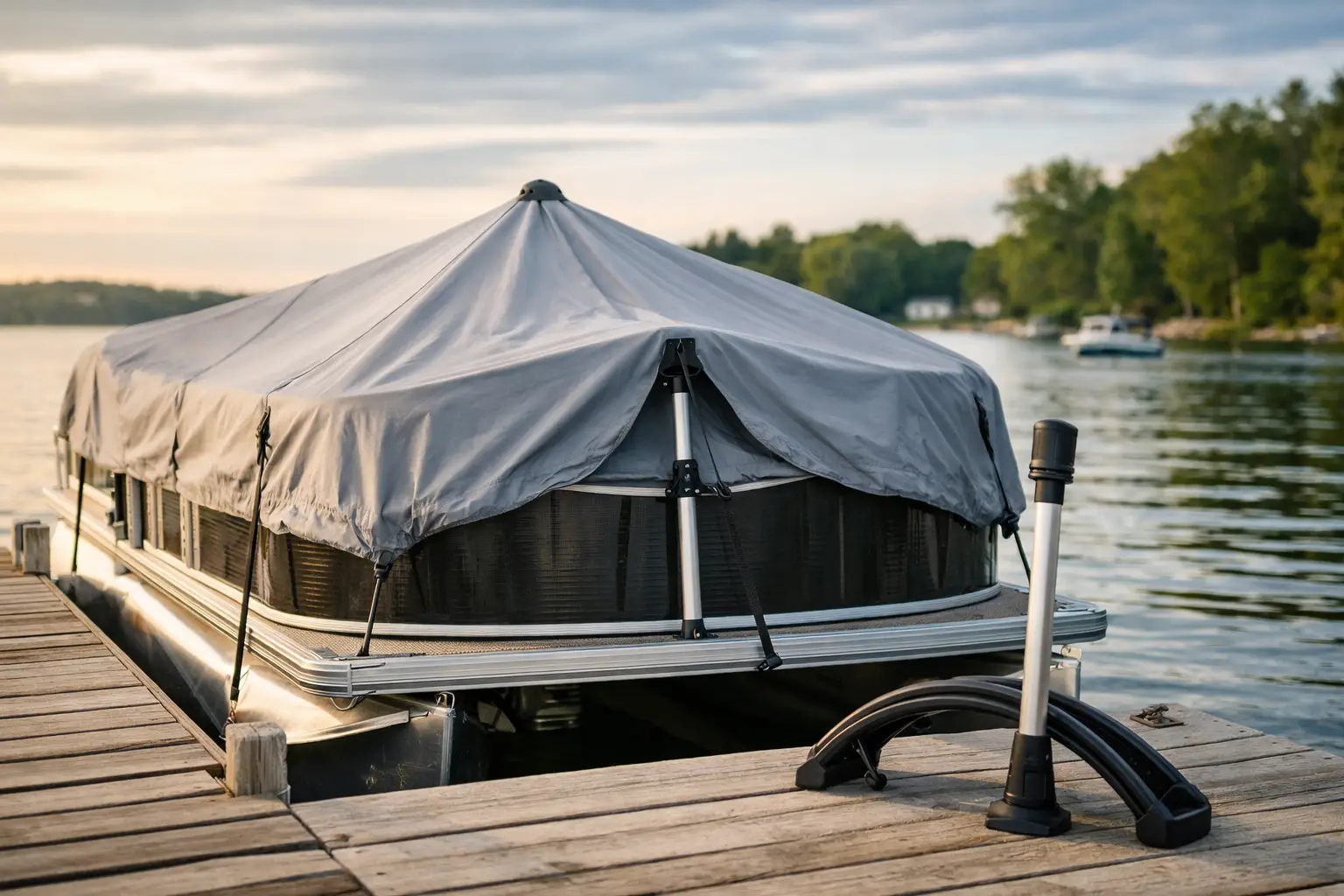
A pontoon cover usually fails in the same place owners do – right after a heavy rain. You walk down to the boat, expecting a quick cleanup, and instead find gallons of water sagging in the middle of the canvas, leaves packed into the low spots, and furniture sitting in a damp, stale space. If you are looking for the best pontoon cover support system, the real question is not just what holds the cover up. It is what actually protects your investment season after season.
Generic support poles can help a little, but pontoon boats are not generic boats. Their wide decks, open layouts, long spans, and rail geometry create challenges that a basic center pole was never designed to solve. That is why the best systems are built specifically around how a pontoon is shaped and how a pontoon cover behaves under rain, wind, debris, and long-term storage.
What makes the best pontoon cover support system?
The best support system creates a strong dome under the cover so water runs off instead of collecting in low spots. That sounds simple, but there is a major difference between a setup that barely props the canvas up and one that gives the entire cover real structure.
A true pontoon-specific system needs to spread support across the span of the boat, not just push up from one point. When support is too concentrated in the center, the cover can still dip along the sides or between seating zones. Rainwater does not need much of a low spot to start pooling, and once pooling starts, the weight stretches the canvas, weakens seams, and makes the problem worse every time it rains.
Fit matters just as much as strength. A support system that works with pontoon rails and deck layout will usually be more stable, easier to install, and less likely to shift in bad weather. That is especially important for owners who store their boat outside for part or all of the year.
Why generic cover poles usually come up short
A lot of pontoon owners start with the standard marine solution – one or two adjustable poles under the cover. They are inexpensive, easy to find, and better than no support at all. But they come with trade-offs.
The first issue is limited coverage. One pole lifts one area, not the whole canvas. On a pontoon, where covers often stretch over a broad footprint, that leaves too many opportunities for water to settle elsewhere. The second issue is stability. A pole can tip, shift, or punch awkwardly into the underside of the cover if the fabric moves in wind.
Then there is installation frustration. Some systems rely on straps, loose fittings, or makeshift anchoring methods that become one more thing to adjust every time you cover the boat. If a support solution feels temporary every time you use it, it probably is.
The best pontoon cover support system is built for pontoon geometry
This is where pontoon-specific design changes everything. A support system designed specifically for pontoon geometry can use the rail structure to create a more secure and consistent framework under the canvas. Instead of acting like a stick holding up a tent, it acts more like a shaped support structure that follows the boat.
That difference shows up fast in real-world conditions. Rain sheds better. Debris slides off more easily. The cover stays tighter. The interior stays drier. You also reduce the long-term strain that causes expensive covers to sag, stretch, and wear out before they should.
For owners who care about preserving upholstery, flooring, electronics, and finishes, that matters. Water pooling is not just a cover problem. It is often the first step toward mildew, trapped moisture, staining, and premature aging inside the boat.
What to look for before you buy
If you are comparing options, focus less on marketing claims and more on how the system actually solves pontoon storage problems.
Material quality is a big one. Heavy-duty aluminum components tend to offer a better mix of strength, corrosion resistance, and manageable weight than flimsy mixed-material kits. If the hardware feels like it was built for occasional use rather than repeated seasonal setup, it may not hold up the way you need.
Installation method matters too. Many pontoon owners do not want to drill into rails, use glue, or deal with permanent modifications just to support a cover. A smarter system should be DIY-friendly and secure without turning a simple protection upgrade into a weekend project.
You should also think about adjustability and shape. Not every pontoon has the same seating layout, rail dimensions, or cover profile. The best setup should work with the broad, flat realities of pontoon design while still creating enough height and structure to move water off efficiently.
One design advantage owners should not overlook
A rail-mounted system has a clear edge for many pontoon owners because it uses the boat’s existing structure instead of fighting against it. That usually means better stability and a more predictable fit.
A patent-pending canvas support system that slides onto pontoon rails and creates a strong dome structure addresses the exact problems most owners deal with: sagging covers, pooled rainwater, debris buildup, and unnecessary wear on expensive canvas. It also avoids a lot of the hassle that comes with screws, nuts, bolts, glue, and drilling.
That kind of design is not just convenient. It is better aligned with what pontoon owners actually want – strong protection, simple installation, and no permanent changes to the boat.
Best pontoon cover support system for different owners
The best choice depends a little on how and where you store your pontoon.
If your boat sits outside through frequent rain, your top priority should be a system that creates a pronounced dome and holds that shape consistently. Minor support is not enough when repeated storms are part of your season.
If you keep your boat near trees, debris control matters almost as much as water runoff. Leaves, seed pods, and small branches collect quickly in low spots, especially when the cover relaxes over time. A stronger support profile helps stop that buildup before it starts.
If you trailer occasionally or remove the cover often, ease of use becomes a bigger factor. A cumbersome support setup that takes too long to install can lead to shortcuts, and shortcuts usually mean the cover goes on without proper support. The best system is one you will actually use every time.
And if your pontoon is a major investment with premium furniture and finishes, it makes sense to choose the most purpose-built option available. Saving a little upfront on a generic support product can cost more later if moisture damage, mildew, or cover replacement enters the picture.
Why purpose-built usually wins long term
Pontoon owners know the difference between something that technically fits and something that was actually designed for the boat. That same rule applies here.
A purpose-built support system tends to perform better over time because it solves the right problem from the start. It does not ask a universal boating accessory to adapt to pontoon dimensions. It starts with pontoon dimensions and builds from there.
That is why owner-focused brands that specialize in pontoon-only solutions often have an advantage. They are not guessing at fit, improvising installation, or forcing a one-size-fits-all marine product onto a platform with its own geometry and storage issues. At Pontoon Boat Solutions, that focus shows up in products designed to protect the boat without adding unnecessary complexity.
Is the most expensive option always the best?
Not automatically. Price should reflect design quality, materials, ease of installation, and how effectively the system prevents the problems you are trying to avoid. A basic pole system may be enough for short-term covered storage or mild weather. But if your pontoon lives outdoors, sees regular storms, or stays covered for long stretches, a more advanced pontoon-specific system often delivers better value.
The cost of replacing a damaged cover, cleaning mildew, or repairing weather-related wear adds up fast. In that context, the best pontoon cover support system is usually the one that prevents those problems before they start.
The right support system should give you one less thing to worry about
Boat ownership is better when storage is simple. You cover the pontoon, walk away, and trust that the next storm is not going to leave a waterbed sitting on your canvas. That peace of mind comes from using a system that was designed to do more than prop up fabric.
Choose the solution that matches the way pontoons are actually built, the way weather actually hits them, and the way owners actually use them. When your cover stays tight, sheds water, and protects what is underneath, you spend less time fixing storage problems and more time getting ready for the next day on the water.