
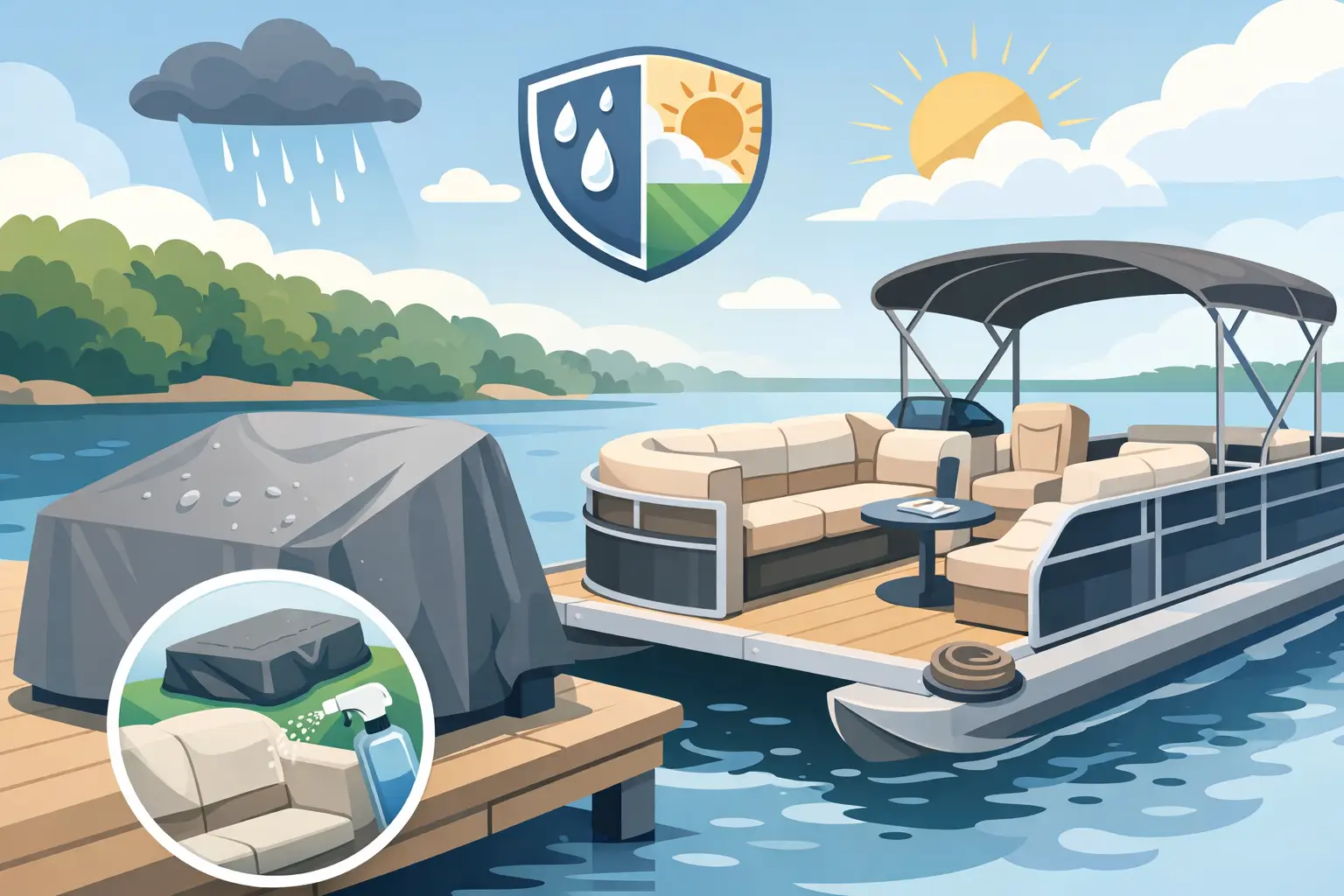
A pontoon can look great in the spring and feel worn out by midsummer if the furniture spends every day fighting sun, rain, pollen, and standing water. If you want to know how to protect pontoon furniture outside, the answer is not one magic product. It is a system – cover support, moisture control, routine cleaning, and a setup designed for pontoon geometry instead of generic marine shortcuts.
Pontoon seating is one of the most expensive parts of the boat to replace. Once vinyl starts cracking, stitching weakens, mildew sets in, or foam stays damp too long, the damage moves fast. The good news is that most of it is preventable if you solve the real causes instead of just throwing a loose cover over the deck and hoping for the best.
Why pontoon furniture gets damaged so quickly outside
Outdoor storage is hard on any boat, but pontoon layouts create a few specific problems. The wide open deck gives rainwater and debris plenty of surface area to collect. Standard covers often sag between rails, which turns the top of the boat into a series of shallow bowls. That pooled water adds weight, stretches canvas, and traps moisture over the seating below.
Sun is the slow damage you notice late. UV exposure dries vinyl, fades color, and weakens seams over time. Moisture is the fast damage you notice after one bad stretch of weather. A week of rain under a sagging cover can leave cushions damp, promote mildew, and create that musty smell no owner wants to deal with.
Leaves, pollen, bird droppings, and dirt add another layer of trouble. They do not just make the boat look neglected. They hold moisture against surfaces and create more cleanup work later. Protecting furniture outside means keeping weather off the seats, but it also means reducing everything that sits on top of the cover and works its way underneath.
Start with the cover, but fix the real weak point
Most owners already know they need a cover. The bigger issue is whether the cover stays tight enough to do its job. A cover by itself is only as effective as the support underneath it.
When a cover sags, rain pools. When rain pools, the fabric stretches and the trapped moisture hangs over your furniture for days. That is where many furniture problems begin. If your current setup allows low spots, you are not really protecting the boat – you are delaying damage.
A proper support system creates a dome shape that sheds water instead of collecting it. That shape matters more than many owners realize. It reduces pressure on the canvas, helps keep debris from piling up, and improves airflow under the cover. On a pontoon, that support needs to match the rail layout and deck shape. Generic poles and straps can work in mild conditions, but they are often unstable, awkward, or poorly positioned for the broad footprint of a pontoon.
That is why pontoon-specific support systems make such a difference. A solution designed specifically for pontoon geometry gives the cover structure where it actually needs it, without forcing owners into a complicated install or permanent modifications. At Pontoon Boat Solutions, that owner-first thinking is exactly the point – protect the furniture by preventing the sag, the pooling, and the moisture buildup before they start.
How to protect pontoon furniture outside in real conditions
If your boat lives outdoors for part or all of the season, protection has to hold up in real weather, not just ideal weekends. That means building a setup around the conditions your pontoon actually faces.
Rain and pooled water
Rain is often the biggest threat because it creates both direct and indirect damage. Direct damage comes from leaks, trapped water, and persistent dampness. Indirect damage comes when the extra weight of pooled water stretches your cover and makes every future storm worse.
The solution is simple in principle. Keep the cover elevated, keep tension where it belongs, and make sure water runs off quickly. If you see puddles on top of your cover after a storm, your system is not doing enough. Even a high-quality cover cannot compensate for poor support underneath.
Sun and heat
UV exposure slowly breaks down vinyl and thread, especially on boats parked in full sun. A cover helps, but only if it stays positioned correctly and does not flap loose in the wind. Loose fabric can shift, rub, and leave parts of the furniture exposed over time.
For boats in intense sun, consistency matters more than occasional deep cleaning. Covering the boat every time it is stored outside will protect the seats far better than trying to restore dried-out vinyl later. Vinyl protectants can help, but they should support your storage routine, not replace it.
Humidity and mildew
Mildew is where a lot of pontoon owners lose the battle. They cover the boat, assume it is protected, and then discover that trapped moisture created a better environment for mildew than open air would have.
You need protection from rain, but you also need airflow. That balance depends on using a cover system that keeps fabric up off the furniture and allows moisture to escape instead of condense and linger. If the inside of the cover feels damp long after the rain stops, ventilation is probably not where it needs to be.
Cleaning habits that actually preserve the seats
Storage protection gets most of the attention, but surface care matters too. Dirt and organic residue do more damage than many owners think. They grind into vinyl, stain light-colored upholstery, and hold moisture on the surface.
Clean the furniture regularly with a marine-safe vinyl cleaner and a soft cloth or soft-bristle brush. The goal is not aggressive scrubbing. The goal is removing sunscreen, food residue, pollen, algae film, and grime before they settle in. Harsh household cleaners can dry out vinyl or damage stitching, so this is one area where using the right product is worth it.
After cleaning, let everything dry fully before covering the boat. That step gets skipped all the time, and it is one of the easiest ways to create moisture problems. If you wash the seats and trap leftover dampness under the cover, you have just handed mildew a head start.
A vinyl protectant can be useful, especially during peak sun exposure, but product choice matters. Some leave oily residue or attract more dirt if overapplied. A light, even application on clean, dry furniture is usually the better approach.
Outdoor storage trade-offs every owner should know
There is no perfect outside storage setup. There is only the right level of protection for your climate, storage period, and how often you use the boat.
If you use your pontoon every weekend, you may want a fast, easy cover system that goes on and off without a fight. If the boat sits for long stretches, long-term moisture control becomes more important than quick access. If you store near trees, debris shedding may matter just as much as rain runoff. If you store in a windy area, cover stability moves to the top of the list.
That is why generic solutions can be frustrating. They are built to sort of work for a lot of boats. Pontoon owners usually need something more specific. The broad deck, rail structure, and cover shape demand a setup that addresses how pontoons are actually stored outside.
Small checks that prevent expensive repairs
You do not need a complicated maintenance schedule, but a few quick checks can save a lot of money. After storms, look for standing water on the cover. Check whether any area of the canvas is sagging lower than it used to. Inspect the furniture for damp spots, mildew odor, fading, and seam wear.
It is also smart to check that nothing under the cover is creating pressure points against the vinyl. A support system should lift and protect, not rub against the furniture. When the setup is right, the cover stays off the seats, water runs off the top, and the furniture stays cleaner and drier with less effort from you.
That is the real goal. Protecting pontoon furniture outside should not feel like a constant battle. With a purpose-built cover setup, basic cleaning discipline, and support designed for pontoon geometry, you can keep your seating in better shape season after season and spend a lot less time dealing with preventable damage.