
Table of Contents
- Why Outdoor Winter Storage Requires a Protection Plan
- Winterizing Your Engine and Cooling Systems
- Complete Pontoon Boat Winterization Checklist
- Choosing Between Shrink-Wrap and Tarps for Coverage
- Building a DIY Pontoon Boat Support System
- Managing Moisture, Ventilation, and Pest Prevention
- Pontoon Boat Winter Storage Cost and Long-Term Value
- Securing Your Boat Against Wind and Snow Load
- Frequently Asked Questions
Last Updated: October 2, 2026
Why Outdoor Winter Storage Requires a Protection Plan
Storing a pontoon boat outdoors for winter exposes your investment to harsh elements. Snow, ice, rain, and freezing temperatures damage canvas covers, furniture, and aluminum pontoons when left unprotected. Most owners discover this the hard way, spring arrives and they find mold, water pooling, cracked upholstery, and corroded metal.
The real problem isn’t the weather itself. It’s that standard covers sag under snow load, trap moisture underneath, and fail to shed water properly. This creates the perfect environment for mildew, algae growth, and structural damage that costs thousands to repair.
How to store pontoon boat outdoors for winter comes down to three core strategies: winterizing your engine and systems, choosing the right cover protection, and building proper support underneath. This guide walks you through each step.
Winterizing Your Engine and Cooling Systems
Your engine is the most critical system to protect before winter storage. Fuel breaks down in cold weather, water condenses inside the fuel tank, and stale oil thickens. Engine corrosion accelerates when a boat sits idle.
Start by running the engine one last time to warm it up. This helps fuel stabilizer circulate through the entire fuel system. Add fuel stabilizer to your tank according to the product instructions, this prevents gum buildup and keeps fuel fresh for months.
Next, change the oil and oil filter. Fresh oil protects engine components from corrosion during storage. Drain the old oil completely, then refill with new oil rated for your engine.
Fog the engine cylinders with fogging oil. This protective coating prevents rust inside the engine. Follow your engine manufacturer’s instructions for the specific fogging process, some engines require you to spray fogging oil into the carburetor while the engine runs, while others use a different method.
For the cooling system, flush it with fresh water to remove salt and mineral deposits. If you have a closed-loop cooling system, add antifreeze rated for marine use. This prevents ice from cracking cooling passages.
Drain the bilge pump completely and leave it disconnected. Standing water in the bilge freezes and damages the pump. Reconnect it in spring after the boat thaws.
Complete Pontoon Boat Winterization Checklist
Fuel System and Engine Protection
Fuel stabilizer prevents your fuel from breaking down over winter months. Add it to a full tank, this minimizes air space where condensation forms.
- Add fuel stabilizer to the fuel tank
- Run the engine for 10-15 minutes to circulate the stabilizer
- Change the engine oil and filter
- Apply fogging oil to engine cylinders
- Flush the cooling system with fresh water
- Add marine-grade antifreeze to closed-loop cooling systems
Battery and Electrical System Care
Cold weather drains battery charge faster. A fully charged battery survives winter better than a weak one. Remove the battery from your boat and store it indoors in a temperature-controlled space.
Connect a battery tender to maintain the charge throughout winter. A battery tender delivers a small trickle charge that keeps the battery healthy without overcharging. This costs less than replacing a dead battery in spring.
Disconnect all electrical systems from the battery before storage. This prevents slow battery drain from bilge pumps, lights, or other equipment drawing power while the boat sits unused.
- Remove the battery and store indoors
- Connect a battery tender for winter charging
- Disconnect electrical systems from the battery
- Check battery terminals for corrosion before storage
- Test the battery in early spring before reconnecting
Protecting Aluminum Pontoons from Corrosion
Aluminum pontoons corrode when exposed to moisture, salt, and oxygen. Winter storage with high humidity accelerates this process. Protective coatings and anodes slow corrosion significantly.
Inspect your pontoons for existing corrosion or damage. Small spots can be cleaned and sealed. Deep corrosion requires professional repair before winter storage.
Apply a corrosion inhibitor spray to all aluminum surfaces. This creates a protective barrier against moisture and salt. Pay special attention to welds, fasteners, and areas where water collects.
If your pontoons have sacrificial anodes, check them for corrosion. Anodes are designed to corrode instead of your pontoons, this is normal. Replace heavily corroded anodes before winter storage.
- Inspect aluminum for existing corrosion
- Clean corroded areas with appropriate cleaner
- Apply corrosion inhibitor spray to all aluminum surfaces
- Replace sacrificial anodes if heavily corroded
- Ensure good ventilation to minimize moisture buildup
Aluminum corrosion spreads faster in high-humidity storage areas. Poor ventilation combined with moisture creates aggressive corrosion conditions. Ensure your storage location has adequate air circulation.
Choosing Between Shrink-Wrap and Tarps for Coverage
Shrink-wrap and tarps both protect your boat, but they work differently. Shrink-wrap creates an airtight seal that prevents moisture from entering. Tarps allow some air circulation but require proper support to shed water.
Shrink-wrap works best for complete protection in harsh climates. Professional shrink-wrap installation costs more upfront but provides superior weather protection. The airtight seal prevents moisture from entering, which reduces mold and mildew risk significantly.
Tarps are more affordable and easier to install yourself. UV-resistant tarps last multiple seasons. The downside: tarps trap moisture if they sag or pool water. Without proper support underneath, water collects in pockets and drips onto your boat.
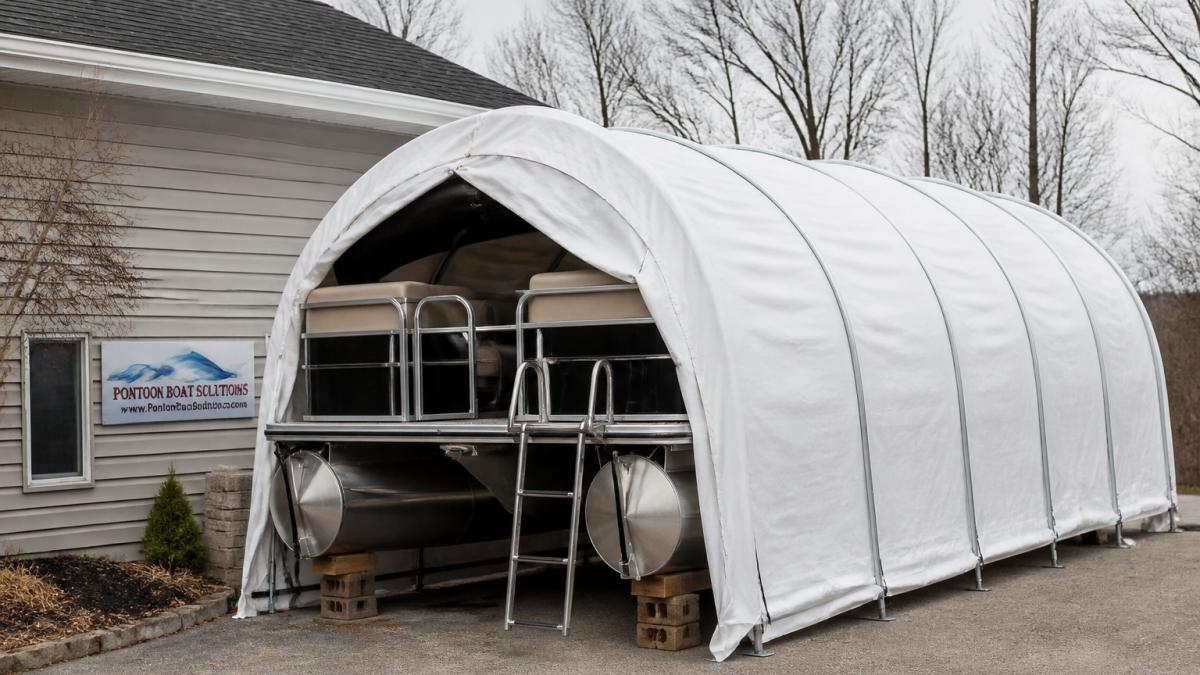
For outdoor boat storage, a high-quality UV-resistant tarp combined with a support frame is the most cost-effective solution. The frame keeps the tarp elevated and angled for water shedding. This prevents pooling while allowing some air circulation.
| Coverage Option | Best For | Key Advantage | Main Drawback |
|---|---|---|---|
| Shrink-wrap | Harsh climates, premium boats | Airtight seal, maximum protection | Higher cost, professional installation needed |
| Tarp with frame | Most outdoor storage situations | Affordable, DIY-friendly, water shedding | Requires proper support to work well |
| Tarp without frame | Temporary, short-term storage | Lowest cost | Water pooling, moisture trapping |
Building a DIY Pontoon Boat Support System
A support frame keeps your canvas cover elevated and angled for proper water shedding. Without support, the cover sags under snow load and traps water underneath. This leads to mold, mildew, and structural damage to your boat.

Why Support Frames Prevent Water Pooling and Damage
Water pooling under a sagging cover causes multiple problems. Trapped moisture creates mold and mildew that damage upholstery and equipment. Standing water freezes in winter, creating ice weight that stresses your boat’s structure. The cover itself deteriorates faster when wet fabric sits against the canvas for months.
A properly angled support frame sheds water to the edges instead of pooling in the middle. This keeps the underside of the cover dry, preventing mold growth. The angle also prevents snow from accumulating on the cover, snow slides off sloped surfaces instead of piling up.
Support frames also protect your boat from direct water contact.
Installation Without Drilling or Damage
Most support systems require drilling holes into your boat’s frame or rails. This creates permanent damage and potential leak points. A better approach uses a floor-supported frame that needs no drilling.
A properly installed support frame is the difference between a boat that survives winter in great condition and one that needs costly repairs in spring. The investment in a quality frame pays for itself by protecting your furniture, canvas, and pontoons.
Managing Moisture, Ventilation, and Pest Prevention
Moisture is the enemy of outdoor boat storage. High humidity under a sealed cover creates mold, mildew, and musty odors. Proper ventilation reduces moisture buildup significantly.
- Sealing any gaps or openings larger than a quarter inch
- Removing food sources (snacks, trash, old bait)
- Using rodent deterrent traps around the boat perimeter
- Installing screens or barriers over vents and openings
- Checking the boat monthly for signs of pest activity
Pontoon Boat Winter Storage Cost and Long-Term Value
How to store pontoon boat outdoors for winter involves upfront costs that protect much larger investments. A quality support frame and cover system costs less than replacing a damaged canvas cover or repairing mold-damaged upholstery.
Securing Your Boat Against Wind and Snow Load
Wind and snow create significant forces on a covered boat. An unsecured cover tears, and an unsecured boat shifts on its trailer or mooring. Proper tie-downs prevent these problems.
Mark your boat’s location with a visible stake or flag if it’s covered with shrink-wrap or a tall cover. This prevents accidental damage from snowplows or other equipment during winter maintenance of your storage area.
Frequently Asked Questions
How much does it cost to store a pontoon boat over the winter?
Winter storage costs depend on your boat size, location, and protection method. Shrink-wrap ranges from a few hundred to several thousand dollars for professional installation. DIY tarps and support systems cost significantly less upfront. A quality support frame prevents expensive furniture and cover damage, often saving more than its initial cost by extending equipment lifespan and maintaining resale value. Visit Pontoon Boat Solutions for current pricing on DIY solutions tailored to your boat.
Do pontoons need to be winterized?
Yes, winterization is essential for pontoon boats stored outdoors. Fuel stabilizer prevents engine gum buildup, fogging oil protects internal engine parts, and coolant flushes remove water that can freeze and crack the cooling system. Battery removal prevents discharge and corrosion. Without winterization, you risk fuel line blockages, engine damage, and costly spring repairs. A complete winterization checklist takes a weekend but protects your investment through the off-season.
Should I shrink-wrap my pontoon boat for winter?
Shrink-wrap offers maximum UV and weather protection but costs significantly more and requires professional removal in spring. Tarps with proper support frames provide excellent protection at lower cost and allow easier access for ventilation and inspections. UV-resistant marine-grade tarps rated for snow load work well in most climates. Your choice depends on budget, climate severity, and how often you need boat access during winter. Both methods require proper water shedding and ventilation to prevent mold.
How do I prevent water pooling on my pontoon cover during winter?
Water pooling causes mold, rot, and cover sagging. A support frame that elevates the canvas creates a peaked dome allowing water to shed naturally. DIY pontoon boat support systems using floor-based aluminum arches eliminate drilling and damage while maintaining proper slope. Ensure tie-downs are secure against wind, and maintain ventilation gaps to allow moisture escape. Check the cover monthly for pooling and adjust supports if sagging occurs.