Quick Summary
The 8 steps to winterize a pontoon boat are: clean the boat, inspect the tubes and hull, flush the engine’s cooling system, stabilize the fuel, protect the engine internals, drain all water systems, add antifreeze, and manage the battery. Work through them in order before the first hard freeze, then cover the boat so moisture can escape.
- Clean the boat first so dirt and standing water do not invite mildew over winter.
- Flush the engine’s cooling system with fresh water to remove lake or river water and silt.
- Run the engine long enough after adding fuel stabilizer so treated fuel reaches the carburetors or injectors.
- Leave water drains open until the antifreeze is in every fixture, then close them.
- Use RV or marine antifreeze, never automotive antifreeze, in freshwater systems.
Table of Contents
- 8 Steps to Winterize a Pontoon Boat Before Storage
- What You’ll Need and When to Do Each Step
- Step 1: Clean the Boat Inside and Out
- Step 2: Inspect the Pontoon Tubes, Deck, and Hull
- Steps 3 to 5: Flush, Stabilize, and Protect the Engine
- Steps 6 to 8: Drain Water Systems, Add Antifreeze, and Manage the Battery
- How to Shrink Wrap or Cover a Pontoon Boat for Storage
- How Much Does It Cost to Winterize a Pontoon Boat?
- Booking Your Off-Season Setup and Getting Ready to De-Winterize
- Frequently Asked Questions
8 Steps to Winterize a Pontoon Boat Before Storage
Last Updated: November 12, 2026
What You’ll Need and When to Do Each Step
This guide covers 8 steps to winterize a pontoon boat before storage, so the deck, furniture and engine come through the off-season in good shape. Winterizing is mostly about removing water and fuel that can freeze, rust or go stale, then protecting the boat under a cover that keeps moisture from pooling.
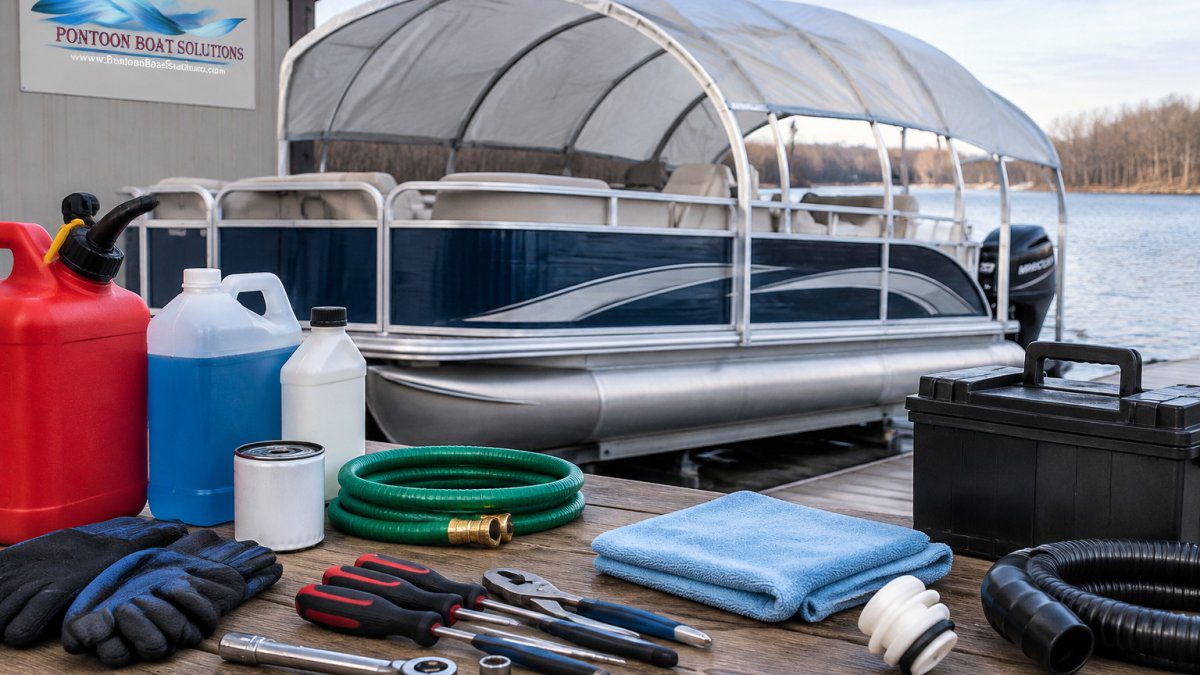
Most owners do this in the last few weeks of the boating season, before the first hard freeze. Plan for a full weekend the first time, with a shorter timeline on later years. Gather these supplies before you start:
- Marine-grade cleaner, soft brushes and a hose
- Fuel stabilizer and a fuel-line flush kit (for outboard models)
- Engine oil, lower unit gear lube and replacement filters, as the engine manual specifies
- Non-toxic RV or marine antifreeze
- A battery charger or maintainer, and a voltmeter
- A flashlight, a tube inspection kit and clean rags
- A breaker bar or wrench for drain plugs
Work through the steps in order. Cleaning first keeps dirt out of the engine and water systems, and draining before adding antifreeze prevents mixing. Many owners find that the most useful outside reference is the NMMA guidance on boat winterization, which sets out the common maintenance intervals for marine engines.
Step 1: Clean the Boat Inside and Out
Start the 8 steps to winterize a pontoon boat by cleaning the boat from top to bottom. Remove cushions, floor mats, storage bins and any loose gear, then wash the deck, railings and furniture with a marine cleaner. Dirt, food residue and standing water left in the seams invite mildew over winter. For guidance on protecting the boat’s furniture and cushions from winter damage, see winter damage prevention for pontoon furniture.

Pay attention to the areas people overlook. Clean the underside of the seat cushions, the storage compartments and the drain channels around the deck edge. Rinse thoroughly and let everything dry completely before covering the boat. Moisture trapped under a cover is the most common cause of mildew on upholstery.
Watch out: do not pressure wash the seams of the pontoon tubes or the fabric cushions, since high pressure can force water into seams and lift vinyl.
Step 2: Inspect the Pontoon Tubes, Deck, and Hull
This is the point in the process where you find problems while the boat is out of use, since a thorough inspection is essential to winterizing a pontoon boat. Check each pontoon tube for cracks, dents, loose end caps and corrosion around the fittings. Look along the deck for soft spots or gaps where the flooring meets the frame, and check the hull and propeller for damage.
Small issues are cheap to fix now and expensive in spring. A loose end cap can let water into a tube, and a freeze can split it. Note anything you find so you can order parts or book repairs before the season opens.
Steps 3 to 5: Flush, Stabilize, and Protect the Engine
These three steps cover the engine, and each one needs its own attention. Rushing them is the most common reason a pontoon engine starts hard in spring.
Step 3: Flush the cooling system. Connect a flush attachment or earmuffs to the water intake and run fresh water through the engine for several minutes with the engine idling. This pushes out lake or river water, silt and salt before they sit in the powerhead or block for months. Run the engine only as long as the manual allows, and never run it dry.
Step 4: Stabilize the fuel. Add marine fuel stabilizer to a full tank, then run the engine long enough for the treated fuel to reach the carburetors or injectors. A common pattern is to run it for several minutes at idle and then a short period at higher rpm so the treated fuel circulates through the whole system, not just the tank and fuel line. A full tank also leaves less room for condensation to form over winter.
Step 5: Protect the engine internals. Change the engine oil and filters while the engine is still warm, so old oil and contaminants drain fully. Then fog the cylinders as the manual directs, which coats the cylinder walls and protects them from rust during storage. Replace the lower unit gear lube on outboards and sterndrives, and check for water or metal in the old lube, which signals a seal problem worth fixing before spring.
Watch out: running the engine too briefly after adding stabilizer leaves untreated fuel in the carburetors or injectors, which can varnish over winter and cause a rough spring start.
Outboard, Sterndrive, and Inboard Differences
The steps above apply to most setups, but the details change with the engine type:
- Outboard: Flush through the water intake with a flush kit or earmuffs, change the gear lube in the lower unit, and check the propeller shaft for fishing line. Fog the cylinders through the spark plug holes as the manual directs.
- Sterndrive: Flush the drive through its raw-water connection, service the drive lubricant and bellows, and check the gimbal bearing and u-joints. Drain the raw-water side of the engine block if the manual calls for it.
- Inboard: Winterize the engine and generator separately, and confirm every raw-water and freshwater circuit is drained or treated. Inboards often have a closed cooling system, so check the coolant strength with a hydrometer and top up as needed.
Always confirm the exact procedure in your engine manual before you start, and use a qualified technician if the manual calls for steps you are not comfortable performing.
Steps 6 to 8: Drain Water Systems, Add Antifreeze, and Manage the Battery
These three steps protect the systems that hold water and power. Each one has its own sequence, and skipping a drain point is how a pontoon ends up with a cracked pump or split hose in spring.
Step 6: Drain every water system. Work through each system one at a time, as the final stage of the 8 steps to winterize a pontoon boat. Open the low-point drains on the freshwater tank, water heater (if fitted), livewell, and washdown system. Run the pump until it is dry, then open any inline drain valves and disconnect hoses at the lowest points so trapped water can escape. Blow out the lines with low-pressure air if the manual recommends it. Leave the drains open until you finish the antifreeze step.
Step 7: Add non-toxic antifreeze where appropriate. Use RV or marine antifreeze rated for the temperatures in your area, and follow the product label for mixing and handling. Pour it into the freshwater tank and run each faucet until pink fluid appears, then add it to the livewell and washdown lines. Do not use automotive antifreeze in freshwater systems. Close the drains only after treated fluid reaches every fixture.
Step 8: Manage the battery. Disconnect the negative cable first, then the positive, and remove the battery. Store it in a cool, dry place off concrete if the manufacturer recommends it, and put it on a maintainer or check its charge with a voltmeter each month. A battery left flat through winter can be damaged beyond repair. Clean the terminals and coat them with dielectric grease before storage so corrosion does not build up.
Watch out: leaving the water heater full of water is one of the most expensive winterizing mistakes, because a freeze can split the tank and the repair often costs more than the heater itself.
US Coast Guard boating safety resources offers guidance on handling batteries and fuel safely during storage, including ventilation and spill precautions.
The three final steps each protect a different system, and the table below summarises what each one involves.
| Step | What to do | Key point |
|---|---|---|
| Step 6: Drain water systems | Open low-point drains and run the pump dry | Leave drains open until antifreeze step is done |
| Step 7: Add antifreeze | Use RV or marine antifreeze in freshwater lines | Never use automotive antifreeze |
| Step 8: Manage the battery | Disconnect, store cool, and maintain charge | Check charge monthly with a voltmeter |
How to Shrink Wrap or Cover a Pontoon Boat for Storage
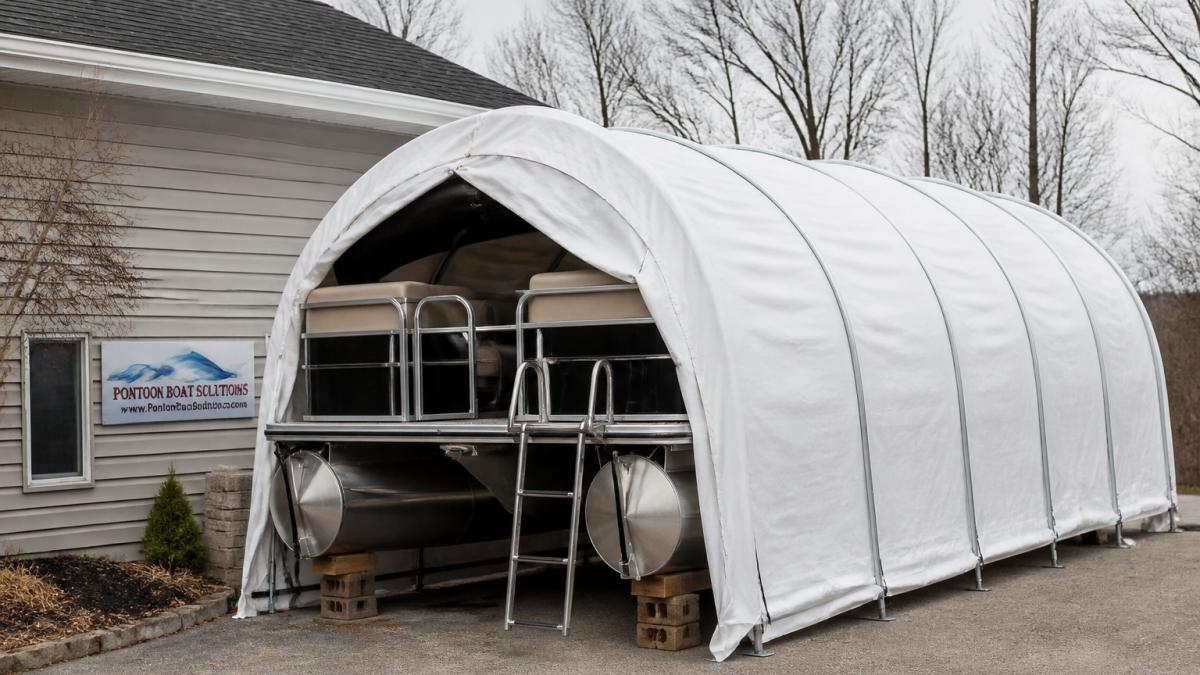
A good cover is the last line of protection in any plan of 8 steps to winterize a pontoon boat, keeping out rain, snow and debris, but it also needs air flow. Trapped moisture beneath a tight cover causes most mildew problems. Use a cover sized for the boat’s length and beam, and make sure it sits clear of the furniture and the top of the railings.
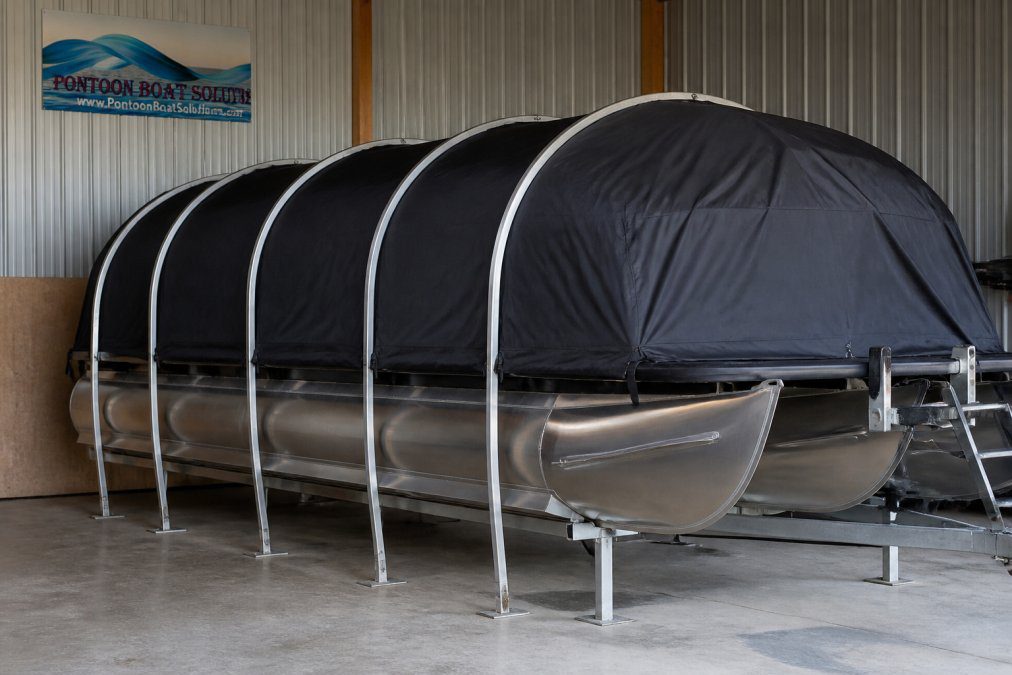
A support system keeps the cover off the boat so water runs off rather than pooling. Pontoon Boat Solutions makes an DIY cover support system that is screw-free and does not require drilling into the boat, which many owners prefer when they want to keep their frame untouched. Whatever system you use, leave a small vent gap so the interior can breathe.
How Much Does It Cost to Winterize a Pontoon Boat?
Costs vary widely. A DIY winterization mainly uses supplies such as fuel stabilizer, antifreeze, oil and filters, and the total depends on engine size and how many parts you replace. Professional service adds labor, so request a written quote from a local marina.
Pricing for cover support systems depends on quantity, dates and delivery. For current prices or a quote, check the Pontoon Boat Solutions website directly.
Booking Your Off-Season Setup and Getting Ready to De-Winterize
Keep a written log of what you did, including oil change dates, stabilizer additions and battery checks. That record makes spring startup faster. When you de-winterize, reverse the process: reconnect the battery, refill the freshwater system, check the fuel and oil, and inspect the cover and support for damage.
If you plan to store the boat in a different spot next season, measure the clearance before buying supports. For current cover support options, see the Pontoon Boat Solutions product range or get in touch to find the right fit for your boat.
Frequently Asked Questions
What are the steps involved in winterizing a pontoon boat?
Winterizing a pontoon boat generally follows eight steps: clean the interior and exterior, inspect the pontoon tubes, deck and hull, flush the engine, stabilize the fuel system, protect the engine, drain water systems, add antifreeze where appropriate, and maintain or disconnect the battery. Work through them in order so the fuel and cooling systems are protected before the boat goes into storage. Keep a written checklist so nothing gets skipped, and follow your engine and manufacturer manuals for exact procedures and fluid specifications.
Do pontoon boats need to be winterized?
Yes, if the boat will sit through freezing temperatures. Water left in the engine cooling passages, water systems and plumbing can expand and crack components when it freezes. Fuel left sitting can degrade and gum up injectors and carburetors over the winter. Even in milder climates, a pontoon stored outdoors for several months benefits from cleaning, fuel stabilization and battery care to prevent corrosion and mildew.
How do you winterize a pontoon boat yourself?
Start by cleaning the boat and removing loose gear, then inspect the pontoon tubes, deck and hull. Flush the outboard or inboard cooling system with fresh water, add a fuel stabilizer and run the engine to circulate it, and change the engine oil and gear lube if due. Drain the freshwater tank, pumps and plumbing, add non-toxic RV-style antifreeze to the lines, and disconnect or charge the battery. Cover the boat so it stays dry and ventilated.