Quick Summary
The best pontoon boat storage starts with under-seat bins for life jackets and cushions, since they are cheap and fix the most common clutter. Add dry bags, hanging baskets and a cargo net for smaller, wet or loose gear. Match each solution to what you actually carry.
- Measure seat compartment openings at the top, since most seat bases taper inward.
- Drill four to six 1/4-inch drain holes in each bin so water does not pool.
- Keep the heaviest bin over the seat pedestal to stay near the centerline.
- Tie bins to the seat frame so they cannot slide into the helm footwell.
- Use a backing plate when mounting heavy gear to thin rails to prevent cracking.
Table of Contents
- Why Pontoon Storage Gets Cluttered Fast
- 1. Under-Seat Storage Bins for Life Jackets and Cushions
- 2. Hanging Baskets and Door Hangers for Small Gear
- 3. Waterproof Bags and Cargo Nets for Dry Supplies
- 4. Wire Mesh Wall Grids and Shoe Organizers
- 5. Repurposed Drawers, Crates and Coolers
- 6. Storage Covers and Support Systems for Off-Season Protection
- Keeping Your Pontoon Storage Organized Before Your Next Trip
- Frequently Asked Questions
Why Pontoon Storage Gets Cluttered Fast
Last Updated: November 17, 2026
Pontoon decks look roomy until the first weekend trip, and that is when pontoon boat storage becomes the real problem. Life jackets, cushions, towels, ski ropes, a cooler and a tackle box can take over the floor within an hour. Owners who want that clutter out of the way often look for storage that avoids drilling into the boat and fits the layout.
Most of the clutter comes from a few places. Gear gets dropped wherever there is open floor. Items stored under seats get stacked on top of each other, so the one thing you need sits at the bottom. Wet gear gets tossed into the same space as dry gear. A pontoon’s open layout makes all of this worse, because there are few walls or cabinets to hide things behind.
The fix is not one big storage unit. Effective pontoon boat storage is a set of small, specific solutions matched to what you carry. The ten ideas below range from simple under-seat bins to a cover support system for off-season protection. Each one includes the materials you need, a short how-to summary, and a note on where it works best.
1. Under-Seat Storage Bins for Life Jackets and Cushions
Under-seat storage is the most useful space on most pontoons, and it is often the least organized. Plastic bins sized to fit the compartment keep life jackets and cushions separate from wet gear and make the space easy to reach without emptying everything. This is the one idea on the list that almost every owner should build first, because it costs the least and fixes the most common clutter problem.

Materials and tools:
- Stackable plastic bins sized to your seat compartment (measure the opening first)
- A drill with a 1/4-inch bit for drain holes
- Cable ties or a small bungee to keep lids from shifting
- A tape measure and a notepad
How to do it: Measure the compartment width, depth and height at the opening, not at the floor, because most pontoon seat bases taper inward. Write down the smallest of the three dimensions and buy bins that leave a finger’s width of clearance on each side. Measure the compartment before you buy, because seat base dimensions vary by boat. Drill four to six 1/4-inch drain holes in the base of each bin so water does not pool. Sort life jackets into one bin and cushions into another. Use a bungee across the top if the compartment bounces on rough water.
Capacity and layout notes: On a boat with center-toon storage, the center tube locker is usually the longest continuous space on the boat and works best for paddles, ski ropes and long cushions, while the seat bases handle life jackets and small gear. Keep the heaviest bin over the seat pedestal, not at the outboard end of the bench, so the load stays near the boat’s centerline.
Watch out: Do not block the seat base’s ventilation openings or the bilge access hatch with a bin. Loose bins can slide into the helm footwell on a hard turn, so tie each one to the seat frame with a cable tie or a short bungee, and never stack bins above the top of the seat base where they can topple into an exit path.
Under-seat storage is the most useful space on most pontoons, and these are the key figures for setting it up.
| Item | Value | Note |
|---|---|---|
| Drain holes per bin | 4 to 6 | 1/4-inch bit, so water does not pool |
| Clearance per side | A finger’s width | Measure at the opening, not the floor |
| Center tube locker | Longest continuous space | Best for paddles, ski ropes, long cushions |
| Heaviest bin placement | Over the seat pedestal | Keeps load near the boat’s centerline |
2. Hanging Baskets and Door Hangers for Small Gear
Small items like sunscreen, sunglasses, phones and first-aid kits get lost on a flat deck. Hanging baskets and door hangers lift them off the floor and keep them in one place.
Materials and tools:
- Mesh or plastic hanging baskets with stainless hooks
- An over-the-door hanger with pockets, or a hook kit for a cabin door
- Stainless or marine-grade screws if you mount anything to a fixed surface
How to do it: Choose a spot with shade and easy reach. Hang baskets from a rail or cabin hook using a shock cord rather than rigid wire, which keeps contents from banging. Place sunscreen and small electronics in closed pockets. Check the hardware each season, because salt air and sun wear down fasteners.
Where it works best: Owners who want small, frequently used items within arm’s reach without taking up deck floor.
3. Waterproof Bags and Cargo Nets for Dry Supplies
Waterproof bags protect dry supplies like towels, spare clothes and snacks from spray and rain. Cargo nets hold bulkier items against the side of the deck or under a bench, where they will not roll around.
Materials and tools:
- Roll-top waterproof dry bags in sizes that fit your gear
- A cargo net with tie-off points or a bungee-style net
- Anchor points on the deck or under-seat frame
How to do it: Pack towels and clothing in dry bags and roll the tops closed three times before sealing. Secure the cargo net to two fixed anchor points so it cannot slide. Keep heavy items low and near the center of the deck to help with weight distribution.
Where it works best: Families and watersports groups who need dry storage for supplies that get wet or dirty.
4. Wire Mesh Wall Grids and Shoe Organizers
Vertical space is often wasted on a pontoon. Wire mesh wall grids and shoe organizers give you that space back by holding shoes, tools and small containers off the floor.
Materials and tools:
- A powder-coated or stainless wire mesh grid panel
- Stainless clips or hooks sized to the grid
- A tiered shoe organizer with open mesh or drainage
How to do it: Mount the grid on a flat, sturdy surface such as a cabin wall or bulkhead, using corrosion-resistant hardware. Hang shoes and tools on the clips, leaving space for airflow so they dry out. For life rings and ski ropes, a rail-clip J-Hook accessory keeps them off the floor with a secure shock cord. Keep wet footwear on a separate tier from dry gear.
Where it works best: Owners with a cabin or wall space who want to store dock shoes, tools and small accessories in one spot.
5. Repurposed Drawers, Crates and Coolers
Household drawers, plastic crates and coolers can be repurposed for boat storage. They are inexpensive, easy to find and easy to replace. A cooler mounted on a rail rack also keeps drinks within reach without bending.
Materials and tools:
- Plastic crates or a small drawer unit rated for moisture
- A rail-mounted cooler rack or sturdy bracket
- Drain holes and rubber feet to keep the base off the deck
- Stainless steel washers and nylock nuts for any through-bolted mount
- A drill, a 1/4-inch bit and a socket set
How to do it: Choose materials labeled for outdoor or marine use, since indoor furniture can warp in humidity. Measure any crate or cart against the space before you buy it. Drill drain holes in any container that holds water. Mount coolers on a rack that clamps to the rail so the weight is spread across the frame. Do not overload the rack, and check the weight rating before you load it. Check the weight rating of any rack before you load it, and use hardware suited to marine conditions.
Budget and difficulty tiers:
- Beginner, under $20: A single plastic crate with drain holes and rubber feet, set under a bench and tied to the seat frame. No drilling into the boat.
- Intermediate, $20 to $40: A two- or three-drawer plastic cart mounted to a cabin wall with stainless L-brackets, or a cooler strap kit that clamps to an existing rail.
- Advanced, $40 and up: A rail-mounted cooler rack with through-bolted stainless hardware and a custom cutting board or bait tray on top.
Watch out: Use a backing plate when mounting heavy gear to a rail, since thin rails can crack under load. Keep the cooler low and centered, and never mount it where it blocks a gate, ladder or exit path.
6. Storage Covers and Support Systems for Off-Season Protection
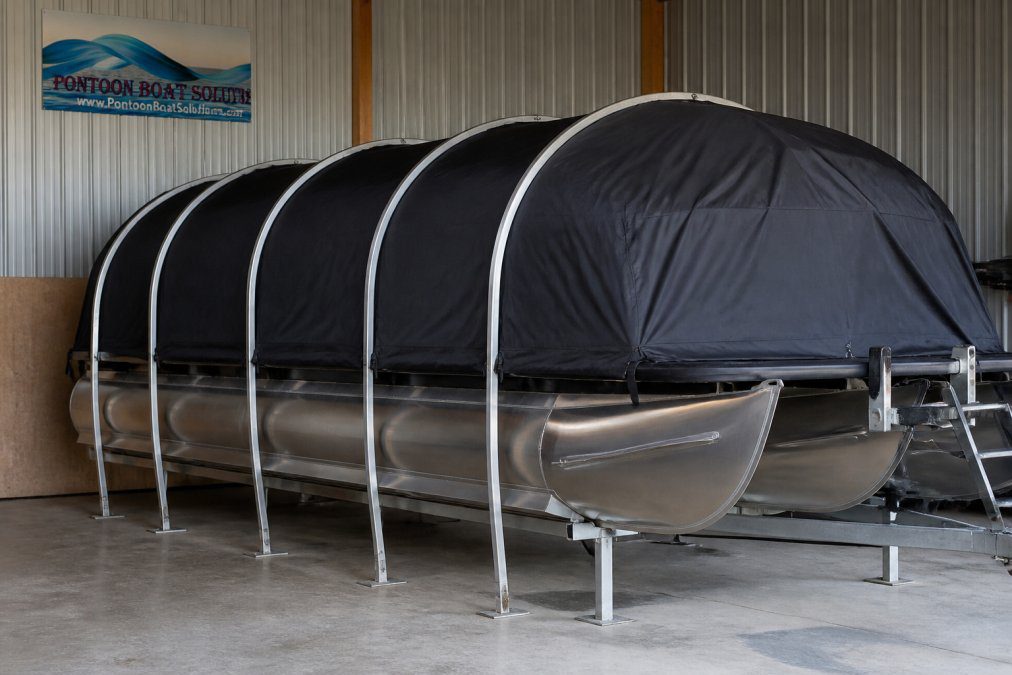
Off-season storage is where furniture and deck gear are most at risk. Water pooling on a canvas cover can lead to mold, sagging and staining. A support system raises the cover so water runs off, and it protects the furniture underneath.
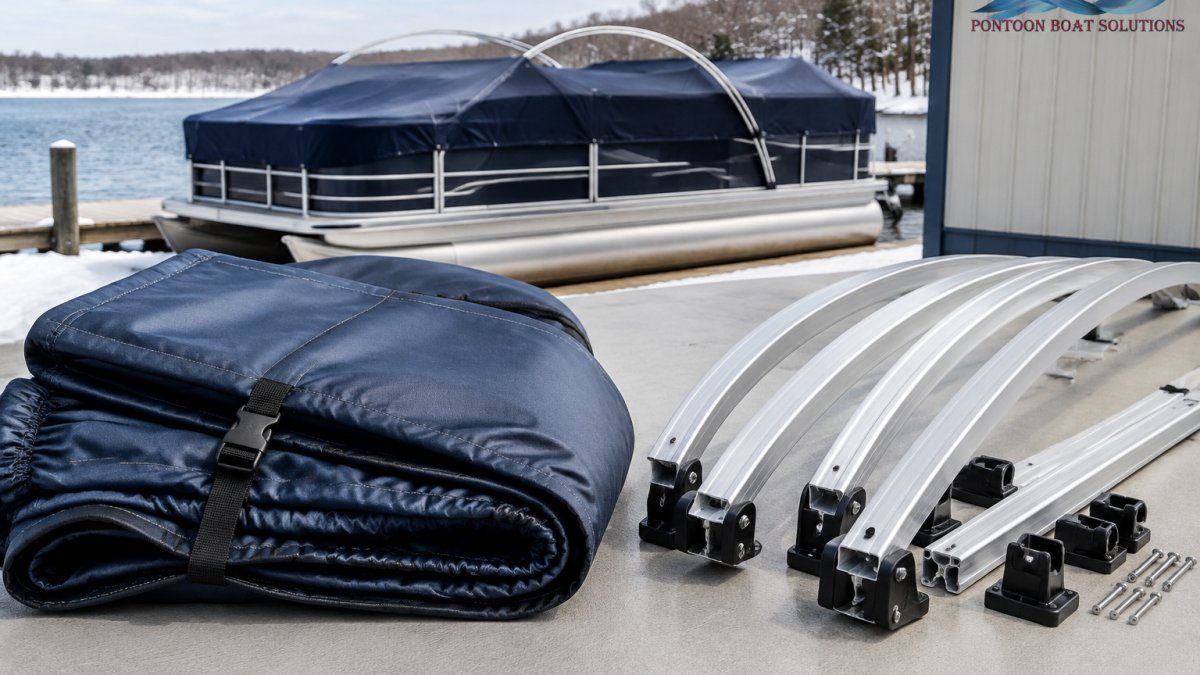
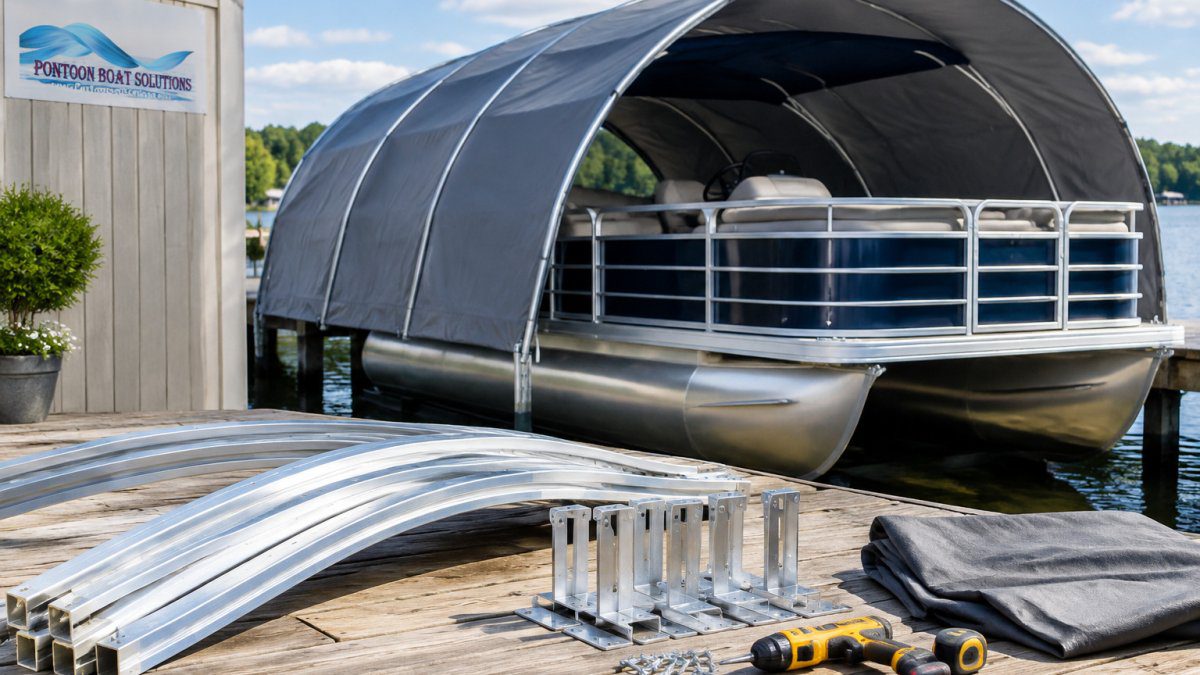
Pontoon Boat Solutions offers a screw-free, patent-pending system that uses solid aluminum Arch-Makers to create a floor-supported dome under the cover, without drilling into the boat. Readers comparing options can see a no-drill pontoon cover support system and how it is set up. For current pricing, check the Pontoon Boat Solutions website or request a quote.
Materials and tools:
- A cover support system sized for your pontoon’s beam and length
- A full-length crown or ridge support for long boats
- Cover straps or lacing to keep the canvas secure
How to do it: Set the support frame on the deck according to the instructions for your boat size. Lay the cover over the frame and secure it at the edges. Check after heavy rain or snow to make sure water is draining and the cover has not sagged. Remove and store the frame if you plan to clean the deck thoroughly.
Where it works best: Owners who store their boat outdoors through winter or a long off-season and want a drill-free way to keep the cover elevated.
Watch out: Canvas covers that trap water for long periods can hold moisture against the deck and furniture. Make sure the support lifts the cover enough for drainage before you seal everything up for storage.
Keeping Your Pontoon Storage Organized Before Your Next Trip
Good storage stays good only if you maintain it. Before each trip, check that bins are secure, drain holes are clear, and anything that touches wet gear has dried out. After each trip, return items to their assigned spots so the deck stays clear for the next outing.
Start with the one or two problems that cause the most clutter on your boat. Life jackets on the floor? Begin with under-seat bins. Wet towels everywhere? Add dry bags and a cargo net. Once those are in place, add the rest as your gear list grows.
Frequently Asked Questions
What are some good storage ideas for pontoon boats?
Good pontoon storage starts with the space you already have. Under-seat bins hold life jackets, cushions and towels. Hanging baskets and door hangers keep small items off the deck. Waterproof bags protect dry supplies from spray, and a wire mesh wall grid gives you vertical space for tools and dock gear. Pick two or three options that match your layout, then add more as your gear list grows.
What are some DIY, cheap storage ideas for a pontoon boat?
The lowest-cost options are plastic bins, mesh cargo nets, and repurposed shoe organizers hung on a wall or railing. Before drilling anything, check that the mounting method will not damage your boat’s rails, seating or upholstery, and that the storage stays secure while the boat is moving.
How do I protect pontoon boat furniture during winter storage?
Clean and dry the furniture before storage, then keep it off the deck floor and out of standing water. A raised cover support helps prevent water pooling on the canvas, which is a common cause of mildew. Pontoon Boat Solutions’ Arch-Makers create a floor-supported dome without drilling, so the cover stays elevated over the seating. Check current pricing on the Pontoon Boat Solutions website or request a quote, since costs depend on your boat size and quantity.