Posted on — Leave a comment

Pontoon Dome Supports: Are They Worth the Cost?

Last Updated: November 24, 2026

Quick Summary

A dome support system is worth it for pontoon boats when water pooling and cover sagging are costing you money, and you are willing to pay more upfront for a shape that sheds water. Whether it pays off depends on your boat, your storage conditions, and what a failed cover would cost to replace.

  • Dome systems spread support across the cover, while pole systems concentrate it at individual points.
  • Pole supports can let the cover sag between poles, where water collects in low spots.
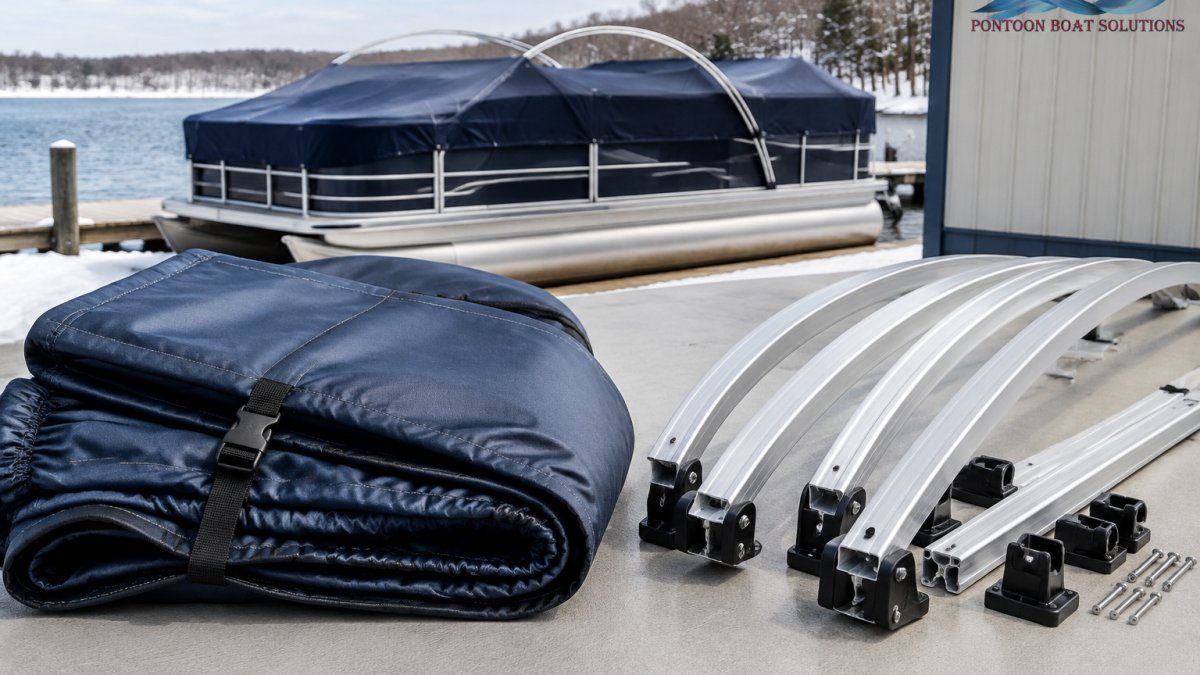
  • The Arch-Makers are described as screw-free and drill-free, avoiding drilling into the boat.
  • Total upfront cost is the purchase price plus installation, compared against cover replacement and water damage.
  • Confirm beam width, rail layout, and obstruction clearance before ordering, since fit is not guaranteed.
Is your pontoon cover pooling water?Pontoon Boat Solutions offers screw-free dome supports designed for pontoon boats.

Shop all Products

Table of Contents

A dome support system is worth it for pontoon boats when water pooling and cover sagging are costing you money, and when the buyer is willing to pay more upfront for a shape that sheds water. The short answer depends on your boat, your storage conditions and how much a failed cover would cost you to replace.

The research available for this article does not include published prices, lifespans or measured performance results for dome systems compared with pole supports. Because of that, this guide explains the decision framework rather than claiming a specific return on investment. A common approach is to weigh that benefit against the cost of the system and the cost of cover repairs over time. Pontoon Boat Solutions product page describing the dome design and water runoff claims

How Dome and Pole Support Systems Compare

A dome system spreads support across the cover, while a pole system concentrates it at individual points. Compare Taylor Made and Vic’s Marine support systems side by side to see how two specific brands handle this difference. Pontoon Boat Solutions comparison of dome and pole cover supports

Factor Dome System Pole System
Support layout Spread across the cover Concentrated at each pole
Water runoff Shape is designed to shed water Depends on pole placement and cover tension
Installation No drilling on the Arch-Makers design Varies by pole type
Documented long-term data Not found in supplied research Not found in supplied research

iBoats Boating Forum discussion of pontoon cover support systems

Pontoon Cover Support Poles: How They Work and Where They Fall Short

Pole supports hold the cover up at set points. Their main weakness is that the cover can sag between the poles, and water can collect in those low spots. Owners who want the poles to work well need to keep the cover tight, which takes attention and adjustment over time.

Installing a Pontoon Boat Solution

Pontoon Boat Solutions

Watch out: if the cover is not stretched semi-taut between poles, water can pool in the gaps and add weight that pulls the cover further down.

Owners who find poles falling short often look for fixes such as adding supports or tightening the cover. Seven practical fixes for a sagging pontoon cover cover what to try first. A practical starting point is to check the cover after each rain and note where water sits.

Pontoon Boat Cover Support System Reviews: Pros and Cons of Dome Systems

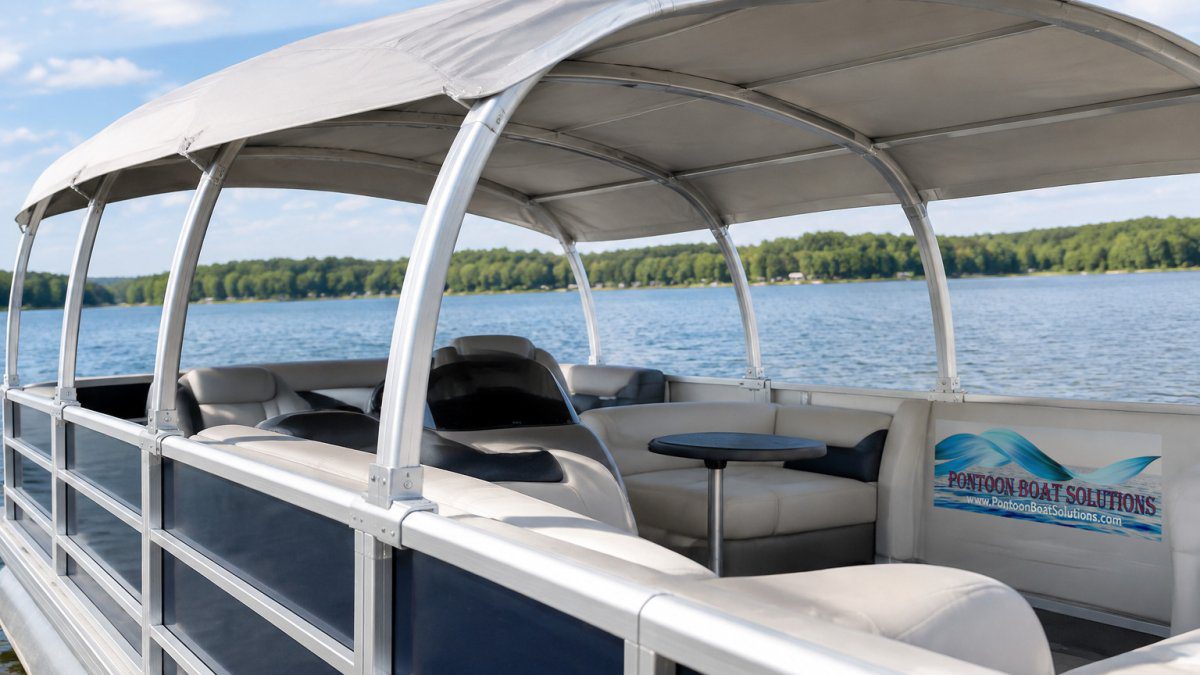
The Pontoon Boat Solutions Arch-Makers use solid aluminum, avoid screws and drilling, and are designed for pontoon boat geometry.

Pros:

  • A raised profile intended to encourage water runoff
  • No drilling into the boat
  • Designed specifically for pontoon boats

Cons:

  • Pricing is not listed in the research available for this article
  • Dimensions and compatibility details are not provided in the supplied results
  • No independent long-term durability data was found

Best for: owners who want a no-drill support and who will check compatibility before buying. See a list of no-drill pontoon cover support systems to compare other options.
Skip if: you need verified price and durability figures before committing.

Review comparing pontoon cover support systems

Pricing, Value, and Break-Even Thinking

Most competing guides stop at “it depends on your budget.” That is not useful when you are standing in a marine store aisle or comparing an online cart. The better approach is to build a total-cost-of-ownership picture across four cost buckets, then compare that against the realistic cost of doing nothing.

Bucket 1, Purchase price of the support system. Because published prices change and vary by configuration, confirm the current figure on the product page or request a quote rather than relying on a number from a forum post.

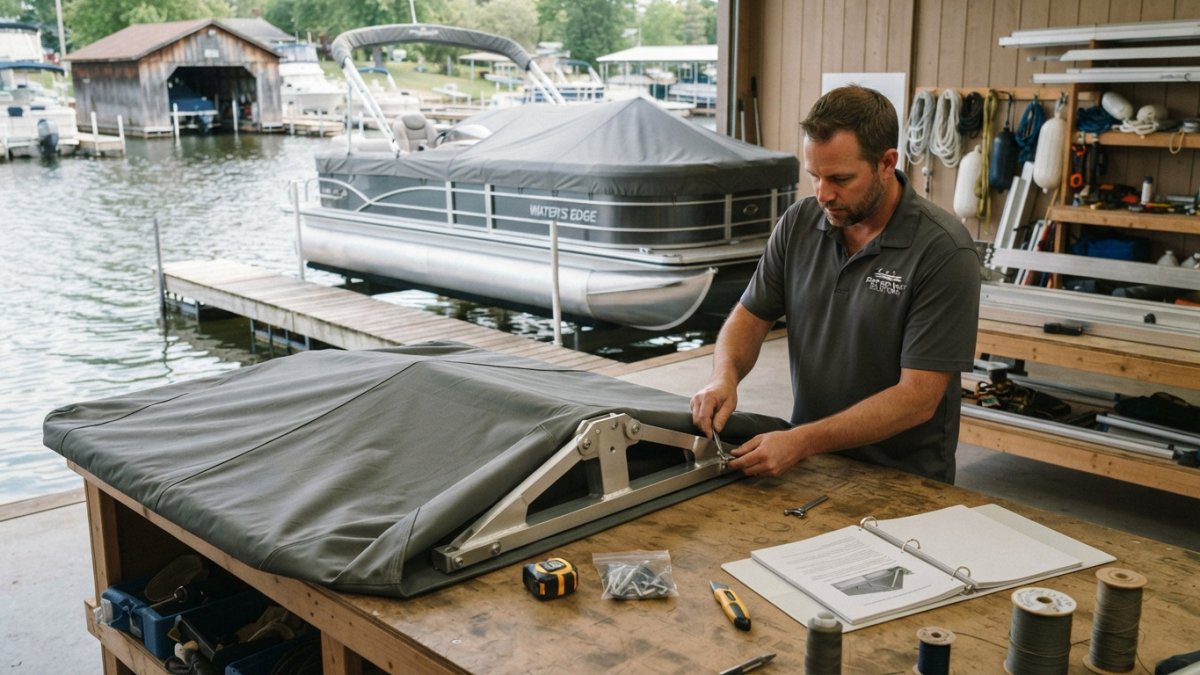
Bucket 2, Installation cost. The Arch-Makers are designed for DIY installation without drilling. A design that requires drilling, through-bolting, or custom fabrication pushes the job toward a dealer or rigger, and that labor is a real line item. Add the cost of any hardware, sealant, or backing plates the install requires.

Bucket 3, Replacement cover cost. This is the number that drives the whole calculation. A pontoon cover is a large, custom-fit piece of marine canvas, and replacement pricing scales with boat length, beam, and fabric grade.

Bucket 4, Water-damage cost. Standing water on a cover does more than ruin canvas. It adds weight that stresses seams and snaps, it can wick through to upholstery and carpet, and in freezing conditions it can crack or deform the cover and the surfaces beneath.

A simple break-even test. Add Bucket 1 and Bucket 2 to get your total upfront cost. Then estimate the replacement cost of your cover (Bucket 3) and the realistic repair or replacement cost of the interior surfaces most exposed to water (Bucket 4). Divide your upfront cost by the per-season damage cost you expect to avoid. The result is the number of seasons the system must last to pay for itself.

Use-case decision framework.

  • Occasional storage, sheltered location: The case for a premium dome system is weakest. A tight cover and a couple of poles may be enough, and the break-even horizon stretches out.
  • Year-round outdoor storage in a wet climate: The case is strongest. Pooling happens repeatedly, cover wear accelerates, and the per-season damage cost is high.
  • Snow-load storage: A dome or arch shape sheds snow differently than a flat pole-supported cover, and the structural question becomes as important as the price. Confirm the system’s snow-load guidance with the manufacturer.
  • Owners who remove the cover frequently: A no-drill, quick-release design earns its premium through setup time saved, not just water protection.
  • Budget-constrained buyers: A pole kit plus disciplined cover tension is a legitimate lower-cost path; the trade-off is more frequent adjustment and a higher chance of sag between supports.

Watch out: a break-even calculation built on a guessed cover price is worse than no calculation. Get an actual replacement quote for your boat’s cover size before you run the numbers, and treat any manufacturer’s durability claim as a claim to verify, not a warranty.

Pontoon Boat Solutions product page for current dome system pricing and configuration options

Installation Effort and Fit for Your Pontoon Boat

The Arch-Makers are described as screw-free and drill-free, which removes the most common installation worry. But “no drilling” is not the same as “fits your boat.” The fit questions below are the ones that most often cause a return or a frustrating install, and they are the questions most competing guides skip.

Fit checklist, gather these before you order:

  1. Beam width. Measure the widest point of your pontoon deck, outside rail to outside rail. Compare that to the system’s stated fit range. A system sized for a narrow beam will not span a wide deck, and one sized for a wide beam may not tension correctly on a narrow boat.
  2. Rail layout and rail height. Note whether your rails are continuous or interrupted by gates, cleats, and bimini mounts. A rail-mounted system needs a clear, straight run of rail to clamp to. Measure rail height above the deck, because that sets how much arch clearance you get under the cover.
  3. Boat length and number of support points. Longer boats need more support points to keep the cover from sagging between arches. Confirm how many arches or supports the kit includes for your length, and whether you can add more.
  4. Cover shape and fit. A dome or arch system works best under a cover with enough slack and a shape that follows the arch. A very tight, flat-cut cover may not accommodate the raised profile without stress at the seams. Check whether your cover is designed for use over a support frame.
  5. Clearance for bimini tops, ski tow bars, and furniture. Measure the height of anything that stays up under the cover. The arch must clear those obstructions or the cover will tent over them and create new low spots.
  6. Floor-supported versus rail-mounted. Floor-supported designs rest on the deck and depend on a clean, flat mounting surface; rail-mounted designs clamp to the rail and depend on rail condition and access. Pick the one that matches your deck and rail setup, not the one that is cheaper.

Installation effort, realistically. A no-drill system is a one-person job for most owners, but budget the time for measuring, test-fitting, and adjusting tension rather than assuming a five-minute setup. The steps are typically: assemble the frame, position it on the rail or deck, set the arch height, drape the cover, and then adjust tension so water runs off rather than pooling at the arch peak or in the valleys between arches. Follow a step-by-step DIY installation guide to see how much effort a self-install really takes.

Where installs go wrong.

  • Tension set too loose. The cover sags into the valleys between arches and recreates the pooling problem the system was meant to solve.
  • Tension set too tight. Seams and snap fittings take the load, and the cover wears prematurely at the arch contact points.
  • Rail clamps over a curved or interrupted rail. The clamp does not seat fully, and the arch shifts in wind.
  • Arch height mismatched to cover shape. The cover tents at the peak and pools at the edges instead of shedding.

Watch out: if the product page does not list a fit range for your beam width and rail layout, contact the manufacturer directly before ordering, a support system that does not fit your boat is a return, not a fix.

!A pontoon owner in a driveway fitting a curved aluminum support across a canvas cover on a pontoon boat, sunlight on the deck rails

Pontoon owner installing a curved aluminum dome support system on a boat cover

Measure your boat’s beam width, rail height, and the height of any fixed obstructions before buying, then compare those numbers with the product page. If the page does not list the fit range for your beam, contact Pontoon Boat Solutions directly before purchase.

Verdict: Which Owners Should Choose a Dome System

A dome support system is worth considering if your cover already pools water, if you want no-drill installation, and if you are comfortable confirming fit before you buy. It is harder to justify if your cover is new, your storage is sheltered, or you need verified price and durability data to make the decision.

Start with the fit and break-even questions above, then review the Pontoon Boat Solutions product line for current options.


Frequently Asked Questions

Is a dome support system better than support poles for a pontoon boat?

Dome systems are designed to hold the cover in a raised arch. Pole systems are cheaper and work well for many owners, especially if the cover is stretched taut. No independent side-by-side testing has measured which lasts longer or prevents more pooling, so the right choice depends on your boat width, storage conditions, and how much you are willing to spend to avoid standing water.

Can a pontoon boat cover support system prevent water from pooling?

Check the product details and your cover’s fit before buying.

How do you install a floor-supported dome system on a pontoon boat?

Most floor-supported systems are installed by positioning the support pieces on the deck, fitting them under the cover, and tightening the cover over the top. Pontoon Boat Solutions markets its Arch-Makers as screw-free and drill-free, so no holes are needed in the boat. Pricing depends on quantity, dates, and delivery. Contact the company for current prices and a fit recommendation.

What should you look for when buying a pontoon cover support system?

Check the support’s materials, how it attaches to the boat, whether it fits your beam width, and whether it works with your existing cover. Confirm the return policy before ordering, since you cannot touch the product before buying. Compare the upfront cost against what you spend on replacing a sagging or damaged cover, and read customer reviews for long-term durability reports, which are more useful than marketing claims.

Posted on — Leave a comment

Best Taylor Made Pontoon Cover Alternatives for Your Boat

Last Updated: November 14, 2026

Quick Summary

The best Taylor Made pontoon cover alternatives are the Westland Select Fit Cover for heavy-duty fabric and the Bass Pro Shops WeatherSafe Trailer Cover for trailering, but neither includes a support system. Pair any pontoon cover with a no-drill support frame so rain runs off instead of pooling.

  • Westland Select Fit covers use heavier fabric and double-stitched seams than entry-level universal covers.
  • Expect 10 to 15 minutes for a first Westland fit and 5 to 8 once you have a routine.
  • A trailer cover suits a pontoon that lives on a trailer and tows regularly.
  • Adjustable support poles create a slope, though a single pole can leave low spots.
  • Count your existing snap studs and note their spacing before buying a playpen cover.
Still fighting puddles on your pontoon cover?We build no-drill aluminum support systems that keep pontoon covers elevated and water draining.

Shop Cover Supports

Table of Contents

Why Pontoon Owners Look Beyond Taylor Made Covers

Taylor Made is a name many pontoon owners check first. That reputation is earned, but it is not the whole picture. A cover is only half of a protection system, and the half most owners overlook is what holds the canvas up.

A well-made pontoon cover with no support underneath will still sag, pool rain, and grow mildew. A premium replacement cover can still develop water pockets within a season if nothing changes below the fabric.

Below, we break down the realistic alternatives, what each solves, and where each falls short.

Quick Comparison: Cover and Support Alternatives

The table below maps the main options by what they protect and who they suit.

Option Type Best For Watch Out For
Pontoon Boat Solutions Arch-Makers No-drill support system Sag and pooling prevention Requires measuring your deck layout
Westland Select Fit Cover Semi-custom cover Heavy-duty fabric replacement Confirm pontoon fit before ordering
Bass Pro Shops WeatherSafe Trailer Cover Trailer cover Versatile trailering use Pontoon compatibility not guaranteed
Taylor Made support poles Adjustable pole system Basic slope creation Poles alone can shift under wind
Playpen cover with snaps Snap-on cover Fast daily coverage Snap placement must match your rails

A cover and a support system solve different problems. Most owners need one of each, and the support side is where the real gains hide.

Westland Select Fit Cover: Heavy-Duty Protection

Westland’s Select Fit line earned a spot in Outdoor Life’s boat cover roundup as a heavy-duty pick, which tells you the fabric is built for serious weather. For an owner replacing a tired canvas, it is a legitimate step up, but the label “heavy-duty” describes the fabric, not the fit, and that distinction is where most pontoon owners get burned.

Screenshot of Best Boat Covers page on outdoorlife.com
Best Boat Covers of 2026 | Outdoor Life

Fabric and Construction

Select Fit covers typically use a solution-dyed polyester or acrylic blend built for UV and moisture resistance, with double-stitched seams and a reinforced tie-down system, a genuine step above the thin, single-stitched fabric on entry-level universal covers. The trade-off is weight: heavier fabric resists tearing and UV breakdown longer but is stiffer at the ramp and slower to dry if water gets underneath.

Fit and Installation

Semi-custom covers rely on a strap-and-buckle system rather than snaps: center the cover, run straps to the trailer or rails, and tension evenly. Expect 10 to 15 minutes for a first fit and 5 to 8 once you have a routine. No support frame is included, so you still need poles or a dome underneath, the fabric is heavy enough that a sagging section holds a surprising amount of water.

Pros and Cons

Pros:

  • Recognized as a heavy-duty option by a major outdoor publication
  • A genuine alternative brand to compare against Taylor Made
  • Semi-custom sizing covers many pontoon lengths
  • Heavier fabric and double-stitched seams outlast entry-level universal covers

Cons:

  • The supplied reviews do not confirm pontoon-specific fit details
  • No published price or warranty terms in the source material
  • Semi-custom cut means edge-of-band boats may fit loosely
  • Does not include a support system, so pooling prevention is on you

Best for: Owners who want a tougher fabric and are comfortable checking measurements against a size chart.
Skip if: Your pontoon has an unusual layout, tall rails, or a custom bimini setup.

How It Compares to Taylor Made

The practical difference between a Westland Select Fit and a Taylor Made semi-custom cover comes down to fabric weight and pattern coverage. Taylor Made has deeper pontoon-specific pattern coverage from cutting pontoon canvas longer, so its fit near the edges of a size band is usually tighter; Westland’s advantage is fabric toughness at a comparable price. Neither solves the support problem, which is why owners who switch between them often report the same pooling issue within a season.

Bass Pro Shops WeatherSafe Trailer Cover: Versatile Option

But “trailer cover” is a design category, not a marketing label, and understanding what it optimizes for tells you whether it belongs on your pontoon.

Where It Fits and Where It Doesn’t

A trailer cover suits a pontoon that lives on a trailer and tows regularly, to the ramp, storage, or a dealer, and works as short-term storage cover for weeks rather than months. It is the wrong choice for a boat on a lift or in an open slip through winter, where a storage-focused cover with a steeper peak and a support frame underneath will outperform it.

Installation and Trailering Notes

Expect a first fit of 15 to 20 minutes while you learn the strap routing, then 5 to 10 once you have a system. Before towing, confirm the cover is cinched tight enough not to balloon at highway speed, straps are routed away from sharp trailer edges, and the cover blocks neither your trailer lights nor your license plate. A loose trailer cover will flap, scuff gelcoat, and eventually tear at the seams.

Pros and Cons

Pros:

  • Selected as the most versatile trailer cover in the source review
  • A named alternative for shoppers comparing cover brands
  • Suits owners who trailer regularly rather than store long-term
  • Built-in ventilation reduces condensation during travel and short storage

Cons:

  • Pontoon compatibility is not confirmed in the supplied results
  • No price or warranty information provided
  • Trailer shaping is not optimized for snow load
  • Does not include a support system for stationary storage

Best for: Boaters who trailer their pontoon and want one cover for road and ramp use.
Skip if: Your boat stays outside, uncovered by a roof, through heavy snow months.

Total Cost of Ownership

The sticker price is only part of the math. A trailer cover typically costs less than a custom pontoon cover, but add a support system, poles or a dome frame, if the boat sits stationary, and expect to replace it sooner under heavy sun and highway use. The realistic comparison is purchase price plus support cost plus replacement interval; a mid-range trailer cover with a good support frame often costs less over five years than a premium cover that sags and mildews because nothing held it up.

Pontoon Cover Support System: The Key to Stopping Sag

A pontoon cover support system is the framework that holds canvas above the deck, creating a slope so rain runs off instead of collecting. Without one, even a premium cover becomes a water bag.

Adjustable support poles are one way to create a slope on a pontoon cover, though a single pole creates one peak and can leave low spots where water collects.

Solid aluminum Arch-Makers form a floor-supported dome that spans the deck, with no screws, no drilling, and no hardware to loosen.

If you want to compare specific setups, our guide to the best pontoon cover support system breaks down the options. Owners weighing a different route can read about a pontoon cover support poles alternative that handles rain runoff more reliably.

How to Stop Pontoon Cover Sagging and Water Pooling

Stopping sag comes down to three things: a slope steep enough to shed water, support that does not shift, and tension that stays even across the canvas. Miss any one and pooling returns.

Here is the sequence we recommend:

  1. Measure your deck opening. Note the distance between rails and any furniture that limits span.
  2. Clear the deck. Remove seats, coolers, and gear that would push the cover up unevenly.
  3. Set your support points. Space them so the canvas forms a continuous slope toward the lowest edge.
  4. Tension the cover evenly. Work from the center outward so no single strap carries the load.
  5. Check after the first rain. Look for pockets and adjust before they become mildew.

Watch out: overtightening one corner to fix a sag pulls the canvas off the opposite rail and lets wind underneath. Even tension beats tight tension.

Boater tightening a pontoon cover over an aluminum support frame at a sunny lake dock

If you want the drill-free version of this setup, the Pontoon Boat Aluminum 4-Way Support Solution replaces a standard PVC connector and upgrades the whole frame. For a deeper walkthrough, read our guide to the best no drill pontoon cover support system.

Pontoon Playpen Cover with Snaps: Fit and Compatibility

A pontoon playpen cover with snaps is the enclosure that covers the seating area, fastened to the rails with snap studs. It is the most common factory-style cover and the fastest to put on and take off.

Two practical checks before buying:

  • Count your existing snap studs and note their spacing along each rail
  • Confirm the cover accounts for your bimini top, ladder, and any rail-mounted accessories

A snap cover also needs support underneath. Snaps hold the edges down; they do nothing for the middle of the canvas. Pair a playpen cover with a support frame and you get both a tight edge and a dry deck.

Pontoon Boat Covers for Winter: Storage and Weather Protection

Winter is where cheap setups fail. Snow load is heavier than rain, freeze-thaw cycles work canvas loose, and any low spot becomes an ice pocket that stretches fabric permanently.

For pontoon boat covers for winter, prioritize a steep slope, ventilation, and a support frame that does not collapse under weight.

Before storage:

  • Remove cushions and store them indoors
  • Clean and dry the canvas fully before covering
  • Set support so the peak sheds toward the stern or the lowest rail
  • Leave ventilation gaps at the edges

Our article on how to protect pontoon furniture from winter damage covers the interior side of this in more detail.


If you are tired of bailing water off your canvas every time it rains, the fix starts below the fabric.

Frequently Asked Questions

What should I compare when choosing a Taylor Made pontoon cover alternative?

Compare fabric type, fit for your boat’s length and beam, and whether the cover includes a support system. Check if the alternative offers similar durability, breathability, and UV protection. Also consider attachment methods like snaps or straps and whether you need a playpen cover or full cover.

Can a cover support system work with a pontoon cover from another brand?

Yes, most support systems are designed to work with any pontoon cover. A pontoon cover support system like adjustable poles or a floor-supported dome creates a slope to prevent water pooling regardless of the cover brand. Just ensure the support height matches your cover’s dimensions and that the system doesn’t damage the fabric. Some systems, like Pontoon Boat Solutions’ Arch-Makers, are specifically designed for pontoon geometry and require no drilling.

How can I keep a pontoon cover from sagging and collecting water?

Use a support system to create a dome or slope under the cover. Adjustable poles or a floor-supported arch system can keep the canvas elevated. Also ensure the cover is properly tensioned with straps or snaps and that rain can run off. For winter storage, add ventilation to prevent condensation and mildew. Regularly check and adjust supports after heavy rain or snow.

What is the difference between a pontoon playpen cover and a full boat cover?

A pontoon playpen cover with snaps typically covers only the seating area (playpen) and attaches with snaps, leaving the bow and stern exposed. A full boat cover covers the entire boat, including the motor, and often uses straps or a drawstring. Playpen covers are easier to install for daily use, while full covers offer more protection for storage. Choose based on whether you need quick access or maximum coverage.

Are universal pontoon covers a good alternative to fitted covers?

Universal covers can work as a budget alternative but often fit loosely, leading to wind flapping and water pooling. Fitted covers, like semi-custom or custom options, provide a snug fit that sheds water better and protects against UV and rain. If you choose universal, pair it with a support system to maintain slope and prevent sagging. For long-term storage, a fitted cover is generally more protective.

Posted on — Leave a comment

Reusable Cover vs Support System for Heavy Snow

Last Updated: November 5, 2026

Quick Summary

The best pontoon boat covers for heavy snow combine 1200-denier waterproof and breathable fabric with a floor-supported arch system that holds the canvas in a raised dome, so snow slides off instead of pooling. Fit must match your boat’s length and beam, and you should clear wet snow before it refreezes into ice.

  • A 1200-denier polyester cover is a common benchmark for pontoon winter storage.
  • A flat cover sags and collects snow no matter how strong the fabric is.
  • Arch spacing and peak height decide whether the canvas sheds snow or bellies under it.
  • Size up when your boat falls between sizes, then let the support frame take up the slack.
  • Clear snow with a soft-bristle broom or snow rake, never a metal shovel or scraper.

Table of Contents

Pontoon Boat Covers for Heavy Snow: What Actually Decides Performance

A pontoon boat cover only survives a heavy winter when three things work together: a heavy-duty fabric that sheds snow, a fit that matches your boat’s length and beam, and a support system that holds the cover in a raised dome so snow slides off instead of piling up. Skip any one of those and you get the same result every February: sagging canvas, pooled meltwater, and mildew working its way into your furniture.

At Pontoon Boat Solutions, we build hardware for exactly this problem. Below, we compare the real options, from 1200-denier covers to no-drill frame systems, so you can pick a setup that holds up in a genuine snow belt.

The cover is only half the system. A tight fabric pulled over a flat deck has nowhere to shed snow, it stretches, sags, and collects weight until something gives.

Heavy Duty Winter Boat Covers Compared: Fabric, Denier, and Snow Load

Heavy-duty winter boat covers are rated mainly by fabric denier, coating, and how the material handles accumulated snow weight. Denier measures thread thickness, and higher denier generally means stronger fabric that resists stretching under load.

Denier and Fabric Strength

Denier tells you how much fabric strength you are buying. A 1200-denier polyester cover is a common benchmark for pontoon winter storage.

Lower-denier fabric costs less and works fine for dust and summer sun. Under snow load, thin fabric stretches, then sags, then pools.

Waterproof, Breathable, and UV-Resistant

Waterproof and breathable sound like opposites. They are not. A waterproof coating keeps rain and meltwater out, while breathable fabric lets trapped moisture escape so condensation does not turn into mildew on your seats. UV-resistant treatment matters for the years a cover spends in the sun between winters.

Watch out: a fully waterproof cover with no breathability traps moisture underneath and can grow mold even while the boat stays dry from above.

Side-by-Side: Pontoon Cover Options for Heavy Snow

Here is how the main cover options stack up on the specs that matter for snow, based on manufacturer and retailer listings.

Cover Fabric Fit Stated Snow-Load Claim Price Stated
Seal Skin Elite Pontoon Cover 1200-denier, waterproof and breathable Not listed in available details Handles snow weight without stretching Not listed
Budge P-1200-1 1200-denier, waterproof, UV-resistant 20 to 24 feet Not stated Not listed
Northstar Products Winter Cover Not specified 16, 18, and 22 feet Not stated $425, $435, $465
Taylor Made Trailerite Not specified Pontoon-specific Not established Not listed

Pontoon Boat Cover Support System: Why Frames Beat Tight Fabric

A pontoon boat cover support system holds the canvas in a raised dome so snow and rain slide off instead of collecting in low spots. Tight fabric alone cannot do this: pulled flat, it creates the exact sag that pooling needs.

Gray canvas pontoon boat covers shed winter snow over a raised support frame at a quiet marina.

Snow accumulates where the canvas is flat or concave. A dome gives every part of the cover a downhill path to the rails, so fresh snow slides before it can compact and refreeze.

Our approach at Pontoon Boat Solutions uses heavy-duty solid aluminum Arch-Makers to create a custom, floor-supported dome that follows the pontoon’s geometry, with no screws, nuts, bolts, glue, or holes to drill.

If you want to see the specific no-drill system in detail, the Best No Drill Pontoon Cover Support System breaks down how the components fit together.

Support Frame Design and Spacing

Arch spacing is the difference between a dome and a sag. Place arches along the deck so the canvas holds a continuous slope from the centerline to the rails, with enough arches that no span can belly under wet snow.

Height matters as much as spacing. Raising the peak increases the slope angle, and tie-downs and frame anchoring have to scale with peak height.

Two components make that geometry practical. The 6 Arch Maker is the arch component itself, and the Pontoon Boat Canvas Solution 6 Rise With Aluminum 5 Way Extension Kit adds a six-inch rise so you can build the peak height you need for your beam width. The extension kit is what lets you tune slope without changing arch count, useful when a wide beam needs a taller center to keep the same shedding angle as a narrower boat.

Frame material and footing deserve the same attention. A floor-supported design spreads the load onto the deck rather than into the rails or canvas.

Shop all Products →

Pontoon Boat Covers While Docked: Mooring, Ventilation, and Tie-Down

Pontoon boat covers while docked face a different test than trailered storage. Wind, shifting water levels, and constant moisture mean ventilation and tie-down security matter as much as snow shedding.

Ventilation prevents condensation from collecting under the canvas: keep vents clear, or leave a small gap at the lowest point so moist air can escape. Tie-down straps should be snug but not drum-tight, and every strap should run to a secure point rather than wrapping around a cleat at an angle that chafes.

For docked boats, check the cover after every storm. Snow that slides off during the day can refreeze into ice at the low edge overnight, and that ice adds weight exactly where the fabric is weakest.

Pontoon Boat Winter Storage: Fit, Sizing, and Snow Shedding

Correct fit is measured, not guessed. Match the cover to your boat’s length and beam, and confirm the cover is designed for pontoon geometry rather than a generic V-hull shape. A cover that fits a V-hull will bridge the pontoon’s wide, flat deck and leave long unsupported spans that collect snow, the opposite of what a winter cover needs.

How to Measure a Pontoon for a Winter Cover

Measure before you shop, and write the numbers down. Length runs from the tip of the bow to the back of the stern, including any outboard or sterndrive the cover is meant to enclose, note whether the manufacturer’s length rating includes the engine. Beam is the widest point across the deck, not the width of the tubes at the waterline. Rail and console height determine how much rise the cover needs to clear the furniture without tenting on it.

Sizing by boat length is the starting point. If your boat sits between standard sizes, size up rather than down, then use the support frame to take up the slack. A slightly large cover over a proper dome sheds snow better than a tight cover stretched flat, because the slack becomes slope instead of stress.

For fit guidance and storage cover ideas that go beyond length alone, our pontoon boat storage cover ideas walk through matching cover style to your winter conditions.

Snow Load and Safe Accumulation Limits

No consumer pontoon cover publishes a snow-load rating in pounds per square foot, so you have to manage accumulation rather than trust a number.

Use a soft-bristle broom or a snow rake with a foam or plastic edge, and push snow down the slope rather than pulling it across the canvas. Never chip ice off with a metal shovel or scraper; a pinhole in a waterproof coating becomes a leak that soaks the furniture you were protecting.

Snow shedding depends on slope. A cover peaked at the centerline and sloping steadily to both rails will release snow on its own in most conditions. A flat cover will not, no matter how strong the fabric. The combination that works is a measured fit, a dome with enough arches to keep every span short, and a clearing routine that removes wet snow before it refreezes.

Watch out: leaving a small accumulation to “melt on its own” is how covers fail, daytime meltwater runs to the low edge, refreezes overnight, and adds weight exactly where the fabric is weakest.

Choosing Your Heavy-Snow Cover and Support Setup

Pick your cover by fabric first, then solve the support problem, then confirm the fit. That order prevents the most common and most expensive mistake: buying a strong cover and letting it sag.

  • Fabric: Choose 1200-denier, waterproof and breathable material for real snow country.
  • Support: Use a floor-supported arch system that creates a continuous dome, not one or two poles.
  • Fit: Match length and beam, and size up when you are between sizes.
  • Security: Use snug tie-downs and keep ventilation open.
  • Maintenance: Inspect after every storm and clear ice from the low edges.

Once your cover and frame are set, protecting the interior is the payoff. Our guide to protecting pontoon furniture from winter damage covers the steps that keep seats and carpet in shape through the off-season.


Heavy snow exposes every weak point in a winter setup, and the fix is rarely a thicker cover alone. It is a cover held in a proper dome so snow never gets the chance to pile up. Pontoon Boat Solutions builds a patent-pending, no-drill system around heavy-duty solid aluminum Arch-Makers that keeps your canvas secure and elevated, installs without a single hole in your boat, and comes off just as easily in spring. Get started with Pontoon Boat Solutions and give your pontoon the all-season protection its furniture and resale value deserve.

Frequently Asked Questions

Can a pontoon boat cover support the weight of heavy snow?

A cover alone usually cannot. Fabric can hold a light dusting, but wet snow accumulates fast, and once it pools in a low spot the weight keeps building. The cover’s denier and waterproof rating matter, but the deciding factor is what holds the fabric up. A floor-supported frame that creates a dome or peak lets snow slide off instead of collecting. Pair a heavy-duty cover with a support system and check it after each storm.

Is a fitted winter cover better than a tarp for a pontoon boat?

A fitted cover made for pontoon geometry is the better choice for winter. Tarps are cheap and waterproof, but they do not breathe, so trapped moisture condenses underneath and feeds mildew on seats and carpet. Tarps also lack tie-down points shaped for pontoons, so they flap and tear in wind. A fitted, breathable cover with reinforced tie-downs sits tighter and vents moisture, which matters more the longer the boat sits.

Is shrink wrap or a reusable cover better for winter storage?

Shrink wrap gives a tight seal and sheds snow well, but it is single-use, must be cut off in spring, and traps moisture unless you add vents. A reusable cover costs more up front and can be used season after season, which spreads the cost over years. For owners who store outside every winter, a reusable heavy-duty cover plus a support frame is the more practical long-term setup.

How do you keep snow from pooling on a pontoon boat cover?

Create slope and tension. A support frame with poles spaced evenly under the cover forms a peak or dome so snow slides off rather than settling in the middle. Keep the cover tight with tie-down straps so fabric does not sag between supports. After each heavy snowfall, brush off accumulation before it turns to ice. Check the cover after storms, since a small sag becomes a pool quickly once meltwater refreezes.

What features should pontoon boat covers have for heavy snow?

Look for a high denier count such as 1200-denier polyester, a waterproof and breathable membrane, and UV resistance so the fabric survives sun between storms. Reinforced tie-down points and a fit matched to your boat length and beam keep the cover from shifting. Most importantly, plan for support: a cover rated for snow still needs a frame underneath. Check warranty terms and confirm the cover is listed for your pontoon’s length before buying.

Posted on — Leave a comment

Polyester vs Acrylic: Best Waterproof Pontoon Cover Materials

Last Updated: October 25, 2026

Quick Summary

The best materials for waterproof pontoon covers are marine-grade polyester for budget seasonal storage, acrylic for hot sunny climates, and acrylic bonded to vinyl for maximum rain protection. Fabric choice matters, but how the cover is supported matters just as much, since pooling water defeats even the best fabric.

  • Marine-grade polyester sheds rain well and costs less than acrylic, but its coating can crack or peel.
  • Acrylic breathes well and resists UV damage, but plain acrylic wets out under sustained downpour.
  • Sunbrella Seamark bonds acrylic to vinyl and is described as 100% waterproof with a 10-year limited warranty reported.
  • Waterproof means water cannot pass through, while water-resistant slows water but lets it through eventually.
  • A support system that lifts the canvas into a dome lets rain run off instead of collecting.

Table of Contents

Comparing Waterproof Pontoon Cover Materials at a Glance

Choosing the best materials for waterproof pontoon covers comes down to a trade-off between water blocking and airflow. Marine-grade polyester sheds rain well and costs less, acrylic breathes better and resists UV damage, and acrylic bonded to vinyl delivers near-total waterproofing at a higher price. The fabric matters, but how the cover is supported matters just as much.

Here is the short version before we dig into each material:

Material Water Protection Breathability UV Resistance Best For
Marine-grade polyester High, with coating Low to moderate Good Budget-conscious seasonal storage
Acrylic Moderate, needs treatment High Excellent Hot, sunny climates
Acrylic bonded to vinyl Very high Low Good Maximum rain protection
Acrylic-coated polyester High Moderate Good Ready-made waterproof covers

Below, we break down where each fabric wins, where it falls short, and how to keep water from pooling no matter which one you pick.

Marine-Grade Polyester Boat Cover Fabric: Pros and Cons

Marine-grade polyester boat cover fabric is a woven synthetic cloth, usually coated or laminated on the back, that resists water penetration while staying light enough to handle. It is the workhorse of the cover market, and for most pontoon owners it is the sensible starting point.

Where Polyester Performs Best

Polyester holds up well against rain and costs less than acrylic. Solution-dyed polyester, where color goes into the fiber rather than onto it, resists fading better than piece-dyed fabric. Coatings like polyurethane add a water-resistant layer that keeps moisture out during typical rain events. It also stretches less than cotton-based canvas, so a taut fit stays taut.

Where Polyester Falls Short

The coating is the weak point. It can crack or peel as the fabric flexes, and once it does, water finds its way through. Breathability is limited, so condensation can build underneath a tightly sealed cover. A common mistake is buying the heaviest polyester available and assuming it solves everything; a heavy fabric that traps moisture can do more damage to cushions than a lighter one that breathes.

Acrylic Boat Cover Fabric: Breathability and UV Resistance

Acrylic boat cover fabric is a solution-dyed synthetic woven from acrylic fibers, and its defining strength is UV resistance. Acrylic holds color and strength under sustained sun exposure better than most alternatives, which is why it dominates in hot, sunny regions.

Breathability is the other advantage. As Sunbrella’s marine canvas guidance explains, acrylic canvas allows air to pass through, unlike fabrics that trap heat. That airflow matters on a pontoon sitting in the sun all season.

The trade-off is water resistance. Standard acrylic sheds light rain but will wet out under sustained downpour unless it carries a finish or a backing. This is where our editorial take gets blunt: if your boat sits under trees or in a wet climate, plain acrylic alone is not your best choice.

Acrylic Blends and Waterproofing

Blending acrylic with a waterproof backing closes the gap. Sunbrella Seamark, for example, bonds acrylic to vinyl and is described by Canvas Boat Cover and Repair Advisor as 100% waterproof, with a 10-year limited warranty reported. That combination gives you acrylic’s UV resistance plus a true moisture barrier. The catch: the source also describes the fabric as expensive, and vinyl backing cuts breathability.

Waterproof vs. Water-Resistant Boat Cover: What the Labels Mean

The difference between a waterproof vs. water-resistant boat cover label is simple: waterproof means water cannot pass through the fabric, while water-resistant means it slows water down but will eventually let it through under pressure or prolonged exposure. Most “waterproof” pontoon covers are really highly water-resistant fabrics that keep out rain while still letting some air move.

That distinction is not marketing nitpicking. A fabric that blocks every drop also traps moisture from below, and trapped moisture is what grows mildew. As Sailrite’s boat cover fabric guide notes, highly water-resistant fabrics can offer near-waterproof protection while still allowing some breathability. Read the label for the coating type and backing, not just the word “waterproof.”

Shop all Products →

Durability, UV Resistance, and Maintenance by Material

Durability splits along predictable lines. Acrylic wins on UV resistance because the color is locked into the fiber, so it resists fading and fiber breakdown under sun. Polyester is close behind when solution-dyed, but its coating ages faster than the fabric itself. Acrylic-vinyl laminates hold water out longest but demand more care to avoid trapping condensation.

Maintenance requirements differ too:

  • Polyester: Rinse with mild soap, let it dry fully before folding, and inspect the coating yearly for cracks.
  • Acrylic: Brush off debris, clean with mild soap, and re-treat water repellency as needed.
  • Acrylic-vinyl: Clean gently to protect the vinyl layer, and never store it wet.

Watch out: folding any cover while damp is the fastest way to start mildew, and it can stain the fabric permanently.

How to Prevent Water Pooling on Pontoon Cover Fabric

Water pooling is the real enemy of any cover material, and it defeats even the best fabric. When rain collects in the middle of a cover, it stretches the fabric, stresses seams, and creates a standing puddle that breeds mold. The fix is structural: give the cover a peak to shed water from.

A support system that lifts the canvas into a dome lets rain run off instead of collecting. That is exactly the problem Pontoon Boat Solutions set out to solve with our Arch-Makers, which create a floor-supported dome without drilling a single hole. For the full prevention routine, see our guide on how to prevent mold under a pontoon boat cover.

A pontoon boat on a trailer in a driveway with its canvas cover pitched into a raised dome by floor-supported aluminum arches, rain beading and running off the fabric instead of collecting in the middle

Choosing the Right Cover System for Your Pontoon

Fabric choice and support choice are two halves of the same decision. A premium acrylic-vinyl cover still pools water if nothing holds it up, and a budget polyester cover performs well when it stays taut and pitched.

For owners comparing support options, our no-drill pontoon cover support system explains how the Arch-Makers work.

Best for: owners who want to protect furniture and canvas without drilling into the boat.
Skip if: you already have a working support system that keeps your cover pitched and dry.

Frequently Asked Questions

What is the best material for a waterproof pontoon cover?

There is no single winner. Marine-grade polyester, such as a 6.5 oz acrylic-coated fabric, balances water resistance, cost, and weight for most owners. Acrylic fabrics like Sunbrella resist UV fading and let air pass through, which helps with mildew. For maximum water protection, an acrylic-to-vinyl bonded fabric such as Sunbrella Seamark is described as 100% waterproof and carries a reported 10-year limited warranty, but it costs more and traps heat. Match the fabric to your storage conditions and how much airflow your boat needs.

Is marine-grade polyester better than acrylic for a pontoon cover?

It depends on your priorities. A marine-grade polyester boat cover typically offers strong water resistance at a lower cost and is widely available in ready-made covers. Acrylic boat cover fabric, including Sunbrella, handles UV exposure well and stays breathable, which reduces trapped heat and condensation. Polyester tends to win on budget and waterproofing, while acrylic wins on breathability and long-term color retention. Many owners pick polyester for wet climates and acrylic for hot, sunny storage.

Do waterproof boat covers need to be breathable?

Yes, breathability matters even on waterproof covers. Sunbrella notes that its marine canvas allows air to pass through, unlike fabrics that trap heat. A cover that seals completely can trap moisture underneath, which encourages mildew on seats and carpet. The practical answer is a fabric that keeps rain out while letting vapor escape, paired with a support system that keeps the cover pitched so water runs off instead of pooling.

How do I keep water from pooling on a pontoon cover?

Pooling happens when the cover sags between the bow and stern. The fix is physical support that creates a peak or dome so rain and snow slide off. Floor-supported arch systems that rest on the deck and lift the canvas avoid drilling into rails or panels. Pair that with a tight fit, periodic checks after storms, and clearing snow before it turns to ice. Keeping the cover pitched also reduces the weight stress that stretches fabric and shortens its life.

How long should a pontoon boat cover last?

Lifespan depends on fabric, sun exposure, and how well the cover is supported. Acrylic fabrics are known for UV resistance and color retention, while vinyl-bonded acrylics like Sunbrella Seamark carry a reported 10-year limited warranty. Polyester covers generally need more frequent replacement in intense sun. The biggest variable is water pooling: a sagging cover stretches, abrades seams, and traps moisture, so a proper support system often extends cover life more than upgrading fabric alone.


Protecting a pontoon from water damage should not require drilling holes or wrestling with flimsy poles. Pontoon Boat Solutions builds a patent-pending system with solid aluminum Arch-Makers, no screws or bolts, and a DIY-friendly install you can complete in an afternoon. Get started with Pontoon Boat Solutions and keep your cover elevated, your furniture dry, and your investment protected all season.