
Table of Contents
- Why Pontoon Boat Winter Storage Matters
- Pontoon Boat Winterization Checklist: Essential Steps
- How to Winterize a Pontoon Boat Engine
- Pontoon Boat Cover Support Systems
- Protecting Upholstery and Interior
- Indoor vs. Outdoor Storage: What Works for Your Boat
- Spring Recommissioning: Getting Your Boat Ready to Return
- Frequently Asked Questions
Last Updated: September 18, 2026
Why Pontoon Boat Winter Storage Matters
Your pontoon boat represents a significant investment. Without proper pontoon boat winter storage, you’re exposing expensive furniture, electronics, and structural components to freeze-thaw cycles, UV damage, moisture infiltration, and corrosion that can cost thousands in repairs come spring. The difference between a boat that launches flawlessly in April and one that requires weeks of remediation starts with how you prepare it in October.
Winter storage requires protecting every system, engine, fuel, battery, upholstery, canvas, from freeze-thaw cycles, moisture, and corrosion. Many boat owners skip critical steps and face collapsed covers, mildew, or engines that won’t start come spring.
A structured winterization plan minimizes spring troubleshooting and extends your boat’s lifespan by years.
Pontoon Boat Winterization Checklist: Essential Steps
Winterization is sequential; skipping steps creates gaps that moisture and corrosion exploit.
Motor and Fuel System Winterization
Your engine is the most vulnerable system during winter storage. Fuel oxidizes, water condenses in the tank, and components corrode without protection. The fix: stabilize fuel, flush the system, and apply fogging oil.
Add fuel stabilizer to a full tank during your last trip of the season. Run the engine for 10-15 minutes to circulate it through the fuel system. A full tank minimizes air space where condensation forms.
Run the engine at moderate RPMs until the stabilized fuel has moved through the carburetor and fuel lines, protecting those passages from oxidation.
Cleaning and Hull Preparation
Wash the entire hull with marine-grade cleaner and fresh water, paying special attention to the waterline and salt-spray areas. Dirt and residue trap moisture and accelerate corrosion.
Inspect the hull for cracks and seal any chips with marine epoxy or gel coat repair compound to prevent water infiltration during freeze-thaw cycles.
Dry the hull completely before covering. Use compressed air on deck crevices and any low spots where water collects. Trapped moisture under a cover becomes a mold factory within weeks.
Battery Maintenance and Removal
Marine batteries discharge slowly during winter storage, and cold temperatures accelerate sulfation. The simplest solution is removal.
Disconnect the battery (negative first, then positive) and store it in a climate-controlled space. Check the charge monthly and top it up if voltage drops below 12.4 volts. A trickle charger automates this process.
If you leave the battery installed, disconnect the negative terminal to prevent parasitic drain from bilge pumps, alarms, and other systems that draw power even when the boat is off.
How to Winterize a Pontoon Boat Engine
Engine winterization protects internal surfaces from rust and corrosion through fuel stabilization, fogging oil application, and coolant protection.
Fuel Stabilizer and System Flushing
Add fuel stabilizer at the dosage recommended on the bottle (typically one ounce per gallon). Run the engine at idle for several minutes to circulate it.
Perform a system flush by running the engine on stabilized fuel until it sputters and stalls, ensuring every passage from tank to injector is protected.
Fogging Oil Application
Fogging oil coats internal engine surfaces to prevent rust formation during storage, especially important for pontoon engines in humid conditions.
With the engine at idle, spray fogging oil into the air intake in short bursts until the engine stalls completely. The oil coats cylinder walls, valve seats, and internal passages.
Coolant System Protection
Check coolant level before storage and top it up with marine-grade coolant. In northern climates, ensure antifreeze protection to at least 20 degrees below your region’s average winter low.
Drain and replace coolant every two to three years, even if the level appears adequate. Old coolant loses its corrosion-inhibiting properties and becomes acidic, attacking internal engine surfaces.
Pontoon Boat Cover Support Systems
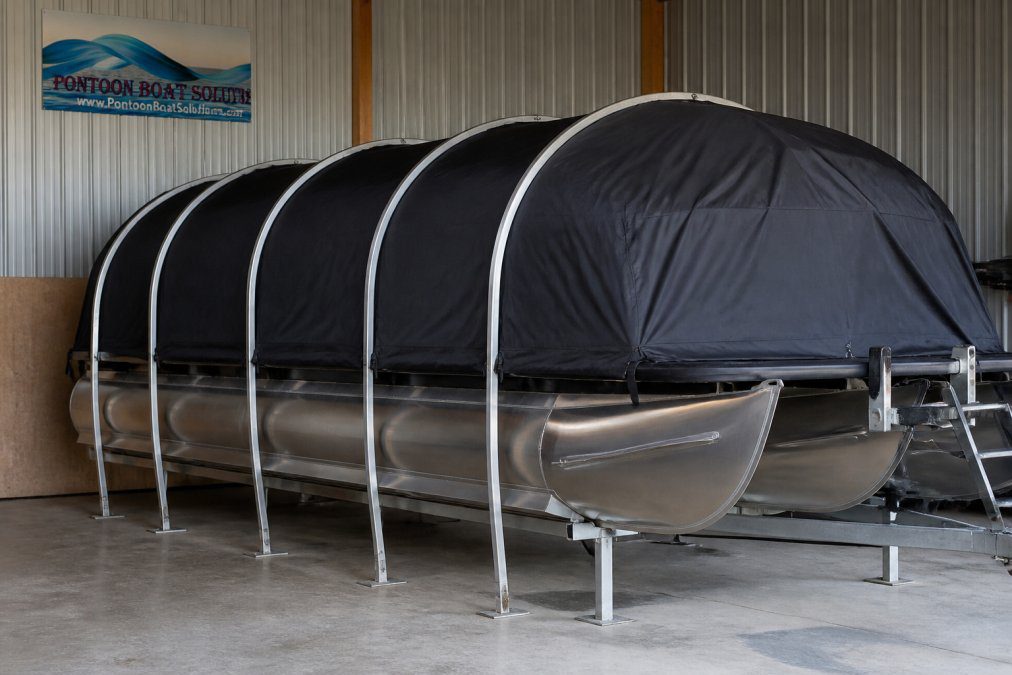
A sagging cover that collects standing water accelerates interior damage and promotes mold. An elevated support structure sheds water and prevents collapse.

Shrink-Wrap vs. Tarping: Which Works Best
Shrink-wrap creates an airtight seal that eliminates water pooling but costs more upfront. The tight seal can trap condensation if moisture enters.
Tarping is more affordable and allows air circulation.
Building a Tarp Frame for Snow Shedding
A tarp frame should peak at the center and slope downward on both sides, creating a roof-like geometry that sheds water.
Preventing Water Pooling and Mold
Even small amounts of standing water create mold within weeks. Ensure your tarp slopes toward the edges and check the frame after heavy snow or rain.
Protecting Upholstery and Interior
Upholstery, carpeting, and electronics are vulnerable to mold and moisture damage. Prevention is far cheaper than replacement.
Indoor vs. Outdoor Storage: What Works for Your Boat
Storage location dramatically affects winter damage risk. Indoor storage provides maximum protection but costs more; outdoor storage requires more preparation.
Spring Recommissioning: Getting Your Boat Ready to Return
| Storage Task | Timing | Frequency |
|---|---|---|
| Fuel stabilization and system flushing | Before storage | Once per season |
| Fogging oil application | Before storage | Once per season |
| Battery removal and charging | Before storage | Monthly during storage |
| Hull cleaning and inspection | Before storage | Once per season |
| Desiccant replacement | During storage | Monthly |
| Cover and frame inspection | During storage | After heavy snow/rain |
| Engine system flush | Spring recommissioning | Once per season |
| Electrical system testing | Spring recommissioning | Once per season |
Store your battery in a climate-controlled space and check its charge monthly. A trickle charger automates this process and prevents sulfation that can permanently damage the battery.
Standing water under your boat cover creates mold within weeks. Even small amounts of pooling water will damage upholstery and promote mildew growth. Ensure your tarp frame slopes properly and sheds water completely.
According to the National Association of Marine Manufacturers, proper winterization extends boat engine life by 3-5 years compared to boats stored without protection. Research from the American Boat and Yacht Council emphasizes that fuel system protection and engine fogging are the two most critical winterization steps for preventing spring startup failures. The U.S. Coast Guard’s recreational boating safety guidelines recommend removing batteries from stored boats to prevent parasitic drain and potential electrical fires during extended dormancy.
Frequently Asked Questions
How can I store my pontoon boat during the winter?
The best pontoon boat winter storage involves three key steps: winterize the engine and fuel system, protect the exterior with a quality cover or shrink-wrap, and elevate the cover using a support system to prevent water pooling. If possible, store indoors in a climate-controlled facility. If outdoor storage is necessary, use a heavy-duty tarp with a frame that sheds snow and rain, and ensure proper ventilation underneath to prevent mold and moisture buildup.
Can you leave a pontoon boat in the water during winter?
Leaving a pontoon boat in the water during winter is risky and not recommended. Ice expansion can damage the hull, pontoons, and internal systems. Water freezing inside bilge pumps, engine blocks, and water lines causes costly damage. If you must leave your boat in the water, use a de-icer to prevent ice formation around the hull, drain all water systems completely, and winterize the engine thoroughly. Dry storage is always the safer choice.
What should I include in a pontoon boat winterization checklist?
A complete pontoon boat winterization checklist includes: adding fuel stabilizer and running the engine to distribute it, fogging the engine cylinders with fogging oil, draining water from the bilge and all water lines, removing and charging the marine battery, flushing the cooling system with antifreeze, inspecting and protecting the propeller, cleaning the hull and upholstery, and covering the boat with a quality tarp or shrink-wrap using a support system to prevent water pooling. Don’t skip battery removal, a dead battery attracts corrosion.
How do I prevent snow accumulation on my pontoon boat cover?
Snow accumulation is prevented by building or installing a tarp frame that creates a peaked roof over your boat. This angled structure sheds snow and rain instead of allowing them to pool. Use a support system with proper angles, typically 30-45 degrees, to encourage water and snow runoff. Ensure the frame is sturdy enough to handle snow load in your region. Pontoon boat cover support systems are specifically designed for this purpose and eliminate the sagging that causes pooling and mold.
What’s the difference between DIY storage and professional winter storage?
DIY storage costs less upfront but requires your time, effort, and knowledge of winterization steps. You handle all winterization, covering, and monitoring. Professional storage facilities manage climate control, security, and regular inspections, protecting your boat from weather and theft. The trade-off: professional storage costs more annually but reduces your risk of costly damage, extends the lifespan of your boat’s systems and upholstery, and preserves resale value. For high-value pontoons, professional storage often pays for itself by preventing damage.
How does winter storage affect my pontoon boat’s resale value?
Proper winter storage directly protects resale value. Boats stored incorrectly suffer engine damage, hull deterioration, upholstery mold, and corrosion, all expensive repairs that reduce buyer confidence and price. Boats stored correctly with winterization, proper covering, and support systems maintain mechanical integrity, interior condition, and aesthetic appeal. Documentation of winterization and storage care also reassures buyers. Long-term, investing in quality winter storage protects thousands of dollars in resale value.
Do I need to drain water from my pontoon boat for winter?
Yes, draining water is critical. Water left in the bilge, engine block, cooling system, and water lines freezes in winter and causes cracking, corrosion, and mechanical failure. Drain the bilge pump completely, flush the engine cooling system with antifreeze, and drain all through-hull fittings and water lines. Use compressed air to blow out remaining water from lines. Leaving water in your boat can result in thousands of dollars in spring repairs.