Last Updated: November 7, 2026
Quick Summary
Indoor pontoon storage is worth the cost when your climate is harsh, your boat carries valuable furniture and electronics, or bundled winterization offsets the premium. Indoor, climate-controlled boat storage is listed at roughly $200 to $600 or more per month, so the decision depends on how much protection your boat actually needs.
- Indoor, climate-controlled boat storage is listed at roughly $200 to $600 or more per month.
- Indoor storage on a trailer is often described as near $250 per month.
- Rack storage runs $10 to $40 per foot per month, while enclosed indoor units typically start around $100 per month.
- High-humidity and saltwater regions are where indoor storage most often pays off.
- Confirm with your insurer whether indoor storage changes your premium before deciding.
Table of Contents
- Typical Monthly Rates by Storage Type
- Indoor vs. Outdoor Boat Storage: Where the Real Differences Are
- What Indoor Storage Protects and What It Doesn’t
- Covered Pontoon Storage as a Middle Option
- When Indoor Storage Pays Off and When It Doesn’t
- Winter Storage Prep Whether You Store Indoors or Out
- Booking Your Storage and Protecting Your Canvas Next
- Frequently Asked Questions
Indoor pontoon storage is worth the cost for some owners and not for others, and the answer depends heavily on your boat’s value, your climate and how much protection your canvas and furniture need. Pontoon Boat Solutions has put together this guide to help you weigh the numbers. Indoor, climate-controlled boat storage is listed at roughly $200 to $600 or more per month, while indoor storage on a trailer is often described as near $250 per month, according to Boat Storage Cost 2026 real rates by size and region. Before you decide, you need a clear picture of what you are actually paying for.
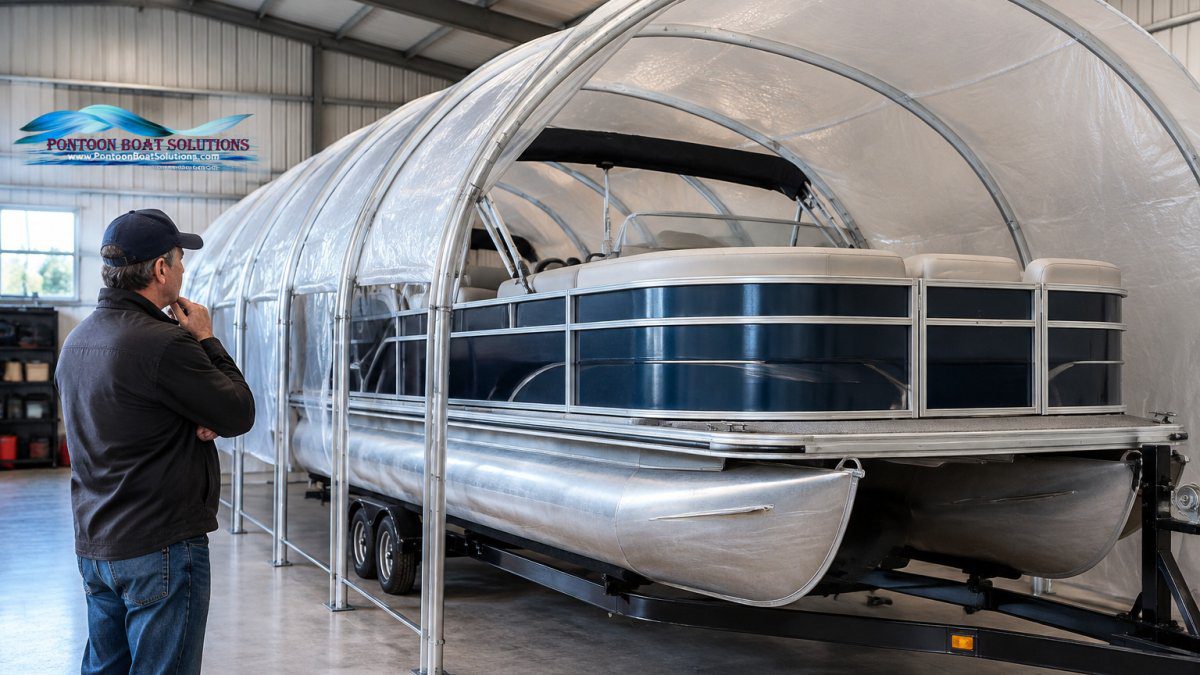
!A pontoon boat resting on a trailer inside a clean, climate-controlled indoor storage building with the door partially open
Typical Monthly Rates by Storage Type
Storage prices vary widely by format. A national median boat and RV storage price of about $108 per month is reported, with an average near $184 per month, according to State of Boat and RV Storage 2026 cost and supply data. Those averages are pulled up by premium covered slips and indoor units, so the typical outdoor rate sits well below them.
Rack storage is reported at $10 to $40 per foot per month, while enclosed indoor units typically start around $100 per month, based on The True Cost of Boat Ownership 2026 guide. Indoor storage more broadly is reported at $150 to $500 or more, though that source does not specify the billing period, as noted by Indoor vs Outdoor Boat Storage pros and cons 2026.
Publicly available figures for pontoons specifically are limited, so treat these as general boat-storage benchmarks and request quotes from local facilities for an exact number.
Factors That Push Prices Up or Down
Several variables move your monthly cost. Boat length and width matter because larger pontoons occupy more space, and location, climate control and security features can all affect the price.
Contract length also changes the math. Many facilities discount longer commitments, while month-to-month rentals cost more per month. Ask every facility whether the quoted rate includes insurance, access hours and any move-in fees.
Indoor vs. Outdoor Boat Storage: Where the Real Differences Are
The core trade-off is protection against cost. Indoor storage costs more upfront but shields the boat from weather and UV exposure. Outdoor storage is generally cheaper and can be more convenient to access, though the choice depends on your priorities, according to Indoor vs. Outdoor Boat Storage guide.

Outdoor storage exposes the boat to rain, snow, sun and temperature swings year-round. Indoor storage minimizes UV and weather exposure. The difference matters most for owners in harsh-weather regions or those with expensive furniture and canvas.
What Indoor Storage Protects and What It Doesn’t
Indoor storage reduces many weather-related risks, but it does not remove every maintenance need. Understanding the limits helps you decide whether the premium buys you real protection.
Canvas, Upholstery and Electronics
Indoor storage keeps canvas, upholstery and electronics out of direct sun and rain, which slows fading, cracking and mildew. Even indoors, canvas covers still need to be kept clean, dry and properly supported. Pontoon Boat Solutions’ [PAGE:1] explains how to protect furniture from winter damage, and its [PAGE:3] shows the sizing and components of canvas support kits.
Insurance Premiums and Resale Value
Some owners find that indoor storage can affect insurance costs and resale appeal, since a protected vessel shows better condition. Confirm with your insurer whether indoor storage changes your premium. Keeping a well-preserved boat can also support its resale value, though the size of that benefit varies.
Covered Pontoon Storage as a Middle Option
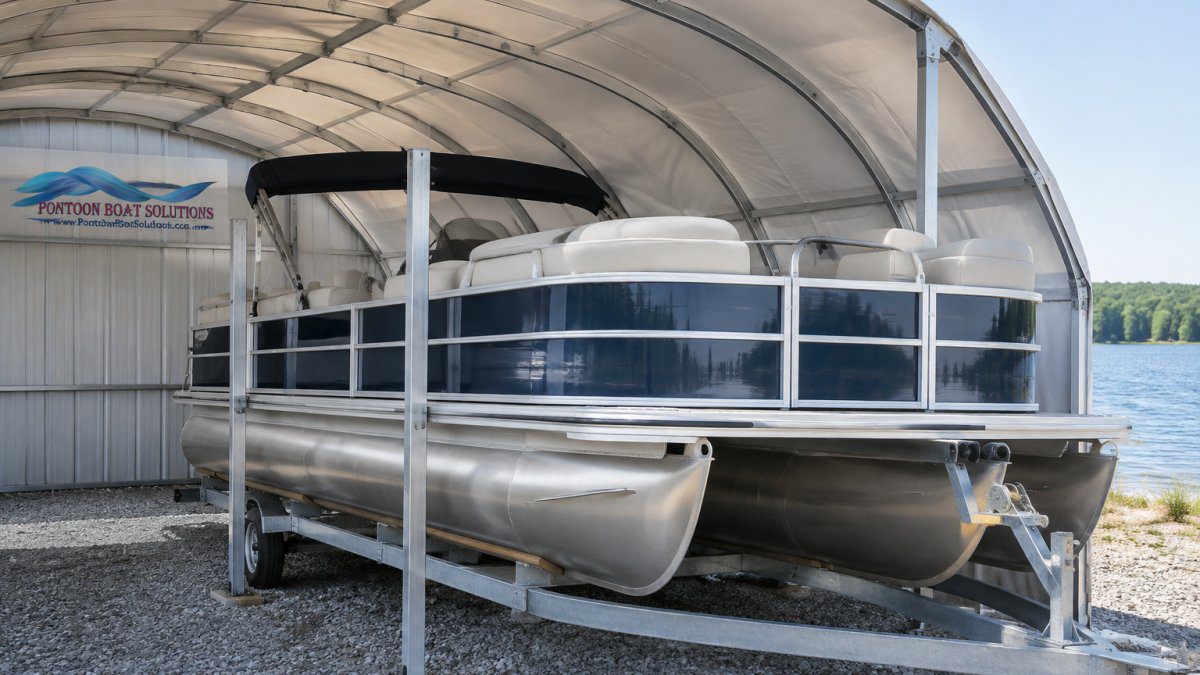
Covered storage sits between open-air and fully enclosed indoor storage. It shields the boat from rain and sun at a lower price than climate-controlled units. Many owners find this a practical compromise.
Covered storage still exposes the sides of the boat to wind and humidity, so pairing it with a good cover system matters. Pontoon Boat Solutions offers no-drill accessories that protect the boat whether it is stored covered or outdoors.
When Indoor Storage Pays Off and When It Doesn’t
The honest answer is that indoor storage is a financial decision with a break-even point, and that point moves with your climate, your boat’s value, and how much of the winterization work you are willing to do yourself. Instead of a single rule of thumb, run the decision through the four tests below.
Test 1: Climate Severity
Where the boat sits for the off-season changes the value of indoor storage more than any other variable.
- High-humidity and saltwater environments. In coastal and humid regions, the dominant threats are mildew, corrosion, and constant moisture cycling. Indoor storage with climate control directly addresses the failure mode that costs the most money here, interior mold and electrical corrosion. This is where indoor storage most often pays off.
- Snow-belt and freeze-thaw regions. The threats are snow load on canvas, ice dams, and freeze damage. Covered or indoor storage removes snow load, but you still need proper winterization of the engine and water systems. Indoor storage helps, but it does not replace winterization.
- Arid and mild climates. UV is the main enemy, and a high-quality cover plus shaded outdoor storage captures much of the benefit at a fraction of the cost. Indoor storage is hardest to justify here on protection grounds alone.
Test 2: Boat Value and Interior Investment
The higher the replacement cost of your furniture, canvas, and electronics, the easier the math. A pontoon with upgraded upholstery, a full canvas enclosure, and a modern electronics package has more exposed value than a bare-bones boat. The protection premium generally scales with what you are protecting, so the more valuable the boat and its interior, the easier the storage math becomes.
Test 3: DIY Versus All-Inclusive Prep
This is the comparison most articles skip. Indoor facilities frequently bundle services that outdoor owners pay for separately or do themselves:
- DIY outdoor storage: you buy or rent a cover, build or buy a support system, winterize the engine and water system, pull batteries, and inspect and re-inspect through the season. The out-of-pocket cost is lower, but the labor is yours.
- All-inclusive indoor storage: many facilities include wash-down, engine fogging, battery removal and tendering, and shrink-wrap or cover service in the rate. When you subtract the value of those bundled services from the monthly rate, the effective premium for indoor storage is often smaller than the sticker price suggests.
Ask every facility for an itemized list of what is included. A higher monthly rate with winterization and wash-down included can beat a lower rate that leaves you paying for those services separately.
Test 4: The Break-Even Calculation
- Multiply the monthly indoor rate by the number of months you will store.
- Subtract any insurance premium credit you confirmed with your carrier.
- Subtract the value of bundled services you would otherwise pay for (winterization, wash-down, cover service).
- Compare the result to the cost of outdoor storage plus your own labor and materials.
If the net indoor premium is small relative to the value of the interior and electronics you are protecting, indoor storage is worth it. If the net premium is large and your climate is mild, a covered spot with a properly supported cover is usually the better financial call.
Pontoon Boat Solutions offers a patent-pending, screw-free canvas support system designed to keep covers elevated and from collecting rainwater.
The break-even point shifts with climate, boat value and how much winterization work you handle yourself, so the article’s four tests can be compared side by side.
| Test | What to check | Favors indoor storage when |
|---|---|---|
| Climate severity | Local humidity, snow and UV exposure | High-humidity or saltwater regions |
| Boat value | Replacement cost of furniture, canvas and electronics | Upgraded interior and electronics |
| DIY vs. all-inclusive prep | Whether wash-down and winterization are bundled | Bundled services offset the premium |
| Break-even calculation | Monthly rate minus insurance credit and bundled services | Net premium is small relative to protected value |
Winter Storage Prep Whether You Store Indoors or Out
Preparation matters regardless of where the boat sleeps. Clean the hull and deck, drain the water system, remove loose items and inspect the canvas for tears. Keep the canvas off the furniture so water and snow do not pool on it.
A properly fitted canvas support keeps covers from sagging under snow or collecting rainwater. Pontoon Boat Solutions offers a screw-free canvas support system made from heavy-duty solid aluminum.
Booking Your Storage and Protecting Your Canvas Next
Choosing indoor storage is a real financial decision, and the right answer depends on your boat’s value, your climate and your protection needs. Before you book, request written quotes, confirm what each rate includes and ask your insurer how storage affects coverage.
Pontoon Boat Solutions builds a patent-pending, screw-free canvas support system from heavy-duty solid aluminum, so you can protect your investment without drilling into your boat. Pricing depends on quantity, dates and delivery, so visit our website for current prices and sizing.
Frequently Asked Questions
Is indoor storage worth the extra cost for a pontoon?
For many owners, indoor storage is worth it when the boat is high value, the canvas and upholstery are expensive to replace, or the climate is harsh with heavy snow, humidity or intense sun. Indoor storage rates are generally higher than outdoor rates, and they vary by region and facility. For a lower-value boat stored in a mild climate, outdoor or covered storage may deliver most of the protection at a fraction of the price. Compare the annual storage cost against the expected cost of canvas, seat and electronics replacement.
How much does indoor boat storage cost per month?
Indoor boat storage typically ranges from about $150 to $500 or more per month in published 2026 estimates, with climate-controlled units at the higher end. A national median for boat and RV storage is reported near $108 per month, with an average around $184 when premium covered slips and indoor units are included. Prices vary by region, unit size and whether the boat sits on a trailer. Request current quotes from local facilities before budgeting, since rates change frequently.
Is covered storage enough to protect a pontoon over winter?
Covered storage blocks direct rain, snow and sun, which addresses much of the damage that outdoor storage causes. It does not usually provide climate control, so humidity and temperature swings can still lead to mildew or condensation under a canvas cover. Covered storage is a practical middle option when indoor rates are out of reach. Pair it with proper ventilation, a supported canvas system and thorough cleaning before storage to reduce pooling and mold risk.
How should I prepare my pontoon for winter storage?
Clean the deck, seats and upholstery thoroughly and let everything dry completely before covering. Drain the water system, add antifreeze where recommended, and remove or secure loose items. Keep the canvas cover elevated so water runs off rather than pooling, since standing water is the most common cause of canvas damage and mildew. Check electronics and batteries, and disconnect batteries if the boat will sit for several months. These steps help whether you store indoors or outdoors.