
Quick Summary
A pontoon boat cover usually fails from sunlight, standing water, and snow weight rather than fabric alone, and quality covers often last 10 to 20 years with proper care. Keeping the cover clean, dry, and well supported is what extends its life most.
- Quality covers commonly reach 10 to 20 years, and proper maintenance can add roughly 3 to 5 years.
- Use a pH-neutral marine soap and a soft brush, and avoid bleach, ammonia, solvents, and pressure washers.
- Rinse off all soap residue and confirm the cover is fully dry before folding it for storage.
- Adjustable support poles can typically be set from 23.5 to 56 inches to ensure water runoff.
- Replace snaps, zippers, and ratchets early, since hardware failures often cause the fabric damage that follows.
Table of Contents
- What Actually Shortens a Pontoon Boat Cover’s Life
- Pontoon Boat Cover Lifespan: What to Expect and Why It Varies
- How to Clean a Pontoon Boat Cover Without Damaging the Fabric
- Stopping Water Pooling with Proper Support and Tension
- Off-Season Storage and a Seasonal Maintenance Checklist
- Pontoon Boat Cover Repair: Fabric, Seams and Hardware
- Signs Your Pontoon Cover Needs Replacing and Your Next Step
- Frequently Asked Questions
What Actually Shortens a Pontoon Boat Cover’s Life
Last Updated: November 1, 2026
Most pontoon owners blame the cover itself when it starts to fade, sag, or grow mildew. In practice, the cover usually fails because of a few predictable forces working on it every day: sunlight, standing water, and weight.
looking at how covers fail, and the pattern is consistent. High-quality boat covers typically last 10 to 20 years according to Lippert general guidance on boat cover durability, but many covers die in half that time.
UV Degradation and Fading
Sunlight is the most constant threat. UV radiation breaks down the fibers and coatings in canvas and vinyl, which shows up first as fading and then as brittleness. A cover that looks fine in spring can split along a seam by late summer if it has been baking in direct sun all season.
Quality covers shield against this exposure, blocking the UV load that drives degradation. The takeaway: keep the cover on, keep it clean, and keep it dry.
Moisture, Mildew and Snow Load
Water does more damage than most owners expect. When rain collects in low spots on the cover, the weight stresses the fabric and the seams, and the standing moisture feeds mildew.
Some owners layer a cheap tarp over an existing cover, but this can trap moisture against the fabric. The safer approach is to improve drainage and support, which addresses moisture and snow load together.
Pontoon Boat Cover Lifespan: What to Expect and Why It Varies
A pontoon boat cover lifespan depends on material, climate, and care. Quality covers commonly reach 10 to 20 years, and proper maintenance can add roughly 3 to 5 years, according to Boatman Marine Canvas on protective canvas maintenance.
Expect the shortest life from covers that sit in standing water, go unsupported through winter, or get cleaned with harsh chemicals. Expect the longest from covers that are tensioned properly, rinsed regularly, and stored dry.
How to Clean a Pontoon Boat Cover Without Damaging the Fabric
Cleaning is where many owners cause damage without realizing it. Pressure washers, stiff brushes, and strong household cleaners can strip the protective coating. Most cleaning advice also treats every cover the same, but the chemistry safe for one marine fabric can destroy another. This section breaks cleaning down by fabric type.
Know Your Fabric Before You Touch It
Pontoon covers are typically one of three material families, and each reacts differently to cleaners:
- Solution-dyed acrylic canvas (Sunbrella and similar): Color is engineered into the fiber, so it resists fading and mild cleaners well. The weak point is the factory fluoropolymer water-repellent finish, harsh solvents and high-alkaline detergents strip it, and the fabric starts absorbing water even though the color still looks fine.
- Coated vinyl or PVC-backed fabric: The waterproof layer is a plastic coating bonded to a scrim. Solvent-based cleaners, acetone, and some “heavy-duty” degreasers soften and craze that coating, which shows up later as cracking and flaking along fold lines.
- Polyester canvas with a polyurethane or acrylic coating: Common on value-priced covers. The coating fails first and is sensitive to both high pH (ammonia, bleach) and high heat (pressure washing).
If you are not sure which you have, check the sewn-in label or the manufacturer’s care tag. When in doubt, test any cleaner on an inconspicuous area and let it dry fully first.
Chemical Compatibility: What Is Safe and What Is Not
| Cleaner | Solution-dyed acrylic | Coated vinyl / PVC | Coated polyester |
|---|---|---|---|
| Mild pH-neutral soap (car-wash or marine soap) | Safe | Safe | Safe |
| Diluted mild dish soap | Safe for spot cleaning | Safe, rinse well | Safe, rinse well |
| Oxygen-based (peroxide) cleaner | Generally safe at label dilution | Avoid, can bleach coating | Avoid |
| Chlorine bleach | Avoid, degrades fiber and finish | Avoid, attacks coating | Avoid |
| Ammonia-based glass/degreaser | Avoid, strips repellent finish | Avoid, softens coating | Avoid |
| Solvent / acetone / MEK | Never | Never | Never |
| Pressure washer above low setting | Avoid, drives water through weave | Avoid, lifts coating edges | Avoid, delaminates coating |
The single most common self-inflicted failure is using a household degreaser or bleach solution on a coated cover to kill mildew. It removes the stain and the coating at the same time, and the cover starts leaking within a season.
A Fabric-Safe Cleaning Sequence
- Rinse with a garden hose to remove loose dirt. Never use a pressure washer above the lowest setting or hold the nozzle close to seams.
- Apply a mild, pH-neutral soap with a soft brush or sponge at the label dilution, more soap just leaves more residue.
- Work top-down in sections without scrubbing hard. Agitate seams and stitch lines gently with a soft-bristle brush, where dirt and mildew collect.
- Rinse thoroughly until no soap residue remains; residual soap attracts dirt and feeds mildew.
- Air-dry completely before folding or storing. A cover folded damp is a mildew incubator.
Mildew Without Bleach
Mildew is the one stain owners reach for bleach to fix, and bleach does the most long-term damage. For solution-dyed acrylic, a diluted oxygen-based cleaner at the label ratio, dwelled briefly and rinsed thoroughly, is safer. For coated fabrics, mild soap plus soft-brush agitation and full sun drying removes most surface mildew; persistent black staining usually means the mildew has penetrated the coating, and no cleaner will restore it.
Match the cleaner to the fabric, not to the stain. A pH-neutral marine soap and a soft brush will handle routine cleaning on every common pontoon cover material. Anything stronger needs a compatibility check first, and bleach, ammonia, solvents, and pressure washing should stay off the cover entirely.
Stopping Water Pooling with Proper Support and Tension
Standing water is the single biggest preventable problem on a pontoon cover. The fix is to keep the top of the cover elevated so rain runs off instead of collecting.

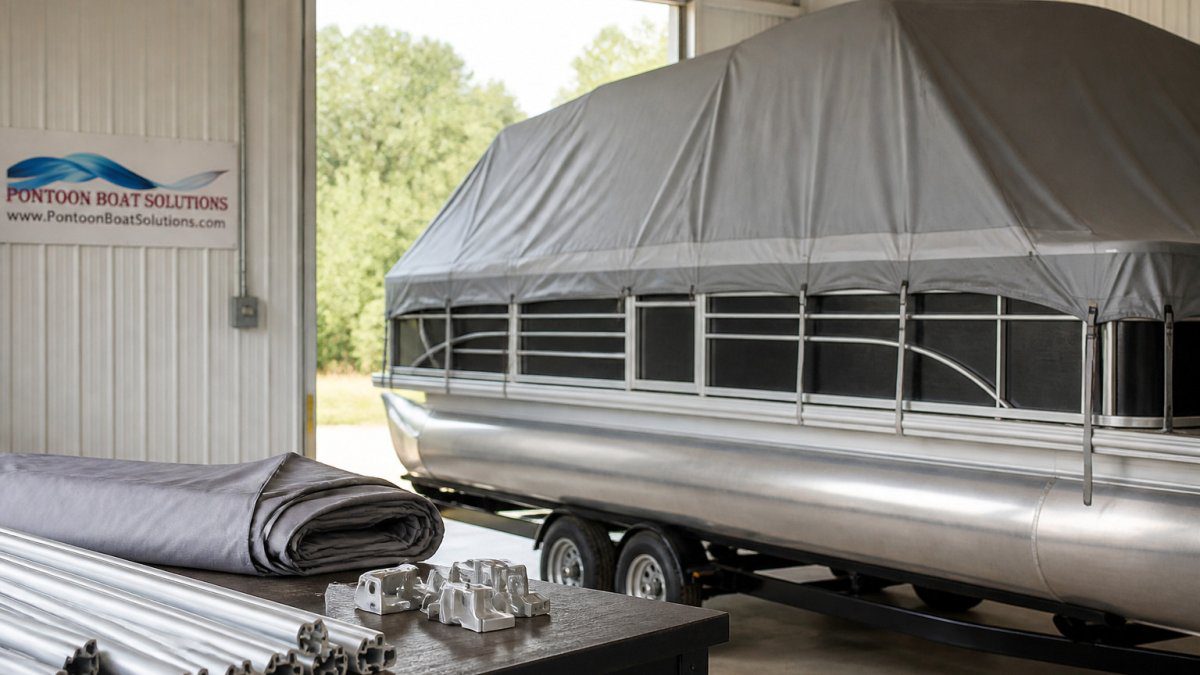
Pontoon Boat Solutions designs a no-drill support system built around solid aluminum Arch-Makers that create a floor-supported dome over the deck. Because it installs without screws, bolts, or holes, you avoid drilling into the boat.
DIY Structural Support Systems Compared
Owners have several routes to the same goal. Adjustable support poles can typically be set from 23.5 inches to 56 inches to fit a range of frames and ensure water runoff, according to Better Boat’s cover support specifications. Tension-based kits rely on cords and ratchets to pull the cover tight.
Each approach trades off differently. Pole systems may require more setup, while tension kits depend on anchor points holding firm.
Off-Season Storage and a Seasonal Maintenance Checklist
Off-season storage is where covers either survive or fail. A cover stored wet, dirty, or loosely folded often comes back with mildew and creases that never fully release. Use this checklist before storing the boat:
- Clean the cover and rinse off all soap residue.
- Confirm the cover is fully dry before folding.
- Inspect seams, zippers, and attachment points for wear.
For owners who want to keep deck gear organized during storage, a Pontoon Boat Water Mat Solution With Storage Solution can keep items out of the way and away from damp surfaces.
Pontoon Boat Cover Repair: Fabric, Seams and Hardware
Small problems are cheaper to fix than full replacements, but the repair depends on what failed. Fabric tears and seam separations need different fixes than broken snaps or worn ratchet hardware. A surprising share of “cover failures” are actually hardware failures a few dollars in parts will fix. Identify the failure point, then decide whether a repair kit or replacement part will do the job.
Hardware Failures: Fix the Part, Save the Cover
Hardware fails before fabric does, and it fails in predictable places. Work through this list before you assume the cover is done:
- Snaps and twist fasteners: A corroded or loose snap lets the cover flap, which tears fabric at the attachment point. Replace the snap half rather than patching the fabric around it. Snap-setting tools and replacement studs are inexpensive and the job takes minutes per snap.
- Zippers: A sticking zipper gets forced, tearing the tape and fabric behind it. Lubricate with a silicone or PTFE zipper lubricant (not petroleum jelly, which attracts grit) and work the slider back and forth before pulling hard. If the slider is spread, replace the slider rather than the whole zipper.
- Rope ratchets and tensioners: A stripped ratchet cannot hold tension, and a loose cover pools water and flaps. Replacement ratchets and cam buckles are cheap and usually bolt or hook on without sewing.
Keep a small spares kit on the boat: a few snap studs, a spare zipper slider, a ratchet, and a length of shock cord. Most hardware failures can be fixed on the trailer in under fifteen minutes, which prevents the fabric damage that follows a loose cover.
Fabric and Seam Failures: Patch, Sew, or Replace
Fabric repair depends on where the damage is and what the fabric is made of.
- Small punctures and tears (under a few inches) in the field of the panel: Use a peel-and-stick patch made for the specific fabric type. Adhesive patches for solution-dyed acrylic are not the same as those for coated vinyl, the wrong one never bonds and lifts at the first rain. Clean and dry the area fully, round the patch corners so they do not catch, and roll it down hard.
- Seam separation: A seam opened along a stitch line is a sewing repair, not a patch repair. Hand-sew with UV-resistant polyester or bonded thread matched to the original, then seal with a seam sealer appropriate to the fabric. A seam separating along its entire length usually means the thread has reached end of life, and the rest are close behind.
- Coating failure and fabric rot: Once the coating has cracked, flaked, or gone sticky, or the fabric tears easily when you tug it, there is nothing to patch onto. Repair money is better spent on replacement.
Repair or Replace: A Simple Decision Rule
Use the failure location and extent as the test:
- Hardware only: Repair. Parts are inexpensive and the fabric is still sound.
- One small fabric tear or one short seam separation: Repair, and monitor the surrounding seams.
- Multiple seam failures, widespread coating failure, or fabric that tears under light tension: Replace. Patching a cover that is failing everywhere just moves the leak.
Pricing for parts and repair kits varies by supplier and quantity, so check current listings or contact Pontoon Boat Solutions for a quote rather than relying on estimates.
Diagnose before you repair. Most cover failures start as hardware problems, and fixing the snap, zipper, or ratchet early is what keeps the fabric intact. Reserve fabric repair for isolated damage, and replace the cover when the fabric itself has stopped protecting the boat.
Signs Your Pontoon Cover Needs Replacing and Your Next Step
Replace the cover when the fabric no longer protects the boat. Watch for widespread fading, brittle or cracking material, persistent mildew that won’t clean out, seam separation along multiple sections, and sagging that tensioning can’t correct. Once those signs appear, the cover is no longer doing its job.
If your cover is still sound but keeps pooling water or sagging, the fix is usually better support rather than a new cover.
Frequently Asked Questions
How long should a pontoon boat cover last?
High-quality boat covers typically last 10 to 20 years, according to general industry guidance on boat cover durability. Lifespan depends on material, how much sun the boat gets, and how well the cover is maintained. Proper maintenance and protective canvas care can extend cover life. Covers stored outdoors in direct sun or left with standing water tend to fail well before the upper end of that range. Inspect seams, fabric and tension each season to judge where your cover sits on that timeline.
How do you clean a pontoon boat cover without damaging it?
Rinse the cover with a garden hose to remove loose dirt, then wash it with a mild soap designed for marine canvas or vinyl, using a soft brush. Avoid harsh household cleaners, bleach and pressure washers at close range, since these can strip water-repellent coatings and weaken fibers. Rinse thoroughly and let the cover dry completely before folding or storing it. Clean the cover at least twice a season so mildew spores and grime do not set into the fabric.
Does water pooling shorten the life of a boat cover?
Yes. Water that collects on a cover adds weight, stretches the fabric and holds moisture against the material, which accelerates mildew growth and seam failure. Pooling is most common on flat or sagging sections where support is inadequate. Keeping the cover taut and supported is one way to reduce water collecting on it between uses.
When should you repair or replace a pontoon boat cover?
Repair small problems such as loose stitching, minor tears or worn snaps and zippers, since these are often inexpensive to fix. Replace the cover when the fabric is brittle, widespread fading or cracking has set in, mildew has penetrated the material, or the cover no longer holds its shape or sheds water. Pricing for replacement depends on size, material and configuration, so check current options and quotes directly with the manufacturer or retailer.
Pontoon Boat Solutions builds its no-drill support system for owners who want to protect the cover without modifying the boat. The Arch-Makers are solid aluminum, install without screws or holes, and are designed for pontoon geometry. Browse all Pontoon Boat Solutions products to find the setup that fits your boat.
